 In this area
The Antwerp issue
Eilandje, Antwerp: docks, design and dinner by the water
A walk through Antwerp’s docklands where Napoleon’s basins, Zaha Hadid’s glass ship and the city’s best waterfront tables still keep the working-harbour edge alive.

By Marieke De ClercqHow Antwerp really dresses
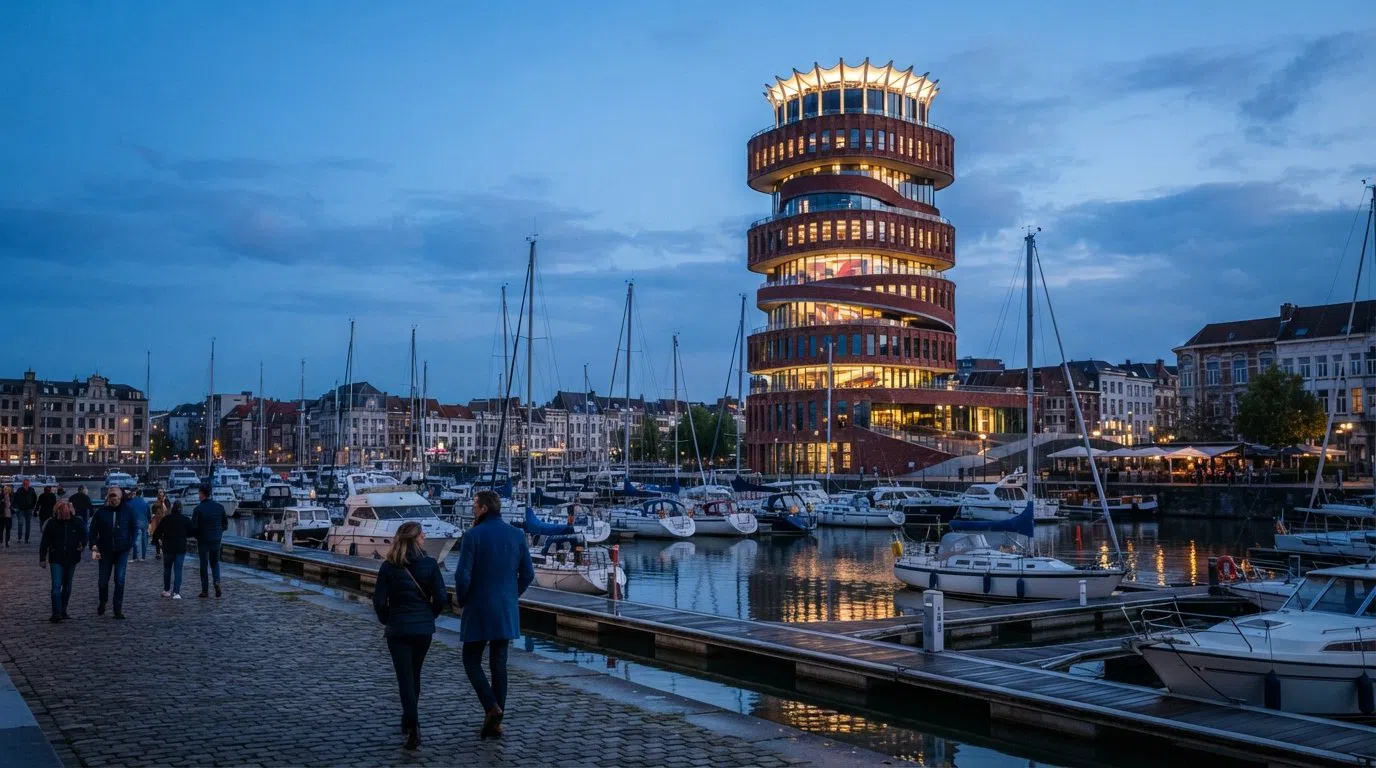
Napoleon dug the first two docks here in 1811, and that detail still hangs over Eilandje like a stern old drawing pinned to a wall. You feel it most clearly on the quays, where the water opens out and the city stops pretending to be medieval for a minute. The old port may have marched north, but these basins — once full of coffee, grain and tobacco unloaded onto the Rijnkaai — still shape the neighbourhood’s rhythm: wide, watery, industrial, and a little theatrical in the way only Antwerp can manage without losing its collar.
What Eilandje is known for
Eilandje reads as Antwerp with the roof taken off. There is more sky here than in the old centre, more metal in the air, more room for the eye to travel from dock edge to warehouse roofline to crane arm. On weekdays it can feel almost suspiciously calm, as if the neighbourhood is waiting for someone to switch it on. Then summer evening arrives, or Sunday lunch, and the terraces fill with Antwerpers chasing what locals like to call a holiday feeling in their own city. That is the trick of the place: it is polished, but not slick; designed, but not airless; working-harbour bluntness still visible under the varnish.
The district’s best shorthand is water and salvaged industry. The Bonapartedok and Willemdok — Napoleon’s original two docks from 1811 — sit at the centre of the story, with the larger Kattendijkdok and Kempischdok stretching away to the north. Warehouses that once handled cargo now hold food halls, cafés, studios and museums. The old bones are still doing the work, just with better lighting.
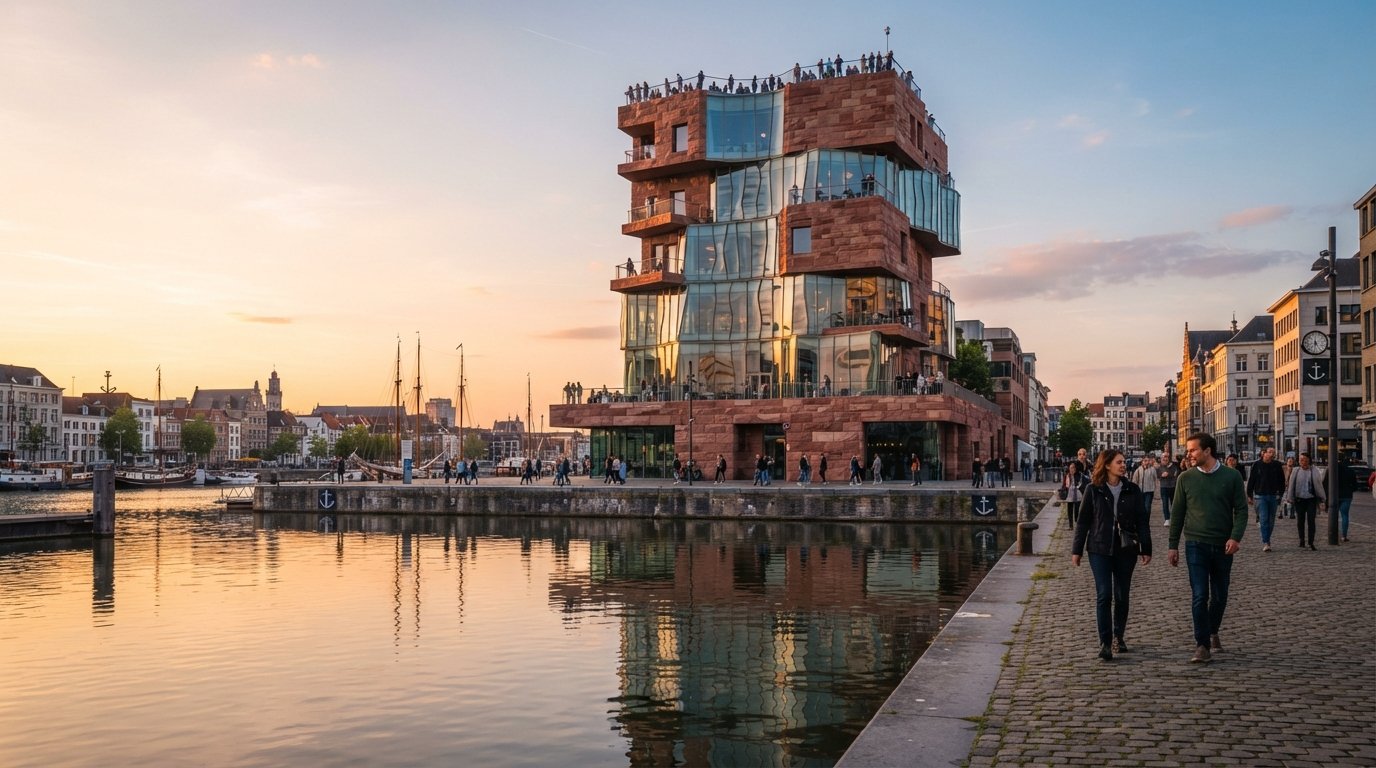
The anchor, physically and emotionally, is the MAS (Museum aan de Stroom) on Hanzestedenplaats. It is hard to miss: ten storeys of Indian red sandstone and undulating glass rising on the neck of land between the two oldest docks. The building is already a landmark before you step inside, but the real pleasure is the outside escalator ride to the free rooftop terrace, where Antwerp opens in every direction — river, port cranes, old town, the whole city laid out with the sort of clarity you only get from height and wind.
A short walk north, the Red Star Line Museum on the Rijnkaai tells a quieter, more human kind of port story: the two million emigrants who left these quays for America and Canada between 1873 and 1934. The reconstructed inspection halls are spare and moving, and the building gives the neighbourhood a second emotional register. Eilandje is not only about trade and architecture; it is also about departure.
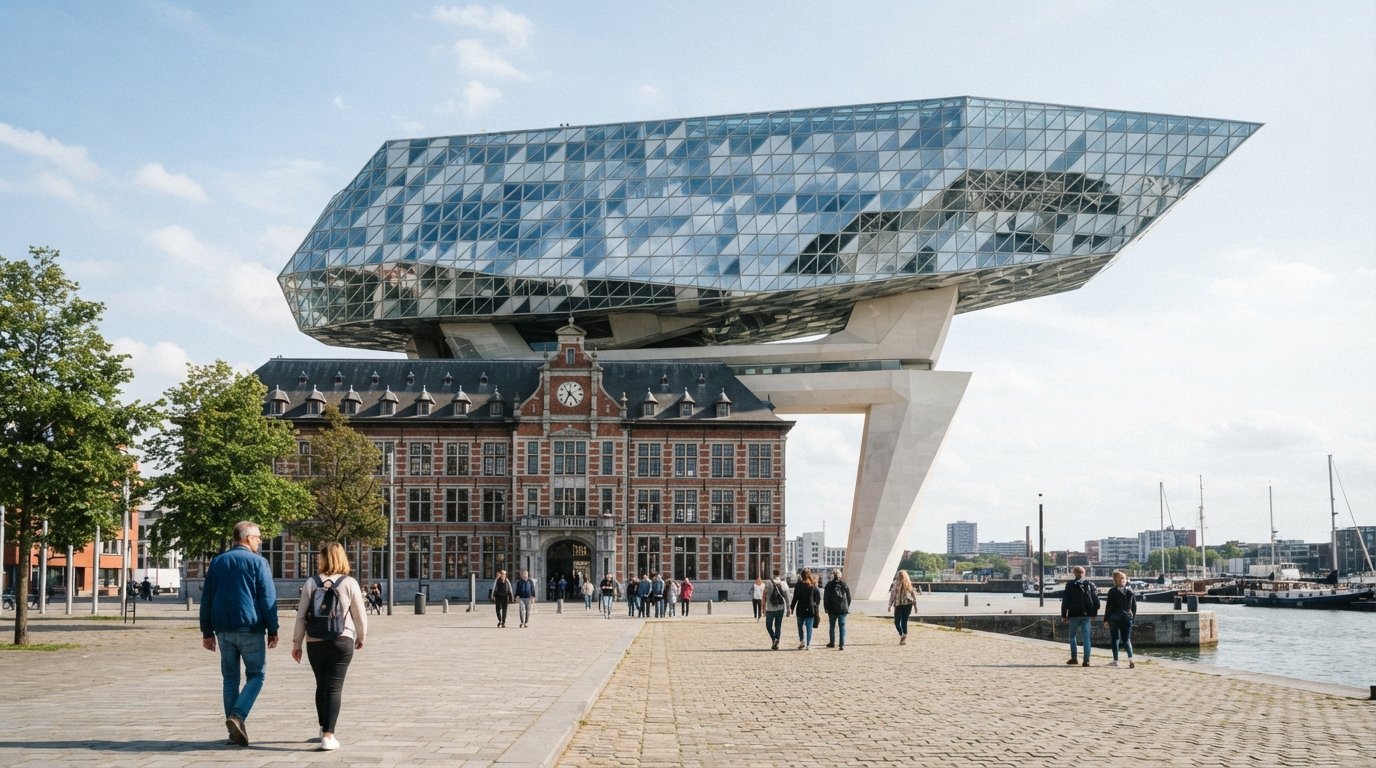
Then there is the Port House (Havenhuis) on the Zaha Hadidplein, Zaha Hadid’s “diamond ship” — a faceted glass volume balanced over a restored 1920s fire station. The triangular panes catch the light and throw it back in flashes, a neat nod to Antwerp’s diamond trade and a reminder that this is the only government building Hadid ever designed. It is one of those buildings that makes people stop mid-sentence, which is usually a good sign.
Plan your Antwerp trip
Live prices from our booking partners.
Guests & rooms
Free cancellation on many rooms. We may earn a commission when you book.
Where to eat & drink
The obvious high point sits on top of the museum, and yes, that is as extravagant as it sounds. Zilte, chef Viki Geunes’s three-Michelin-star restaurant on the upper floor of the MAS, serves a tasting menu with a view down the Scheldt. Book weeks ahead and expect to pay for the privilege. The setting is almost absurdly elegant for a neighbourhood that still remembers cranes and cargo, but Antwerp has always liked a little friction between the grand and the practical.
For a meal that feels more of the district, head to Roest at Sint-Aldegondiskaai 64. It is an industrial-chic bistro directly across from the MAS, with comfort food, a terrace looking onto the Willemdok yachts, and Sunday breakfast that has become something of a local ritual. It is the sort of place where you can linger without anyone nudging you toward the bill, which is frankly a civic virtue.
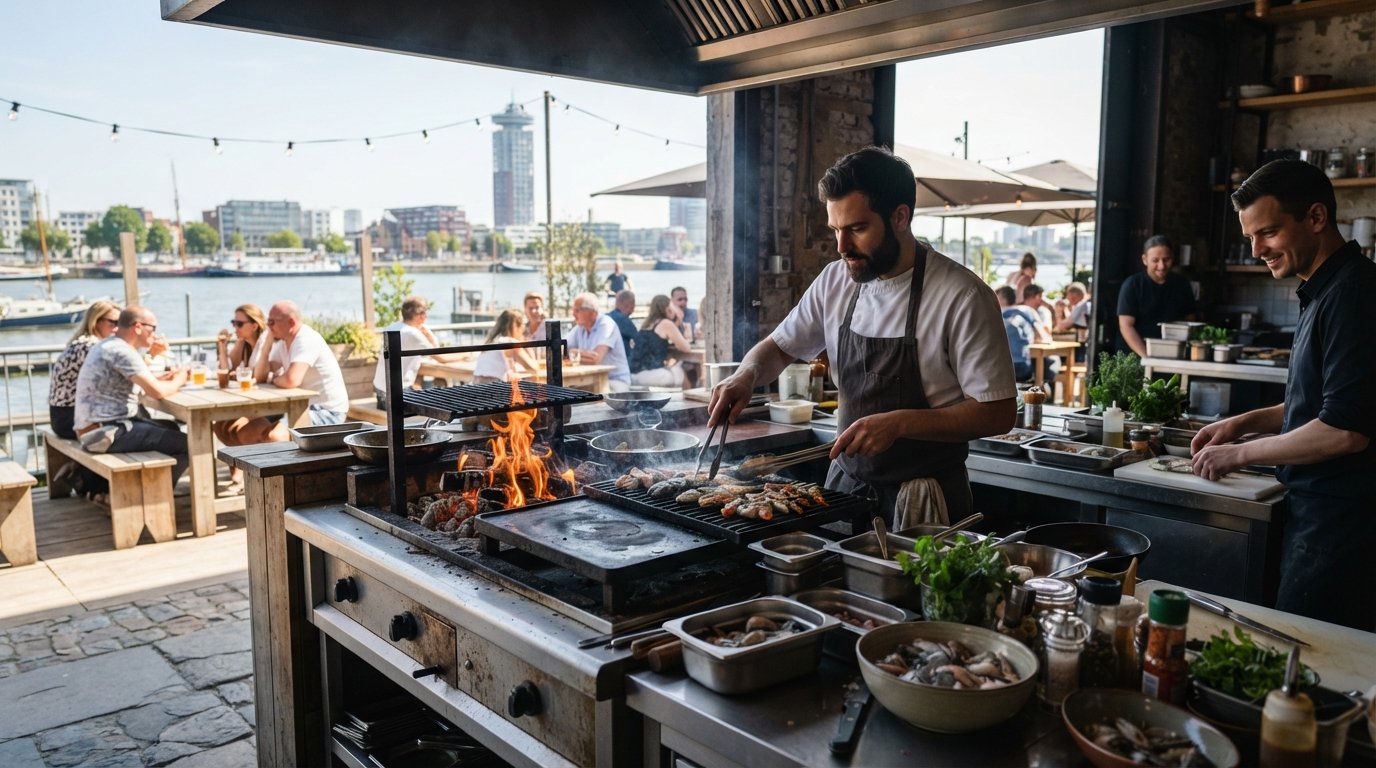
Fiskeskur on the Kattendijkdok-Oostkaai is the rougher, noisier cousin in the family: a rock-and-roll fish bar in a former customs shed, run by one of Fiskebar’s founders, cooking over open fire and a rocket stove. It has a huge summer terrace on the water and no reservations, first come first served, which keeps the mood appropriately unbothered.
If you want something easier and more communal, WOLF Sharing Food Market fills the monumental Sint-Felixpakhuis on Godefriduskaai 30. It is Antwerp’s only real food hall, with roughly ten kitchens — Indian, Japanese, Peruvian, smash burgers among them — and three bars under one warehouse roof. In summer, the waterside terrace is where the whole thing breathes out. It is not subtle, but it does what a food hall should do: give a group of hungry people enough choice to stop arguing.
For coffee and a lighter bite, Café Storm at Hanzestedenplaats 5 is the MAS’s own café, pouring Illy and looking straight out over the Bonapartedok and Willemdok from a sunny terrace. It is the right place to arrive early, orient yourself, and watch the docks wake up. Or, if you are like most people in Antwerp, to sit down for one coffee and accidentally stay for two.
Going out
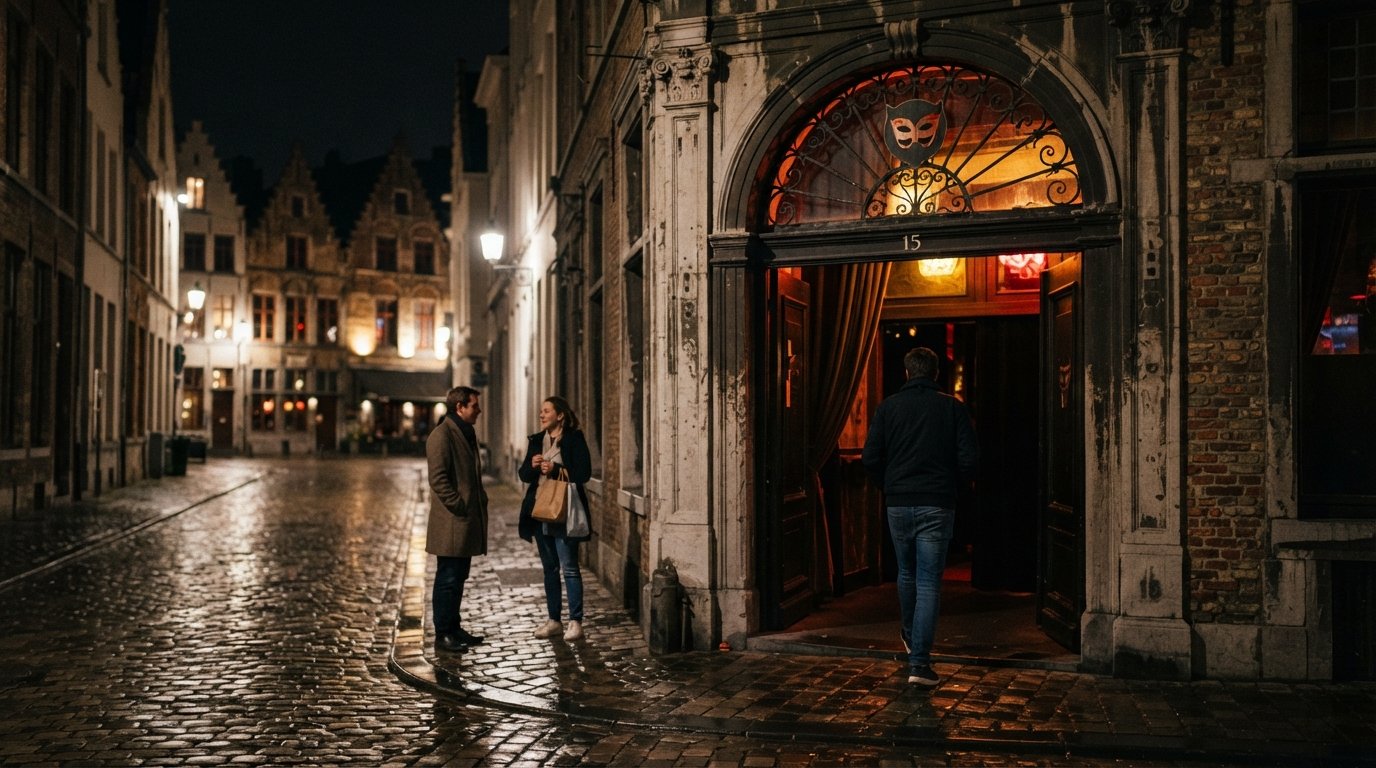
Eilandje has long been Antwerp’s late-night edge, partly because a former harbour district is one of the few places you can run loud music into the small hours without annoying the wrong neighbours. The landmark address is Verversrui 15, the old home of Café d’Anvers — one of Europe’s oldest house clubs, opened in 1989 — which reopened at New Year 2024/25 as Traum. Fridays are for rotating Antwerp collectives; Saturdays belong to its own crew. The room carries a certain inherited authority, the kind that comes from years of basslines and late exits.
For something looser and daylit, Bar Paniek on the Kattendijkdok-Oostkaai is the summer bar-cum-art-studio complex born from the Timecircus collective. It has a big terrace on the dock, live music and cheap cocktails when the weather turns. The place looks like it was assembled by people who understand that a bar can also be a mood board, but the drinks and the dockside air do the real work.
Het Bos at Ankerrui 5-7 is another Eilandje institution with a more underground pulse: a former city warehouse grown out of the Scheld’apen artist squat, now mixing concert hall, bar, kitchen and exhibition spaces. It is where you go for experimental electronics, underground gigs and a beer among artists who look as if they have opinions about cable management.
If you want the big-room end of the night, IKON on the Straatsburgdok-Noordkaai sits just north of Eilandje at the port’s Luchtbal edge. It is a taxi, not a walk, but it is the obvious next stop once the dockside bars have emptied and the neighbourhood has gone back to its water and wind.
Things to do / what to see
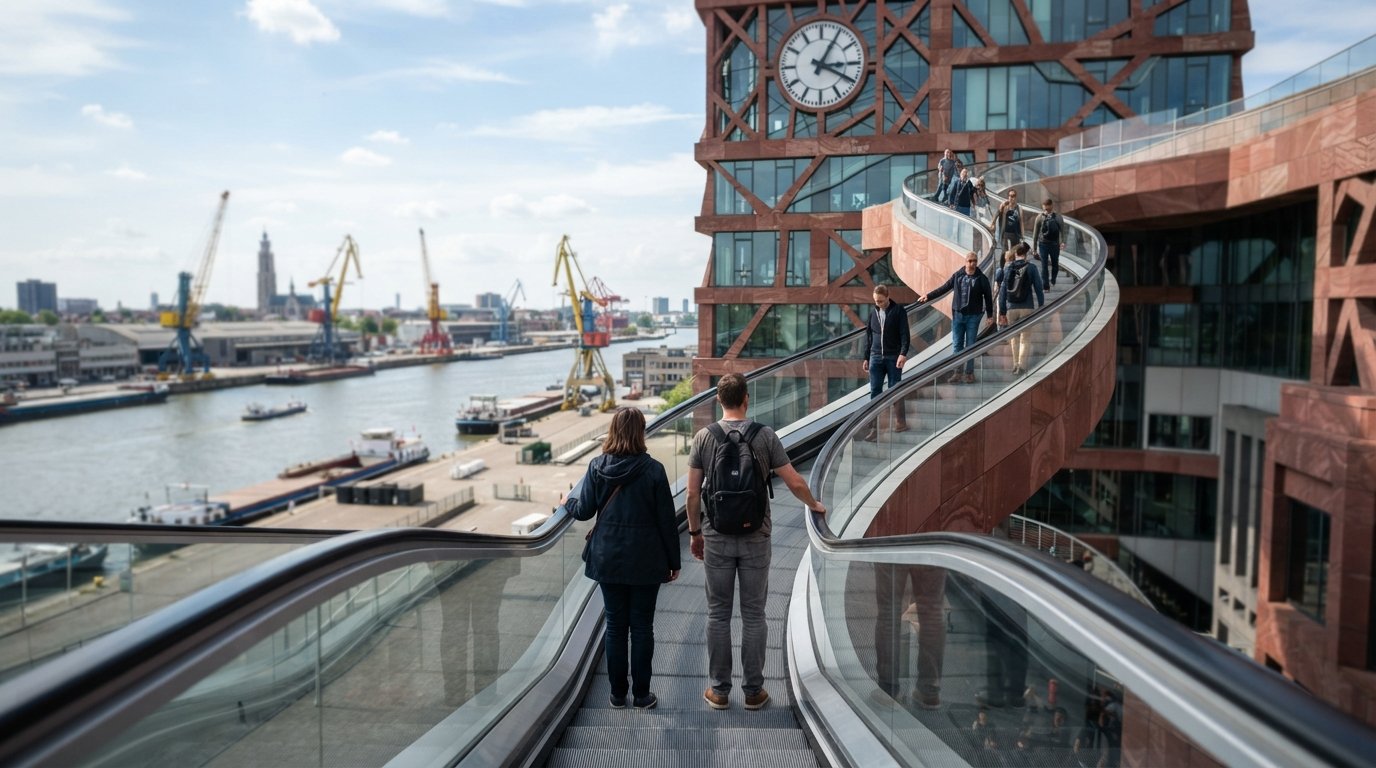
Start high. Ride the MAS escalators to the free rooftop and let the district make sense from above. The panorama is the best map you will get: the river, the port, the old town, the docks, the cranes, the way Antwerp keeps negotiating between commerce and beauty without ever quite choosing one over the other. If you have the time, work through the museum floors too; the port-and-city history is the right sort of grounding for a neighbourhood that still carries its industrial past in plain view.
From there, the district is made for a slow waterside walk. Loop the Willemdok marina, where yachts sit in the oldest surviving basin, and then cross toward the Bonapartedok. The water is not decorative here; it is the organising principle. Follow the quays out to the Zaha Hadidplein and watch the Port House change with the light. It looks almost hard-edged on an overcast morning and strangely buoyant in low evening sun, as if the building has been polished by weather.
Continue north along the Rijnkaai to the Red Star Line Museum. The story inside — of departures, inspections, hope, desperation, and the Atlantic crossing — gives the neighbourhood a human scale that balances all the architecture. It is one of the most quietly affecting museums in the city, and too many visitors treat it as a footnote to the waterfront. It is not a footnote. It is the reason the waterfront matters.
The flat, cobbled quays are also ideal for cycling. Eilandje is part of Antwerp’s easy dockland loop, and you can trace the water most of the way from the old town up to the Kattendijkdok. That sense of continuity is one of the pleasures here: you do not so much move between sights as drift along a sequence of basins, each with its own mood and industrial memory.
If you want a rougher creative edge, the PAKT complex is a short ride inland and worth folding into an Eilandje day, even though it sits just outside the docks proper. It is a warehouse-and-rooftop-garden hub of coffee roasters, taprooms and lunch bars near the Groen Kwartier, and it shares with Eilandje that same habit of reusing old structures without sanding off their history.
Don’t miss in Eilandje
Museum aan de Stroom (MAS)
Red Star Line Museum
The Felix Pakhuis, a converted historic warehouse
Shopping & markets
Set expectations honestly: Eilandje is not a shopping district. It does not do retail density, and it does not care to. The warehouses here hold museums, food halls and studios rather than boutiques, and the serious shopping lives fifteen minutes south in the old town — the Meir high street, the fashion labels around Nationalestraat, the design shops of the ModeMuseum quarter. That is fine. A neighbourhood can be interesting without trying to sell you a coat.
What Eilandje does well is browsing of a different kind. The museum shops at the MAS and the Red Star Line Museum are worth a look for design objects, books and maritime prints. In summer, the quays and warehouse courtyards occasionally pick up pop-ups and maker’s markets, which suit the district’s adaptive reuse better than a permanent row of boutiques ever would. If you want a proper Antwerp market day, do it elsewhere: the Sunday Vogelenmarkt at Theaterplein, or the antique stalls at Sint-Jansvliet, both a short tram ride into the centre.
Come here for the water, the buildings and the food. Do your shopping elsewhere. Antwerp is generous enough to allow that division of labour.
Where to stay in Eilandje
The signature address is Hotel Pilar, a small design-boutique hotel right on the water opposite the Felix warehouses and next to the MAS, run by the team behind Hotel Julien. It is quiet, stylish and about as central as Eilandje gets. The appeal is not just the room count or the design credentials; it is the way the hotel lets you wake up to the docks rather than to traffic.
Hotels in Eilandje
Our best-rated stays in this neighbourhood. Prices are approximate “from” rates — confirmed at the provider when you continue. We may earn a commission if you book through our partners — at no extra cost to you.
In this area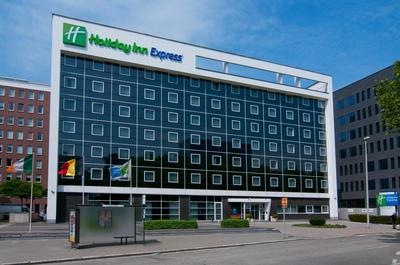 In this area
Eilandje
Holiday Inn Express Antwerpen City North by IHG
8.2· 5,512 reviews
approx. from£134 / nightSee prices
 In this area
 In this area
Eilandje
Holiday Inn Express Antwerp - City Centre by IHG
8.8· 5,201 reviews
approx. from£196 / nightSee prices
Beyond Hotel Pilar, the district is thin on hotels compared with the old town, and that is part of its appeal. You trade the density and footfall of the medieval core for open quays, water views and calm. The best pockets are around Hanzestedenplaats and the Willemdok, within walking distance of the MAS, Roest and Café Storm, and along the quays toward the Godefriduskaai near WOLF. Price feel is mid-range to upper-mid — you are paying for design and a view rather than a five-star lobby — and midweek and off-season rates soften noticeably.
Choose Eilandje if you want a base that feels residential and photogenic and do not mind a fifteen-minute walk or a short tram to the cathedral. Choose the old town instead if you want to step straight into crowds. The neighbourhood rewards those who like a little space around them.
Getting around
Eilandje is flat, compact and made for walking. It is roughly a fifteen-minute stroll from the MAS south to the Grote Markt and cathedral, mostly along the river, and the whole dockland is easy on a bike. That is the real luxury here: not speed, but ease.
By public transport, tram 7 runs to its MAS terminus in the heart of the district, and tram 24 connects Antwerp Central station to the Havenhuis / Port House stop. From Antwerp Centraal you are about ten to fifteen minutes away by tram, or a 25-minute walk. Do check the current routing on the De Lijn app before relying on tram 7, as works around Sint-Katelijnevest diverted the line for stretches through 2025.
If you are arriving from farther afield, Brussels Airport is the main hub — roughly 45 minutes by train to Antwerp Centraal and then a short tram — while Antwerp’s own small airport is about 25 minutes by taxi. Parking exists, but the docks are best explored on foot once you arrive. This is a neighbourhood that makes more sense at walking pace, with the water doing the navigation.
Eilandje is calm and safe by day and evening, with the usual big-city caution late at night on the emptier northern quays around the clubs. Stick to lit routes or take a taxi back if you are heading home after Traum or IKON. Otherwise, the district is exactly what it looks like: a place where Antwerp kept its harbour bones and learned to dress them properly.
Gallery
Eilandje in pictures
Eilandje — your questions
Is Eilandje a good area to stay in Antwerp?
Yes, if you want design over density. It is calm, photogenic and walkable to the old town in about fifteen minutes, with the MAS, waterfront restaurants and the Port House close by. Hotel Pilar is the standout boutique base. Pick the medieval core instead if you want to step straight into cafés and crowds, because Eilandje goes quiet midweek and off-season.
What is there to do in Eilandje?
Ride the MAS escalators to the free rooftop panorama, walk the Willemdok and Bonapartedok quays, see Zaha Hadid’s Port House, and visit the Red Star Line Museum about the emigrants who sailed to America from these docks. Then eat: Zilte atop the MAS, the WOLF food hall in the Felix warehouse, open-fire seafood at Fiskeskur, or a dock-side drink at Roest or Bar Paniek.
Is Eilandje safe at night?
Generally yes. The waterfront and museum area are calm and well used into the evening. The usual big-city caution applies late at night on the emptier northern quays around Traum and IKON — stick to lit routes or grab a taxi back, and you will be fine.
Is Eilandje good for shopping?
Not really. It is better for museums, food halls, waterfront walks and architecture than for retail. For proper shopping, head south to the Meir, Nationalestraat or the ModeMuseum quarter.