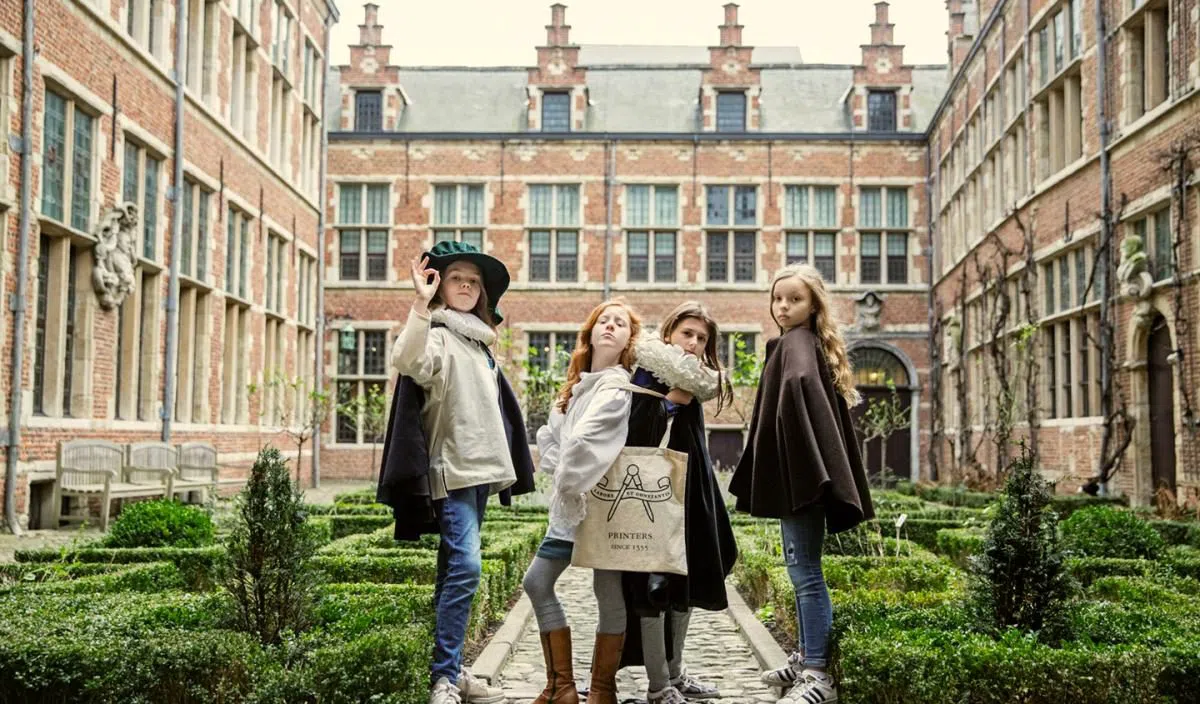

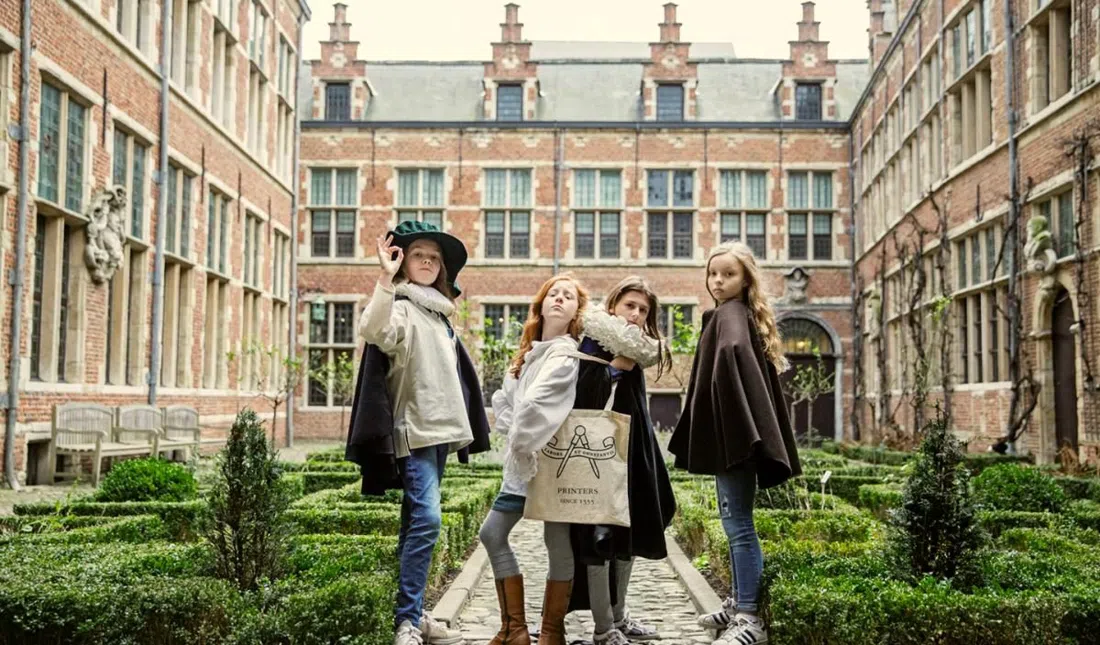
The gate on Vrijdagmarkt gives nothing away. A courtyard, a vine, small shuttered windows, a brass plate. Behind them sit the presses, punches and proof sheets of a business that pushed books out across a continent for three hundred years, kept in the rooms where the family who owned it also slept and ate. It is the quietest world-famous museum in Antwerp, and for the closing months of 2026 it is also shut.
The square Plantin chose
Start on Vrijdagmarkt (old centre, about five minutes southwest of the Cathedral), even if the door behind you is locked. The square is free, permanently open, and it is the argument for everything inside. On Wednesday and Friday mornings it still does the job it was named for: a second-hand auction, furniture and boxes of household oddments set out on the cobbles, bidders in no hurry at all.

Stand there for ten minutes and the location explains itself. Christophe Plantin set up his printing house on a working trade square in a port city then at the peak of its commercial reach, close enough to the river for paper to arrive and finished books to leave, far enough from the main civic square to afford space. A sixteenth-century printing house was a factory, a warehouse, a bank and a home at once. It needed a square in front of it, and this is the one.
It is also the obvious meeting point if you are walking with a guide. There is room to stand, nothing to pay, and the whole story can be told before anyone buys a ticket.
What you see behind the door
Museum Plantin-Moretus (Vrijdagmarkt 22, old centre) is a UNESCO-listed house museum wrapped around a surviving printing works, which is a rarer thing than it sounds. The route has long run from the courtyard into the domestic half of the house (tiled floors, gilt leather wall coverings, rooms of family portraits) and then into the business: the shop where books were sold over a counter, the proofreaders' room, the type store, the library, and finally the press room, where the presses the museum describes as the oldest surviving anywhere stand in a row under the windows. The best things in it are the smallest. Punches and matrices are the physical master copies of letterforms, cut by hand in steel, and they are the reason a page printed here in one decade looks like a page printed here in the next.
The dates change your planning. The museum closed for renovation on 3 August 2026 and stays closed until 4 December. It reopens over a festive weekend on 5 and 6 December 2026 with a completely new permanent route, new scenography and a visitor app, timed to a double jubilee: 150 years as a museum and 450 years of the printing house. So treat the description above, and every description you read elsewhere, as the pre-closure house. From December the order of the rooms, the labelling and the way the collection is presented are all new, and nobody who visited before has seen it.
When it is open, hours are Tuesday to Sunday, 10:00 to 17:00, closed Mondays, and closed on 1 January, 1 May, 1 November and 25 December, with an early 15:00 close on 24 and 31 December. Admission is €12 for adults 26 and over, €8 for ages 18 to 25, €8 for wheelchair users, and free for under-18s; a Museum Pass or ICOM card gets you in for nothing. The desk is cashless, card or phone only. The ticket is valid all day, which matters more than it sounds: do the house in the morning, take a long lunch two streets away, come back for the library with fresh eyes.
The reading room that stayed open
One part of the institution keeps working while the presses rest. The Plantin-Moretus Reading Room and Print Room (Heilige Geeststraat 6, old centre, a two-minute walk from the museum gate) stays open as usual through the renovation, Monday to Friday, 09:30 to 12:30 and 13:30 to 16:30. It is free. It holds early printed books, manuscripts, archives, prints, drawings, copper plates and woodblocks, and it will put them in front of you.
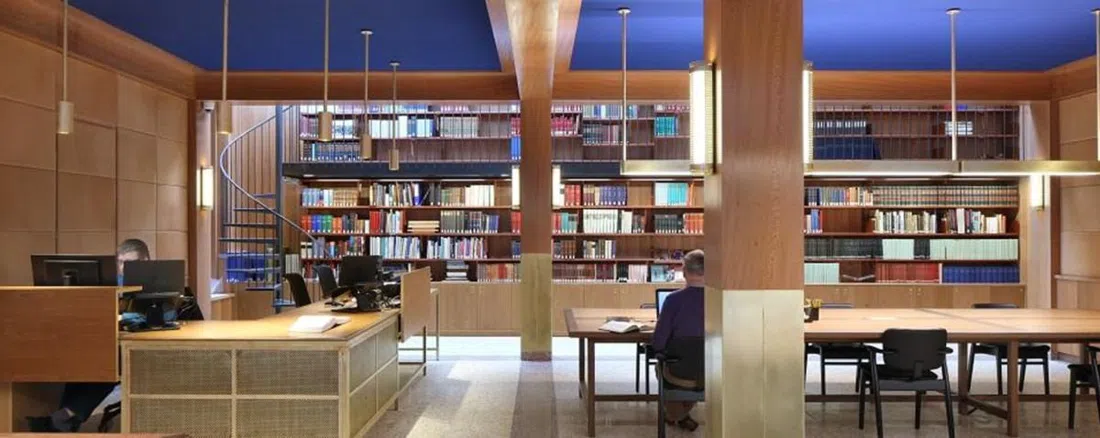
It is a working research room for individuals rather than a group attraction or a stand-in for the museum visit, so there is no route, no interpretation and no press being demonstrated. You must reserve a seat at least 48 hours ahead, and a first visit means registering and getting a library card. The museum also warns that the building may be cold during the works, so dress for it. If you want to read a sixteenth-century book, come here. If you want to look at one, wait for December.
How long the visit takes
Allow ninety minutes to two hours for the house and the works at a normal pace. Anyone with a real interest in type, bookbinding or the economics of early publishing will overshoot that badly and should plan on three, which is what the all-day ticket is for. Split it around lunch rather than pushing through. On a guided walk the printing house is usually one leg of a roughly two-hour route through the old centre rather than the entire outing, so if the interior is the thing you came for, say so when you book.
Tickets at the door and what a guide adds
This has never been a museum with a queue down the street. Under normal conditions you walk up, tap a card, and go in. The pinch points are wet Sunday afternoons, school holidays, and, predictably, the weeks straight after a reopening, which here means a small historic building with a brand-new route in December. For those dates, book a slot ahead and arrive at opening rather than after lunch.
Groups are welcomed and guided tours are bookable for them; school groups go free with a teacher. For everyone else, a guided walking option exists and covers the printing house alongside the streets around it. Those walks run seven days a week, and prices start from around 102 USD per person, quoted in dollars, which is worth noting when everything else you pay for in the city is in euros. Across the bookable tours here there are 516 traveller reviews, and the top-rated one holds 4.9 out of 5 from 324 reviews. The money does not buy entry. It buys someone who can explain why a punch-cutter mattered, and who can open doors nearby that do not take walk-ins at all.
Rubens five minutes east
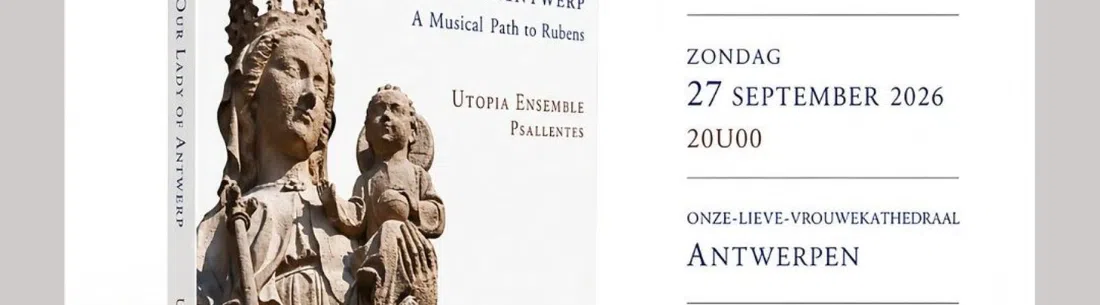
Walk east and you are at the Cathedral of Our Lady (Onze-Lieve-Vrouwekathedraal, Groenplaats, old centre) in five minutes. Four major Rubens works hang in the room they were painted for. Scale, light and sightline were all calculated for this space, and that is the reason to go. Entry is €12, groups are taken and guided tours are available, but visits are restricted during services and the published hours (roughly Monday to Friday 10:00 to 17:00, Saturday 10:00 to 15:00, Sunday 13:00 to 17:00) shift around the liturgy. Confirm on the day.
Two minutes further, Sint-Carolus Borromeuskerk (Hendrik Conscienceplein) sits on the prettiest enclosed square in the old city, and Rubens had a hand in both the facade and the ceiling scheme. Entry is a donation. Hours are nominally Monday to Saturday, 10:00 to 12:30 and 14:00 to 17:00, Sundays worship only, but they are genuinely variable and there are no visits during celebrations. Email ahead, and book group tours through Antwerp City Guides with real notice.

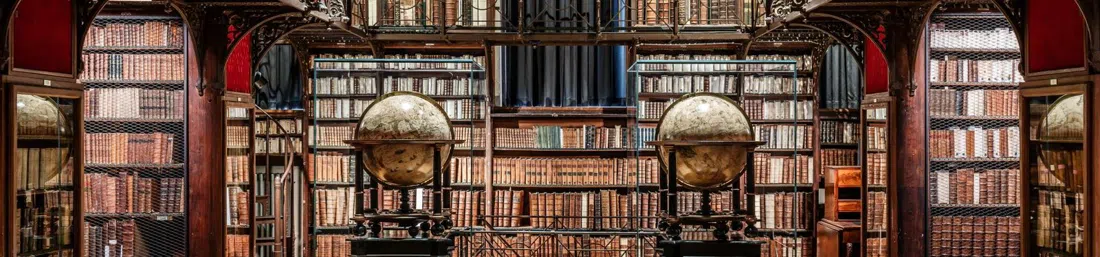
On the same square, the Erfgoedbibliotheek Hendrik Conscience (Hendrik Conscienceplein) keeps the Nottebohm Room, the thematic companion to a printing museum and the one stop where a booked group has a hard advantage over a couple. Individuals can only walk in during the summer window, 19 June to 30 August, Tuesday to Sunday 12:00 to 17:00 with last entry at 16:30. For the rest of the year the Treasures of the Nottebohm Room tour opens the room exclusively for a group or association, and that is the only way through the door. It is free with a Museum Pass; guided tours are priced per group.
The civic half of the walk
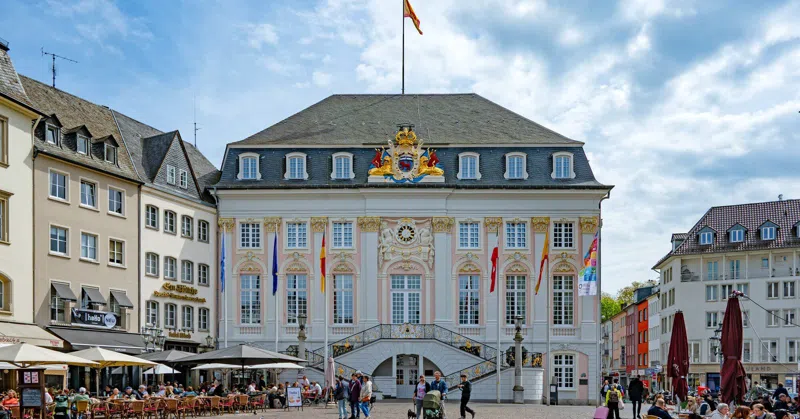
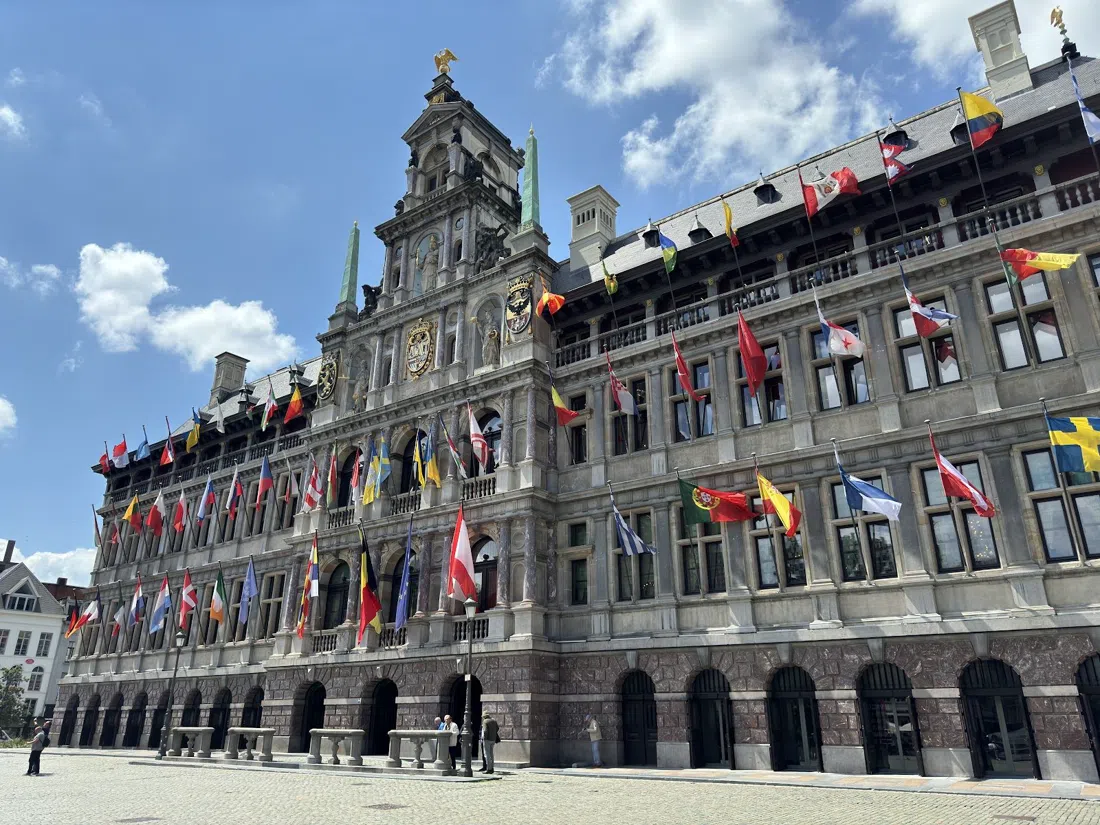
Grote Markt and Antwerp City Hall (Stadhuis, old centre) has been UNESCO-listed since 1936, and the interior is reachable only on a tour: a 60-minute version covering the Schoon Verdiep, or a 105-minute route through the facade and the ground-floor rooms. Guides run these almost daily, including evenings; individuals have to wait for a scheduled public tour, which comes round only a few times a month. Standing on the square costs nothing.
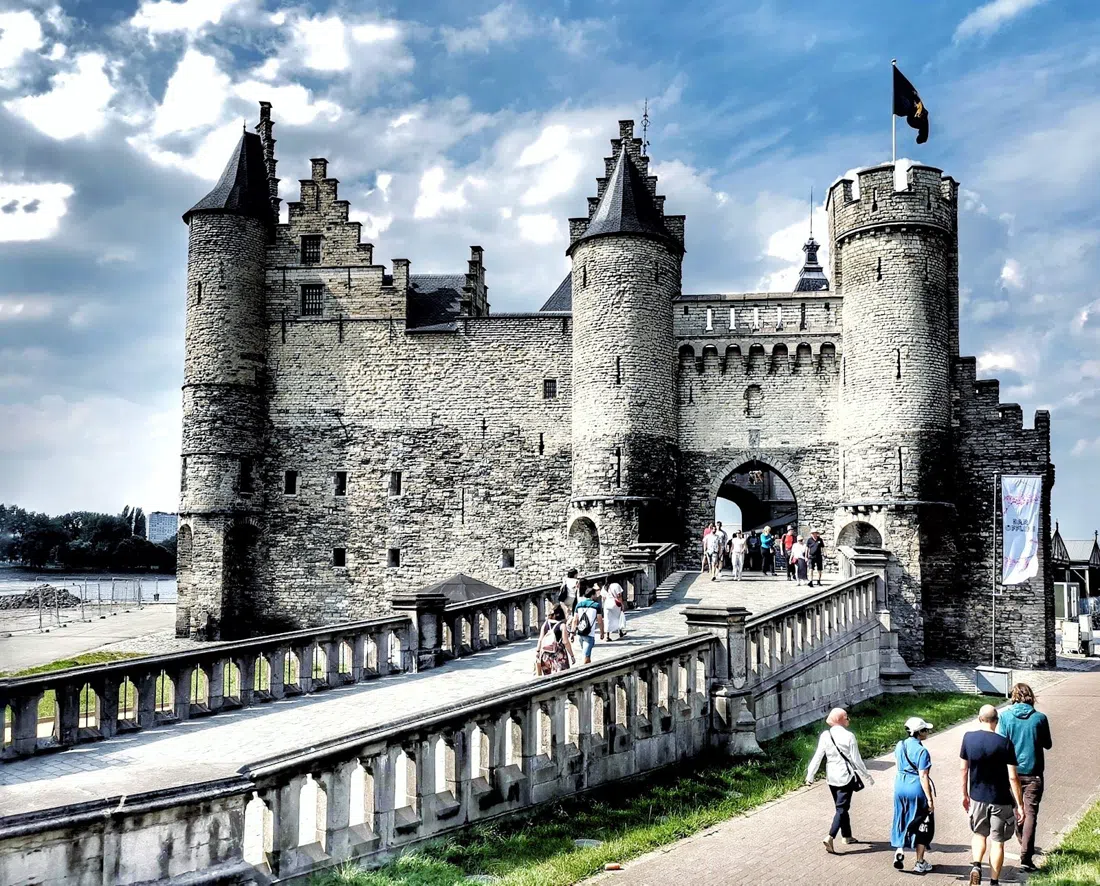
Ten minutes from Vrijdagmarkt, Het Steen (riverside, on the Scheldt quays) is the city's tourist information point, the cruise terminal, and the best free river viewpoint in the centre. The visitor centre is free; The Antwerp Story experience inside is charged separately. Watch the days. It opens Wednesday to Sunday, 12:00 to 18:00, and is closed Monday and Tuesday, which catches people out.
North of the market, Sint-Pauluskerk (Veemarkt) holds Rubens, Van Dyck and Jordaens plus an eccentric open-air Calvary garden that is worth the detour on its own. Entry is €5, €3 for students and groups of 15 or more, free for under-18s and wheelchair users, and free with an Antwerp City Pass. The hours are seasonal and tight: daily 14:00 to 17:00 from 2 May to 31 October 2026, then from 1 November only Friday to Sunday and Flemish school holidays, same afternoon slot. Part of the church is currently screened off for restoration.
What stands in while the presses rest
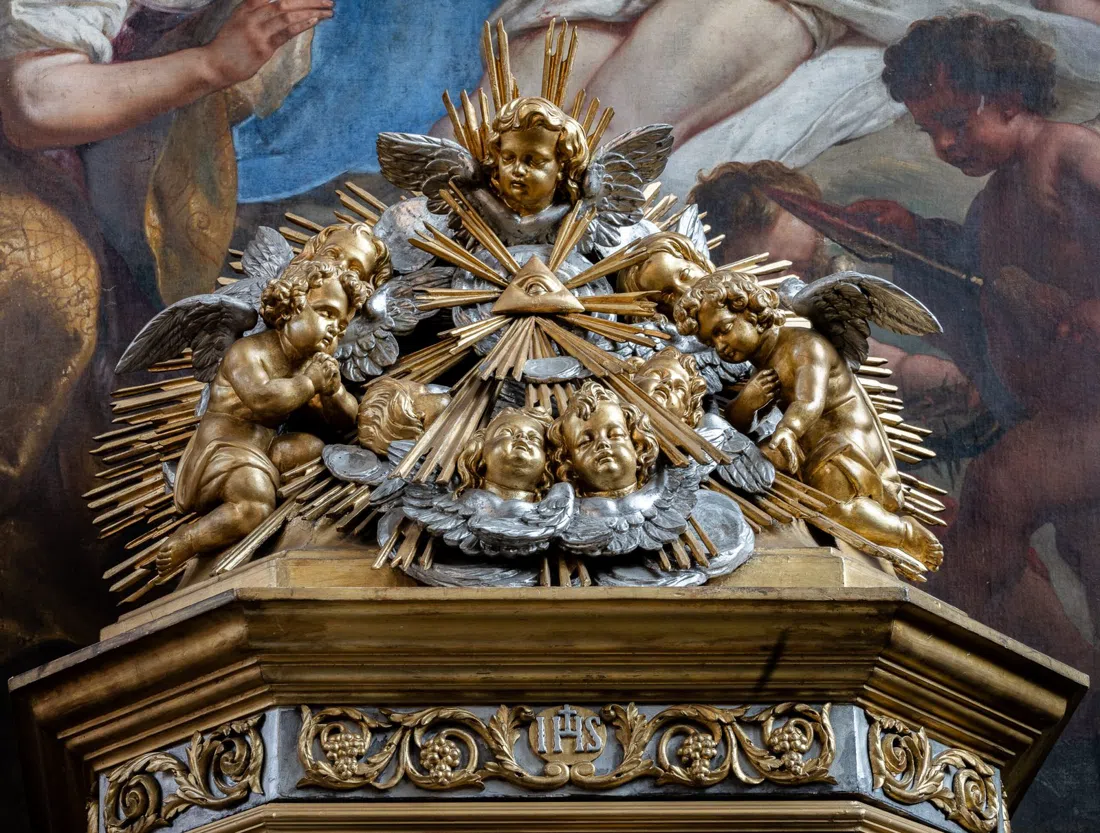
The closest like-for-like substitute is Snijders&Rockoxhuis (Keizerstraat 10-12, Sint-Jacob), a preserved merchant's house hung as a period collector's cabinet. It offers the same pleasure as Plantin-Moretus: a wealthy working household, kept. It is €10, free with an Antwerp City Pass and free on the first Tuesday of the month, open Tuesday to Sunday 10:00 to 17:00, with timed tickets bookable online and walk-in subject to availability.
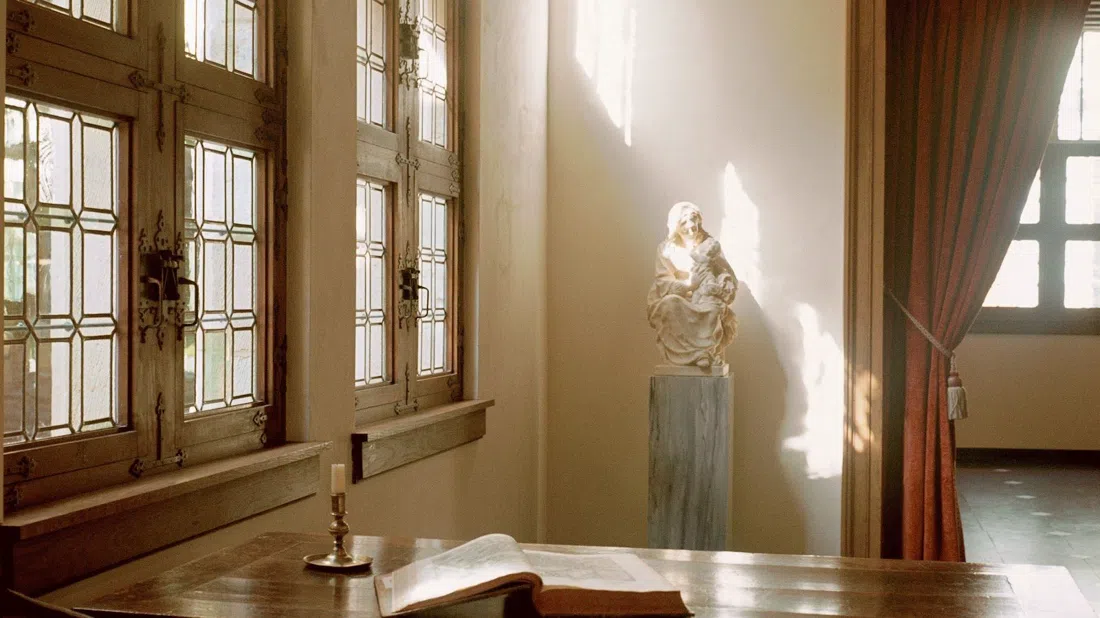
Guides and older guidebooks still get two status changes wrong, so check them before you set off. Museum Mayer van den Bergh is showing at the Maagdenhuis (Lange Gasthuisstraat 33). Its own building is closed until 2030 for restoration and expansion, and the collection has moved 100 metres into the exhibition Beloved. An intimate look at masterpieces. It is €14, the ticket is valid for two days, and tickets are sold online for a fixed time block; Tuesday to Sunday, 10:00 to 17:00. And at Rubenshuis (Hopland 13, off the Meir) only the Rubens Experience building, the library and the restored baroque garden are open. The artist's residence itself is closed for alterations and will not reopen before 2030, so nobody should promise you the house interior. Prices vary by element, so check the official site.
Bread, beer and a spare half-day
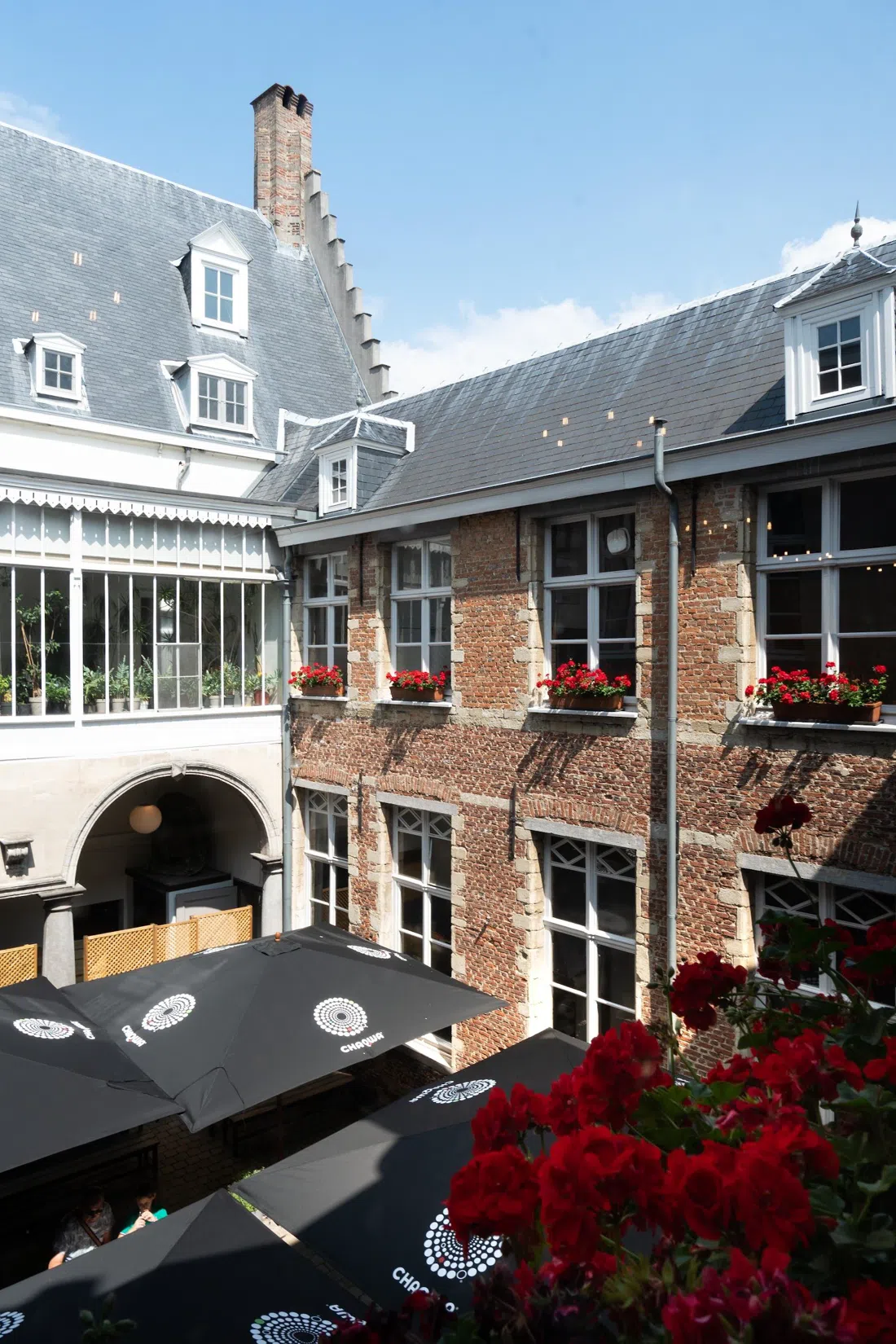
De Groote Witte Arend (Reyndersstraat 18, old centre) is the lunch stop two minutes from the museum gate, with a courtyard and interior rooms, Belgian plates and a serious beer list at around €€. It seats groups but book if you are more than a handful. Open from 10:30 daily, late on Friday and Saturday.
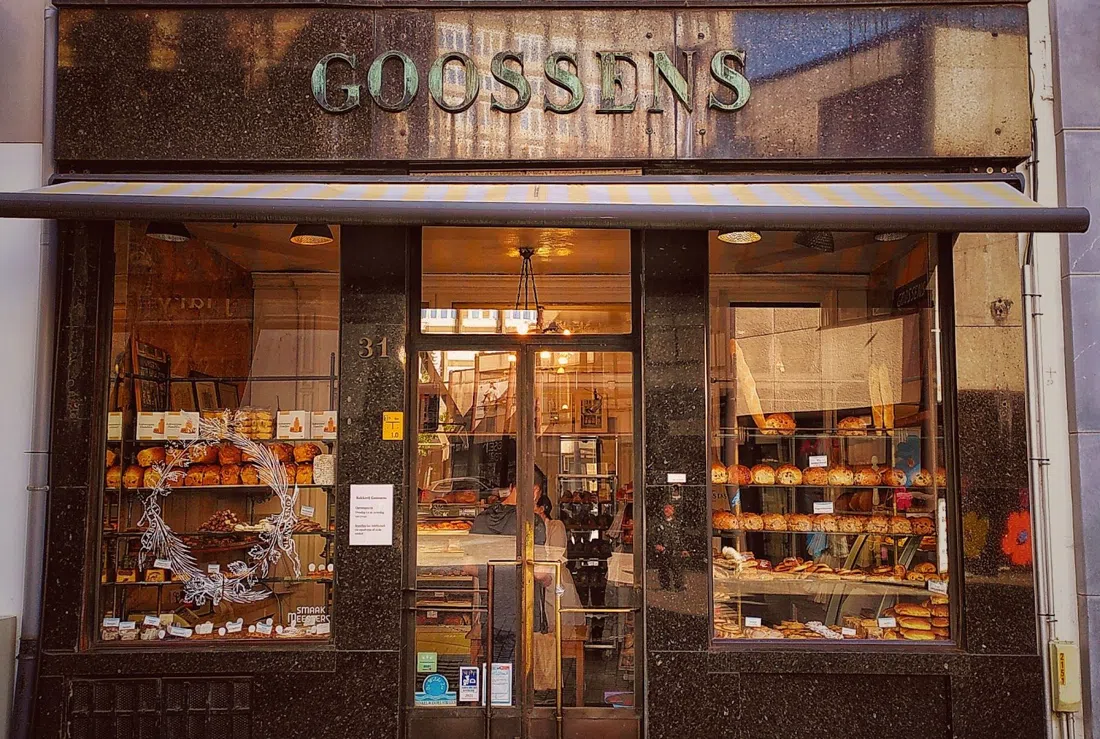
Bakkerij Goossens (Korte Gasthuisstraat 31) has been going since 1884 and is run by the fourth generation, and the raisin rye roll, the roggeverdommeke, is the reason for the queue. It is tiny, there is no seating, there is no group capacity, and it is cash-light. Send two people, not twelve. Tuesday to Saturday, 07:00 to 19:00, closed Sunday and Monday.
If you have a spare half-day, KMSKA (Het Zuid, a short tram ride south of the old centre) is the heavyweight. It is €20 for ages 26 and over, €10 for 19 to 26, free under 19, and you still need to reserve a free timed slot online or at the ticket machine. Open 10:00 to 17:00, to 18:00 at weekends and to 22:00 on Thursdays outside July and August. The museum itself reckons about two hours at a leisurely pace, and it is right.

Is it worth it
Yes, and for a specific reason: almost nothing else in Europe lets you stand inside an intact early industrial workshop that also happens to be a family home, with the machines, the tools and the output all still in the same rooms. If you read, write, design, set type or simply like understanding how things were made, this is a two-hour visit you will think about for years.
Couples and solo visitors do best on a door ticket, because it is a small, dense, quiet building that rewards slowness. Groups need a guide: the rooms are tight, and a group without a narrator becomes a traffic problem. It is a poor choice for young children with no interest in books, and the wrong stop for anyone who wants spectacle; the Cathedral does spectacle five minutes away. And if you arrive between now and early December 2026 it is simply not an option, so plan around the reading room and Snijders&Rockoxhuis instead.
Best time to go
Go at opening, 10:00, on a weekday. Tuesday to Thursday mornings are the calmest hours the building has, the light in the courtyard is best early, and you will get the press room without a second group breathing behind you. Mondays are out entirely. Sunday afternoons and rainy days are the busiest, in that order.
For 2026 specifically, the calendar decides for you: closed 3 August to 4 December, reopening on the festive weekend of 5 and 6 December with the new route. That opening weekend will be the liveliest the museum has been in years, so go if you want the atmosphere and the jubilee, and avoid it if you want the quiet. Mid-January onward should be both new and calm. Across the year, late autumn and winter suit this visit anyway: it is an indoor building on a small square, and the surrounding churches keep shorter hours in the cold months, so an interior-heavy day makes sense.
Practical notes
Everything in this walk except KMSKA sits inside the old centre and is comfortably walkable. Vrijdagmarkt to Het Steen is about ten minutes, the Cathedral about five. The centre is cobbled and uneven in places; wheelchair users get a reduced rate at both the printing museum and Sint-Pauluskerk. Trams and the pre-metro cover the run south to Het Zuid for KMSKA. If you are arriving by train, the old centre is a straightforward walk or one short tram ride from the main station.
Carry a card, not cash. The printing museum's desk is cashless, and most ticketed sites here take cards as standard; the bakery is the exception and is cash-light and tiny. Budget roughly: €12 for the printing museum, €12 for the Cathedral, €10 for Snijders&Rockoxhuis, €14 for the Mayer van den Bergh exhibition, €5 for Sint-Pauluskerk, €20 for KMSKA, a donation at Sint-Carolus Borromeuskerk, and nothing at all for Vrijdagmarkt, the Grote Markt or the Het Steen visitor centre. A Museum Pass or Antwerp City Pass pays for itself fast if you are doing three or more. Lunch at De Groote Witte Arend runs to mid-range Belgian prices; a guided private walk starts from around 102 USD per person and runs every day of the week.
Book the reading room seat at least 48 hours ahead, email Sint-Carolus Borromeuskerk before you count on it, check the Cathedral's hours on the morning you go, and remember Het Steen is shut Mondays and Tuesdays. For where to stay within walking distance of all of it, start with the Antwerp hotel search; for the wider city, the Antwerp guide covers the districts beyond the old centre.