
The port refuses to be seen from the city. Stand at the north end of the Scheldt quays and you get a haze of gantries too far off to read, a flare stack, and every so often a ship's bridge sliding along above the dike line as though a field had a shipping lane running through it. Everything worth looking at out there sits behind twenty-five kilometres of road nobody is going to walk, which is why a guided port tour exists here at all.
What the drive actually is
Antwerp Port Tours (city pick-up, then everything north of it) runs the guided car and minibus trip, and the guides matter more than the route does: there are nine of them, and all have worked in the port or alongside it. That is the difference between a commentary and a conversation. You get told why a lock gate is built the way it is, what the pipe bridges overhead are carrying, why one terminal is full and the next one empty this week.
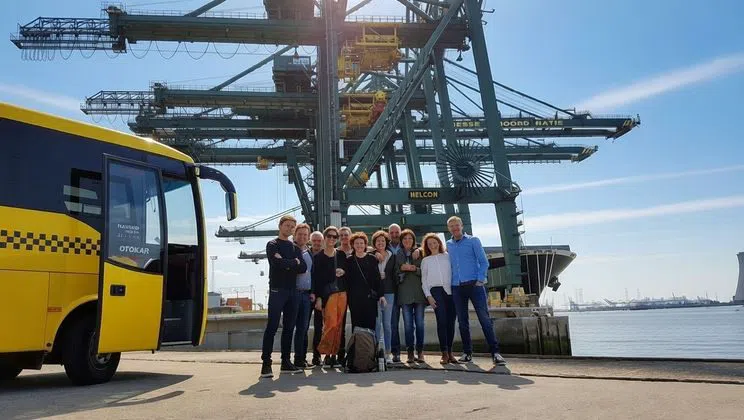
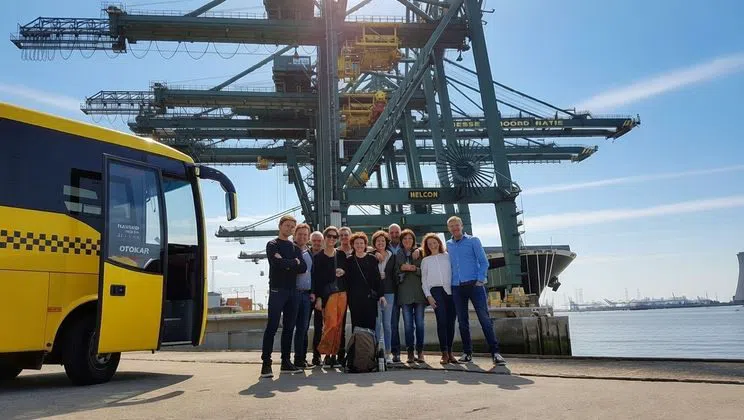
The pricing is unusual and worth understanding before you compare anything. The guide costs from about €16.50 per person for two and a half hours; the vehicle is yours. They will put a guide in your own car, a minibus you have hired, or a full coach, for anything from one person up to 150. The model is built for groups, with VIP arrangements and team-building days on request. There is also a Vespa version at €390 for up to four riders, which is a different kind of day out entirely and depends heavily on the weather. Departures run seven days a week. If you would rather have the whole thing packaged and confirmed before you fly, a bookable private departure exists; the platform carrying it flags it as likely to sell out, and it starts from 304 USD per person, so for a couple or a trio it is worth pricing both routes rather than assuming the packaged one is the cheaper.
Two and a half hours is a spine, and no more than that: the road north, the terminals, a lock, a look at the village inside the port. If you want to get out and stand in Lillo, cross to the left bank, and walk Doel, you are building a half day and you should say so when you book.
Start on the MAS roof
Do not begin in the car. MAS | Museum aan de Stroom (Eilandje, on Hanzestedenplaats) has a free escalator boulevard that climbs the outside of the building to a rooftop panorama, and the panorama gives you the whole dock landscape in one sweep: the river bending away, the crane line, the chimneys that will be your landmarks for the next three hours. It costs nothing, and from April to October it stays open into the evening, which is when the port starts lighting up.

The museum proper is €12, €8 for 18-25s and for groups of twelve or more, free under 18. One rule matters if your port guide is already with you: guided tours inside must be booked with the museum's own guides, and a guide you bring may only speak in the Boulevard space. Plan the handover rather than discovering it at the desk.
The cranes on Rijnkaai
Five minutes' walk along the water, the MAS harbour crane collection (Rijnkaai, on the open quay) is the largest museum collection of harbour cranes anywhere and it sits outdoors, unfenced, free, no booking, any size group. The machines stand in a row against the water and you can read a century of the port's working life off them: how lifting went from steam to water pressure to electricity, how the jibs got longer as the ships got bigger. Guided tours exist if you want the detail, but an unhurried twenty minutes with your own eyes does most of the job, and it makes everything you see later out on the terminals legible.
The building that runs the place
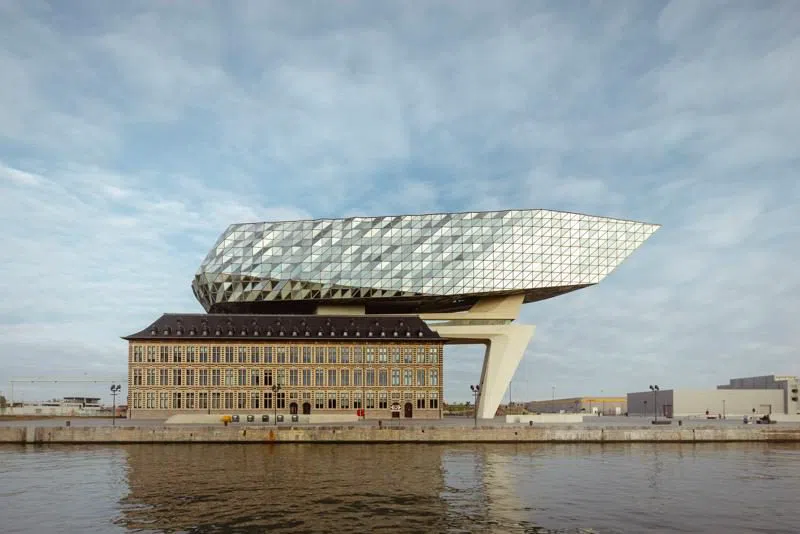
Port House Antwerp (Havenhuis) (Kattendijkdok, at the edge of Eilandje) is the port's public face, a former fire station with a faceted glass superstructure set on top of it. The guided tour is the only way inside, because this is a working head office and nothing here is walk-in. Tours run in Dutch, English, French and German for individuals and for booked groups, cost around €10 a head, and must be reserved ahead. Minimum age is six and there are several flights of stairs. Looking at the outside costs nothing and is worth the detour even if you never book; the building reads completely differently from the water side.
North along the Scheldelaan
The drive north on the Scheldelaan is where a guide earns the fee, because the scale stops being describable and starts being disorienting. At the far end, about 25 km out at the Dutch end of the port, sit the Berendrechtsluis & Zandvlietsluis (north bank, roadside), once the largest lock in the world and still the second largest, the record having gone to the Kieldrechtsluis on the far bank in 2016. Watching a ship lock through is the best free spectacle in the port: the hull rises or falls against the wall, the gates swing, and you understand what the whole apparatus is for.
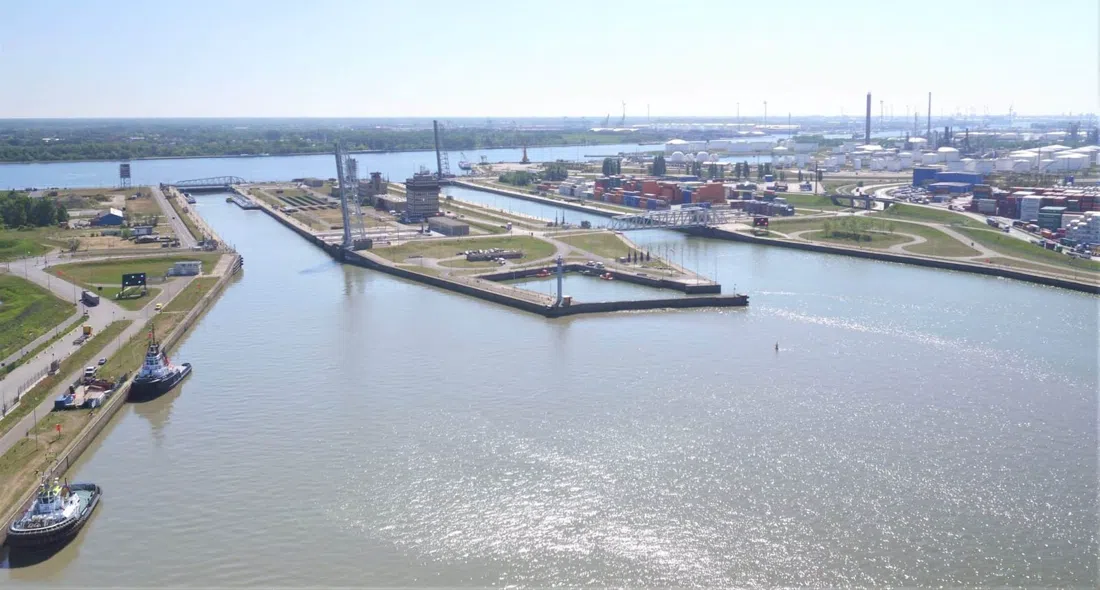
The caveats are real. Access is roadside and public, with no facilities and limited coach parking, which is fine from a car or minibus and awkward with a full coach. And it runs to shipping's timetable, not yours. Ask your guide to check movements before committing thirty minutes of the drive to it.
Forty residents inside the port
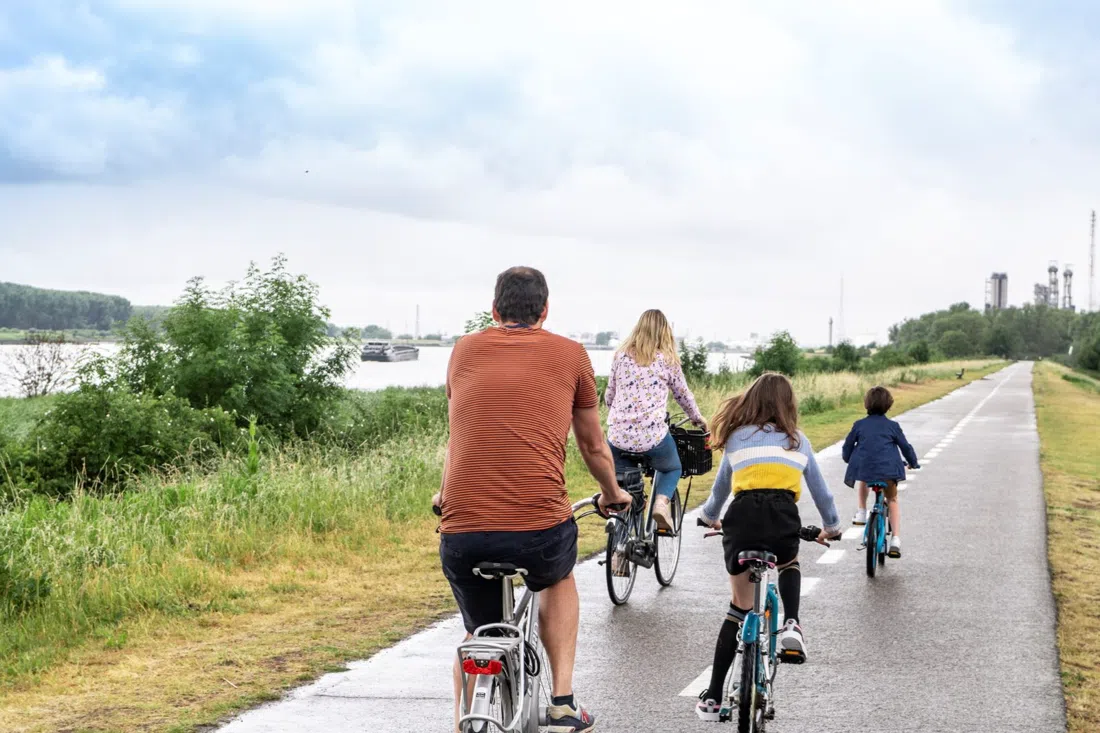
Fort Lillo (a polder village enclosed by the port, north bank) is the contradiction the whole tour is built around: forty residents, a church, two café terraces on a square barely bigger than the terraces themselves, and industry on every horizon. Stand on the ramparts and ships slide past above the dike line. There is no gate and no charge; drinks run €3-5. The terraces will take a group, but warn them first, because the square genuinely cannot absorb a coach arriving unannounced.
Poldermuseum Lillo (on the village square) is a few euro, under €5, and a handful of small rooms; groups should phone rather than turn up. Its opening window is narrow enough that most port tours miss it entirely: Easter Sunday 5 April to 1 November 2026, Sundays and public holidays only, plus Saturdays in July and August, 13:00 to 18:00 with last entry at 17:00. Note too that the old Havencentrum education centre in Lillo has gone, and its replacement, Havenwereld at the Droogdokken, does not open until 14 December 2026, so there is currently no big visitor centre to fall back on.
Across to the fort and the village that stayed
Fort Liefkenshoek (left bank, across the water from Lillo) is free, and the free part is not a token: twelve rooms on war, dike-building, industry and nature, open Wednesday to Sunday 9:30 to 17:00 through the spring-to-autumn season, with free guided tours of the fort from May to September. Group visits are by reservation only through the left-bank municipality that runs it. There is a brasserie with house-brewed beer, and a rampart walk that puts you closer to moving ships than almost anywhere else in the port.

A few minutes on is Doel (left bank, on the dike), down from 1,300 residents to fewer than twenty after decades of expropriation, and now a street-art pilgrimage with a festival of its own. Go with the right frame: 2022 plans let the village survive and let former residents buy back in, so this is a live village, not a ruin. Some of those painted facades have people behind them. There is no gatekeeper and nothing organised for groups, facilities are effectively nil, and the approach roads run through working port traffic, so park on the edge, walk, and go with a driver who knows the way in.
The same port from the water
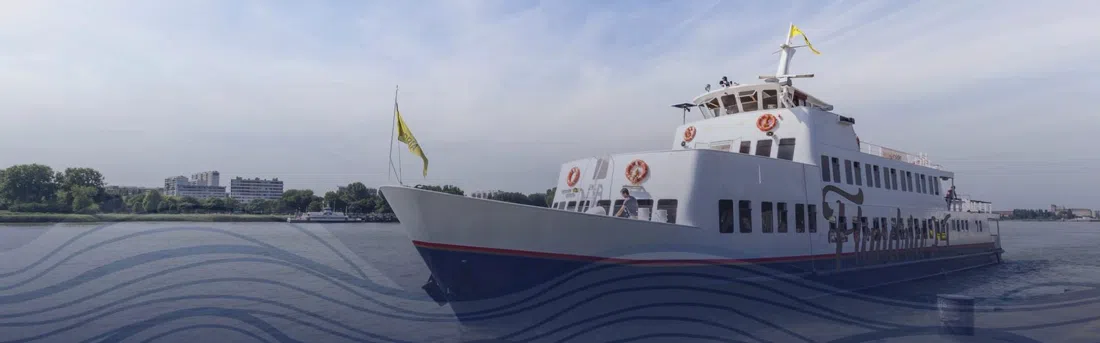
Flandria (boarding at Asiadok-Zuidkaai, walking distance from the MAS) is the water-level counterpart to the road tour, and the two see genuinely different things: from a boat you get hulls, lock chambers and quay walls from below rather than fences and gate houses. The port cruise starts from about €23, the Oosterweel cruise from €28; there is a pancake boat at €32.50 and a brunch cruise from €59.50. Charters, receptions, group bookings and team days are handled directly by their office.
DeWaterbus (Steenplein) is a scheduled public service rather than a charter, so there is no group booking, but it is the cheapest way to reach Lillo and Liefkenshoek by water at €4 single, €6 return, with bicycles free and €1 extra for the Steenplein to Sint-Anna city crossing or the connecting ferries. The season runs roughly May to the end of October and is weekday-only outside high summer. Check the timetable before you build a day around it; a missed return here is a long taxi.

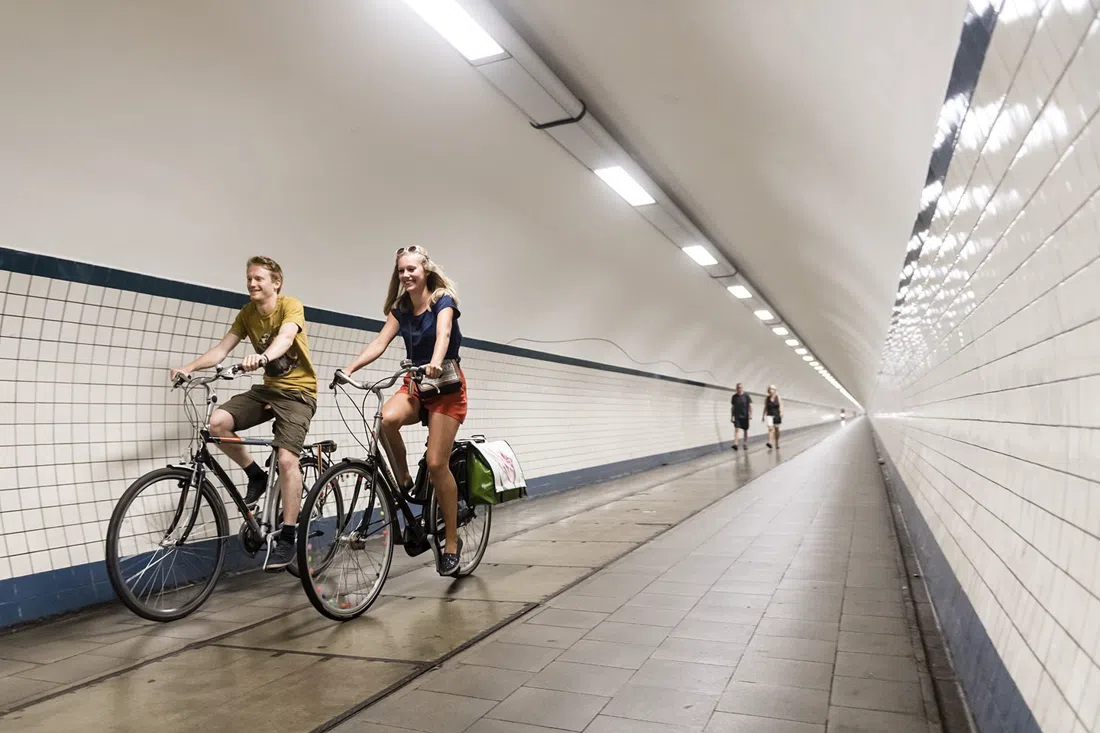
Sint-Annatunnel (Sint-Jansvliet, city centre) is a working piece of 1933 port infrastructure you can walk through for nothing, day or night, and the fastest route to the left bank for the classic wide view back over the Scheldt at the city and the cranes. The original wooden escalators are the bottleneck, so send a group down in batches. They are serviced on Thursdays, but the lifts stay open.
Lunch on a concrete ship, beer where the cranes got their pressure
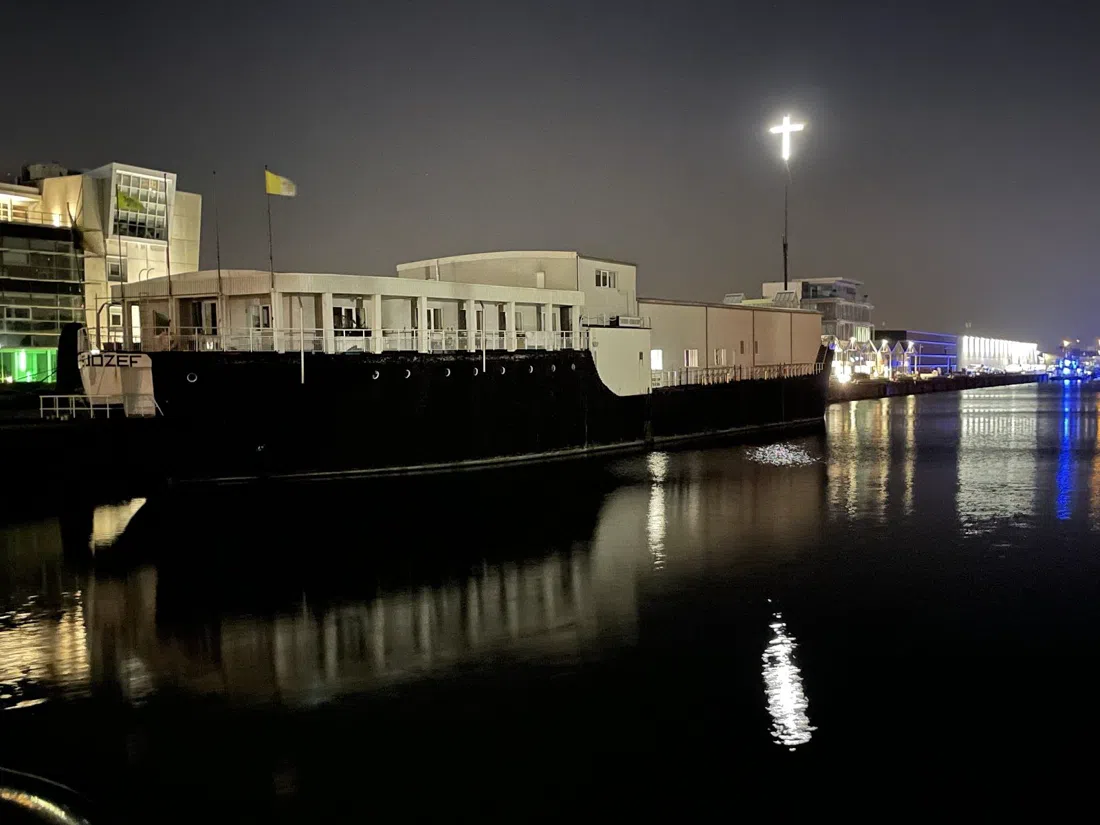
Kerkschip Sint-Jozef (moored in the dock strip north of the MAS) is protected maritime heritage that still functions as a seamen's mission: a concrete ship with chapels below decks and a tavern you can eat lunch in at ordinary tavern prices. Chaplain-led tours are free for groups of 20 to 60, must be requested at least fourteen days ahead, and run about an hour, one of the very few genuinely free guided experiences in the docks. Reserve for the tavern.
Antwerpse Brouw Compagnie (Noorderpershuis site, Eilandje) is freely accessible Wednesday to Sunday, with guided brewery tours for groups of eight or more and a maximum of twenty per guide. Beers are around €5, dishes roughly €15-25. It is the city's second-largest brewery, known for reviving the 16th-century Seef beer, and it occupies the pump house that once drove 161 port cranes, ten locks and twelve bridges by water pressure alone, which makes it the best possible place to finish a day that began looking at those cranes on Rijnkaai. The roofs are being restored until autumn 2027; the brewery stays open throughout.

For dinner at the other end of the scale, Cella Restaurant & Bar (on the dock front) does refined international cooking in the upper price band, Monday to Saturday, closed Sunday, and takes private and exclusive dinners. Use this name and not the old one: the Dieltjens family and the entire Het Pomphuis team moved here after that Droogdokken landmark shut for the Oosterweel works, and the dry-dock original is not expected back for years.

The human half
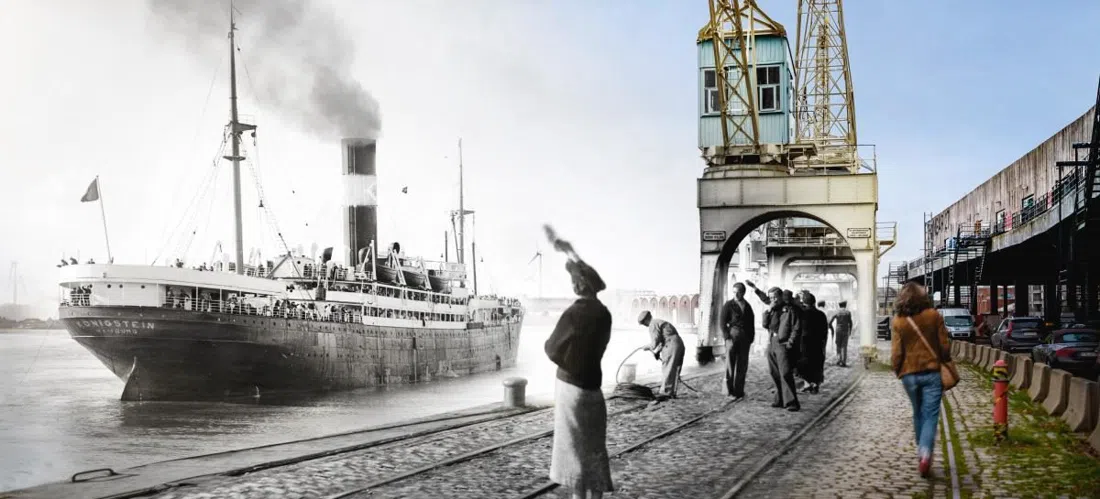
Red Star Line Museum (Eilandje, in the shipping line's former port sheds) is where the machinery finally acquires people. Millions boarded here for America, and the museum is in the actual buildings they passed through, the disinfection rooms and the waiting halls. Entry is in timed 30-minute slots with limited numbers, so this is the one place on the list you should hold a time for. It is €10, or €12 when a temporary exhibition is running; 18-25s pay €6 or €8; under-18s are free; groups of twelve or more get the discount and book guided tours through the museum's own webshop. Cashless only, closed Mondays, and allow ninety minutes.
Best time to go
Mid-morning is the sensible default for the drive: the terminals are working, the light is on the river rather than in your eyes, and you still have an afternoon for the MAS roof or the Red Star Line. Late afternoon into dusk is the better photograph, when the chemical plants light up and the whole northern skyline turns into something closer to a city than a factory, but the small things close: the fort, the museums, the terrace in Lillo.
Weekdays give you a busier port. Weekends give you quieter roads and easier parking at the lock, but fewer trucks and less movement, which for some readers is the point. The tour runs seven days a week either way.
Season decides everything that is not the drive itself. April to October is when the MAS roof stays open into the evening; Fort Liefkenshoek runs Wednesday to Sunday in the spring-to-autumn season, with free guided tours from May to September; DeWaterbus runs roughly May to the end of October, weekday-only outside high summer; and the Poldermuseum is Sundays and public holidays from 5 April to 1 November 2026, plus Saturdays in July and August. In deep winter the road tour is at its best, with a heated vehicle, bare polder and ships in the dark, but plan it as a drive with a beer at the end rather than a day of getting in and out.
Is it worth it
Yes, with one condition: the port only becomes interesting when someone who has worked in it explains what you are looking at. Without a guide it is an hour of pipework and you will leave thinking you have seen a motorway. With one it is the best thing in the city that is not a painting, a working industrial landscape at a scale that nothing in the historic centre prepares you for, plus a village of forty people inside it and another village that survived being erased.
It suits curious generalists, anyone with an engineering or logistics bent, families with older children, and groups above all, because the economics reward filling a vehicle. It suits couples less well on pure cost unless you value a private guide highly. It does not suit anyone who needs frequent facilities, hates sitting in a vehicle, or is hoping for a photogenic old harbour; the pretty water is in the city, and the real port is not pretty, it is enormous.
Practical notes
Everything in the city half (the MAS, the crane quay, the Port House exterior, the Red Star Line, the brewery) is walkable within Eilandje, north of the old centre, or a short tram ride away. Everything in the port half needs a vehicle, which is exactly why the tour is sold with a guide and not a bus seat. Sint-Annatunnel handles the left-bank view on foot; DeWaterbus handles Lillo and Liefkenshoek on water in season.
Carry a card everywhere, because the Red Star Line is cashless only. A frugal day is genuinely close to free: rooftop panorama, crane collection, Port House exterior, lock viewpoint, Fort Lillo, Fort Liefkenshoek, Doel and the tunnel cost nothing between them. A mid day runs roughly €60-80 a head with the guided drive, one museum and lunch. Dinner at the top end will add more than the rest of the day combined.
Book the Port House before you travel and hold a Red Star Line slot; both are refused at the door otherwise, and the museum is shut on Mondays. Kerkschip group tours need fourteen days' notice. For the drive itself, departures run seven days a week, so a weekday morning is usually available at short notice, but the packaged private version is flagged as likely to sell out, so if your dates are fixed, book them rather than arriving hopeful.
Eilandje puts you within walking distance of the museum, the cranes and the brewery, and it is the easiest place for a driver to collect you; the old centre is livelier at night and ten minutes further from the water. Compare both in the Antwerp hotel search, and read the rest of the city in the Antwerp guide before you decide which bank you want to wake up on.