
Wapper street runs quiet and residential just off the Meir, and it takes a moment outside number 9–11 to understand why the address matters. Behind an ochre gate is the house Peter Paul Rubens built for himself starting in 1610 — not a studio bolted onto a townhouse but a self-designed monument to what a painter could become in Antwerp's golden century. Walk the city roughly in the order Rubens himself laid it out — house, cathedral, grave, patrons' homes, and finally the museum holding his deepest collection — and Antwerp's Rubens sites stop reading as a scattered list and start reading as one continuous story.
Wapper: The House That Isn't Quite a House Anymore
Rubens House (Rubenshuis) [Wapper], a few minutes off the Meir, is where any Rubens itinerary in Antwerp has to start, if only because it's the one place built specifically to hold this story. Rubens designed it himself after returning from Italy in 1608, fusing a Flemish townhouse with an Italianate studio wing and a formal garden behind — conceived as advertisement as much as home, meant to tell patrons and princes that the painter inside operated at their level, not below it.

Be honest with yourself before booking: the part most visitors picture — the studio where Rubens and his workshop actually painted, the room where he received Marie de' Medici — is closed for restoration and will stay closed until 2030 at the earliest. What's open now is the baroque garden Rubens laid out with its portico and pavilion, the library wing, and a new multimedia installation the museum calls the "Rubens Experience," which walks visitors through his life and working methods rather than pretend nothing's missing. It's a reasonable substitute for a few years, not the real thing, and the museum doesn't oversell it. Entry to the Rubens Experience plus garden runs €12 for adults and €8 for the 18–25 reduced rate; garden-only entry is €8 (€6 reduced); under-18s go free either way.
This is still a good group stop despite the closure — professional guided tours can be pre-booked directly through the museum, and school groups that book ahead get in free, which keeps the courtyard from becoming the bottleneck it would otherwise be with limited indoor space. Couples and solo travellers should still go, but go in with the right expectation: this is a prologue to Rubens' Antwerp, not the full biography. That comes next.
Groenplaats and the Cathedral: Rubens at Full Scale
Ten minutes on foot from Wapper, past the shopfronts of the Meir, the streets open onto Groenplaats, where the Rubens Statue [Groenplaats] has stood since 1843, cast in bronze, facing the cathedral spire. It's an unglamorous monument as these things go — no gimmick, just Rubens looking at his city — but it works precisely because it's free, unticketed, and large enough to gather a tour group of any size without blocking the square. If you're arranging to meet people before or after a museum visit, this is where you say to meet.
Two minutes further is the Cathedral of Our Lady (Onze-Lieve-Vrouwekathedraal) [Groenplaats], and this, not the house, is where the case for Rubens as the defining artist of the city actually gets made. The cathedral holds four major Rubens altarpieces, including the Elevation of the Cross and the Descent from the Cross, hung at the scale and in the light they were painted for — something no museum wall quite replicates. Standard entry is €12, dropping to €10 for groups of twenty or more, students, and visitors over 60; under-18s and Antwerp Province residents go free, and a free multilingual guided tour is included with every ticket, worth timing your visit around rather than skipping. Large groups should still pre-book a slot; the cathedral fills, and guided-tour groups get priority routing through the busiest bays.
If the house left you wanting more Rubens and less interpretation of Rubens, this is the corrective, and it belongs directly after Wapper on any walking route.
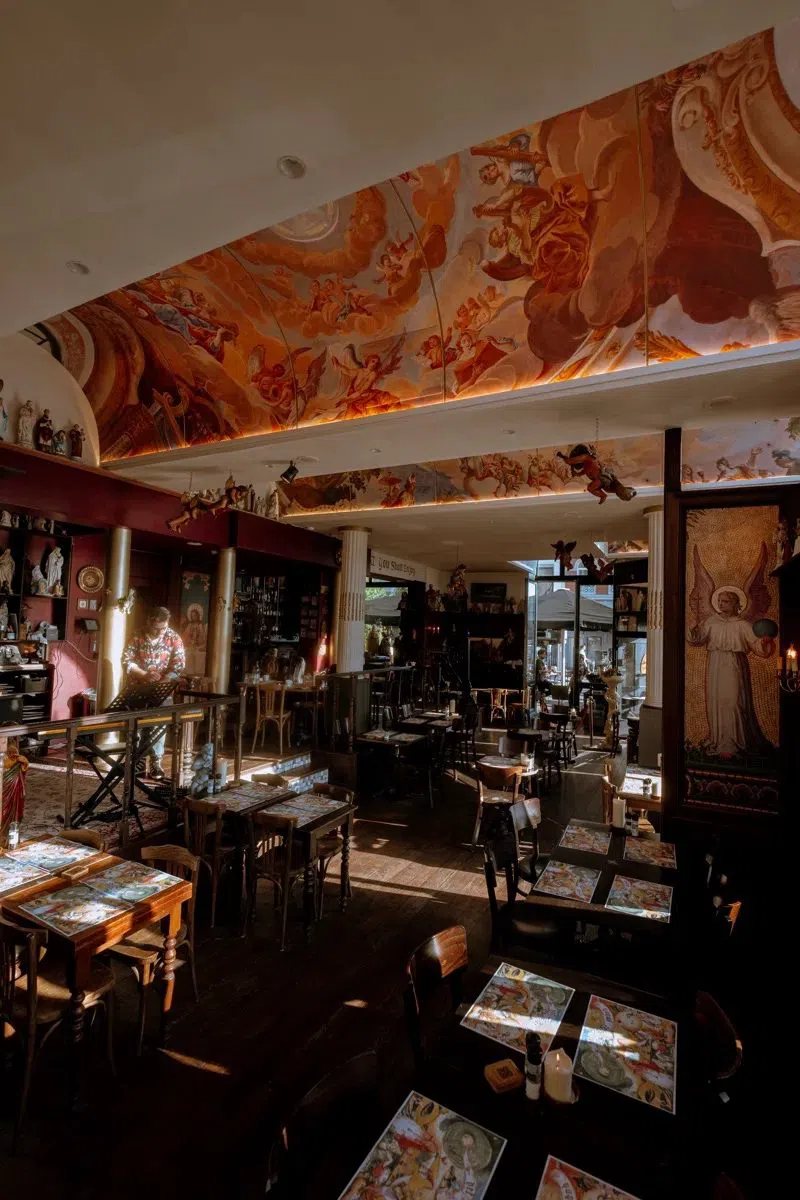
Two minutes off the cathedral square, toward Torfbrug, Elfde Gebod (The Eleventh Commandment) [Torfbrug] is the obvious place to sit down afterward — a bar built almost entirely from salvaged religious statuary, saints and cherubs crowding every shelf, which sounds like a gimmick until you're inside it with a beer. It handles tour groups easily and is already a standard stop for guided walks finishing at the cathedral; food is pub-standard, prices roughly €5–20. Treat it as the five-minute decompression after four Rubens altarpieces, not a destination in its own right.
The Parish Church and the Grave
A ten-minute walk east from the cathedral, St James' Church (Sint-Jacobskerk) [Lange Nieuwstraat] was Rubens' own parish church, and he is buried here, in a chapel he designed to hold his family and, eventually, himself. This is the most fragile stop on the route: the church has been under long-term restoration, the burial chapel only partially reopened in May 2026, and close viewing of the tomb itself is expected to stay restricted until 2028. Opening hours are short and change without much warning, so this is not a place to build a tight schedule around — check the same week you travel, not the month before.
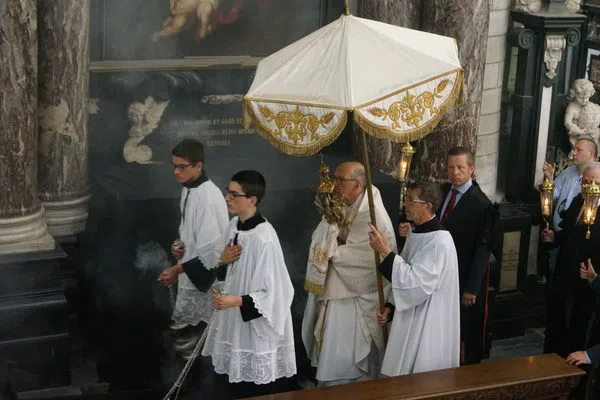
Entry is free, or by donation, and small groups move through comfortably within the limited windows the church keeps. Larger groups should contact the parish secretariat ahead of time; there's no ticketing infrastructure here the way there is at the cathedral. For readers who want the full arc — house, cathedral, grave — this is the necessary third stop, but it's the one to build slack around, not urgency.
The Printers, the Patrons, and the Architect
Rubens didn't work in isolation, and the next loop — maybe twenty minutes' walking through the historic centre — makes that concrete rather than asserted.
Snijders&Rockoxhuis [Keizerstraat], a fifteen-minute walk from St James', was the home of Nicolaas Rockox, Antwerp's burgomaster and one of Rubens' closest friends and patrons. With Rubenshuis itself largely closed, this restored patrician house is now the best available sense of how Rubens' actual social circle — wealthy, cultured, deeply invested in his career — lived day to day. It's smaller and calmer than the cathedral or KMSKA, suited to timed-entry group visits booked online, free on the first Tuesday of the month. Standard entry is €10 for adults, with concessions available. It suits couples and small groups better than large tour parties; go for the domestic detail, not scale.
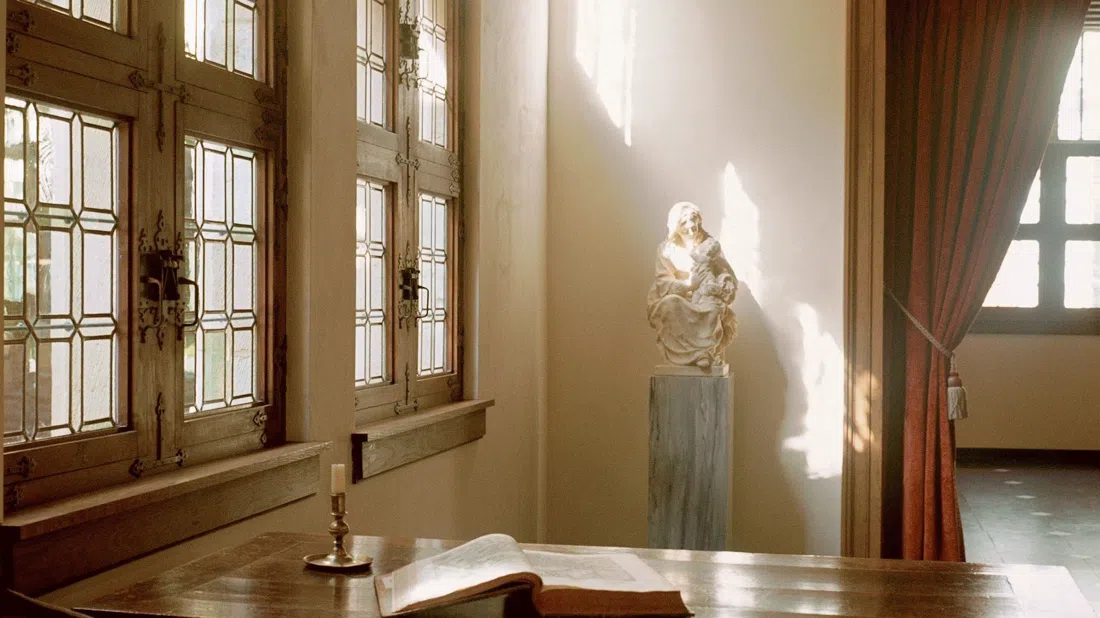
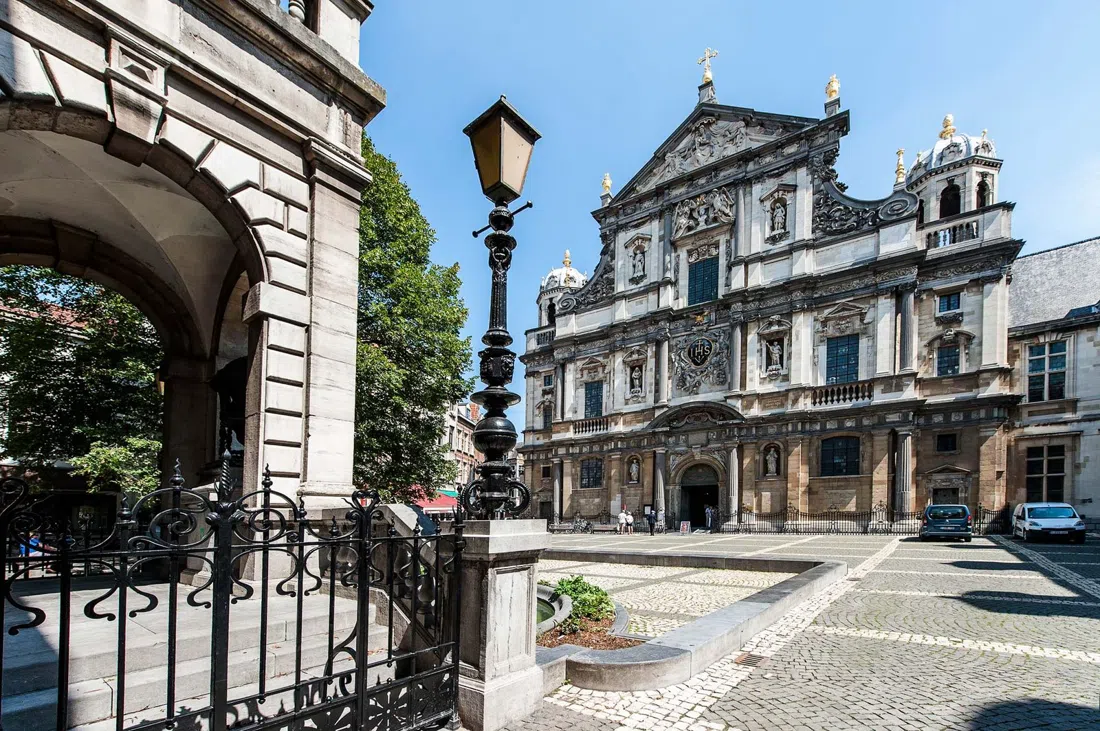
A short walk on, St Charles Borromeo Church (Sint-Carolus Borromeuskerk) [Hendrik Conscienceplein] shows a side of Rubens most international readers never encounter: architect-decorator, not just painter. He worked closely on the Jesuit church's design and decoration, and while a 1718 fire destroyed much of the original ceiling cycle, the building still reads as Rubens thinking in three dimensions rather than on canvas. It's fine for small-to-medium groups within normal opening windows, entry is free or by donation, and it closes to visits on Sunday mornings for Mass — don't route a Sunday tour through here before midday.
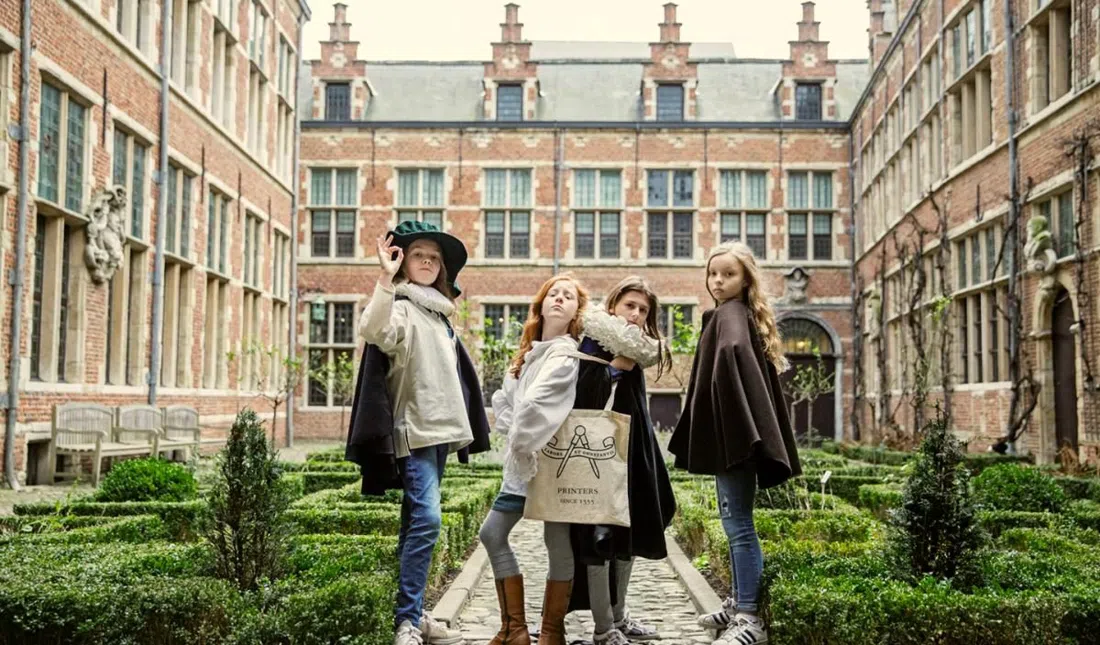
Finish the loop at Museum Plantin-Moretus [Vrijdagmarkt], a UNESCO World Heritage site and the best-preserved historic printing house in the world. Rubens' close friend and patron Balthasar Moretus ran the print business here, and the paintings and personal objects on display — including portraits Rubens made of the Moretus family — show the commercial machinery behind his career. It takes regular group bookings as part of the standard Antwerp museum circuit, with standard admission around €12 for adults. Pair it directly with Rockoxhuis; the two together tell you more about Rubens' Antwerp than either does alone.
KMSKA: The Deepest Rubens Holding in the City
The Royal Museum of Fine Arts Antwerp (KMSKA) [Zuid] sits apart from the historic-centre cluster, a twenty-minute walk or a short tram ride south into Zuid, and deserves to be treated as a deliberate half-day trip rather than squeezed onto the end of a loop that's already covered five other stops. It holds the single deepest concentration of Rubens work in the city, the natural "go here next" once the Wapper interiors have left you wanting more depth.
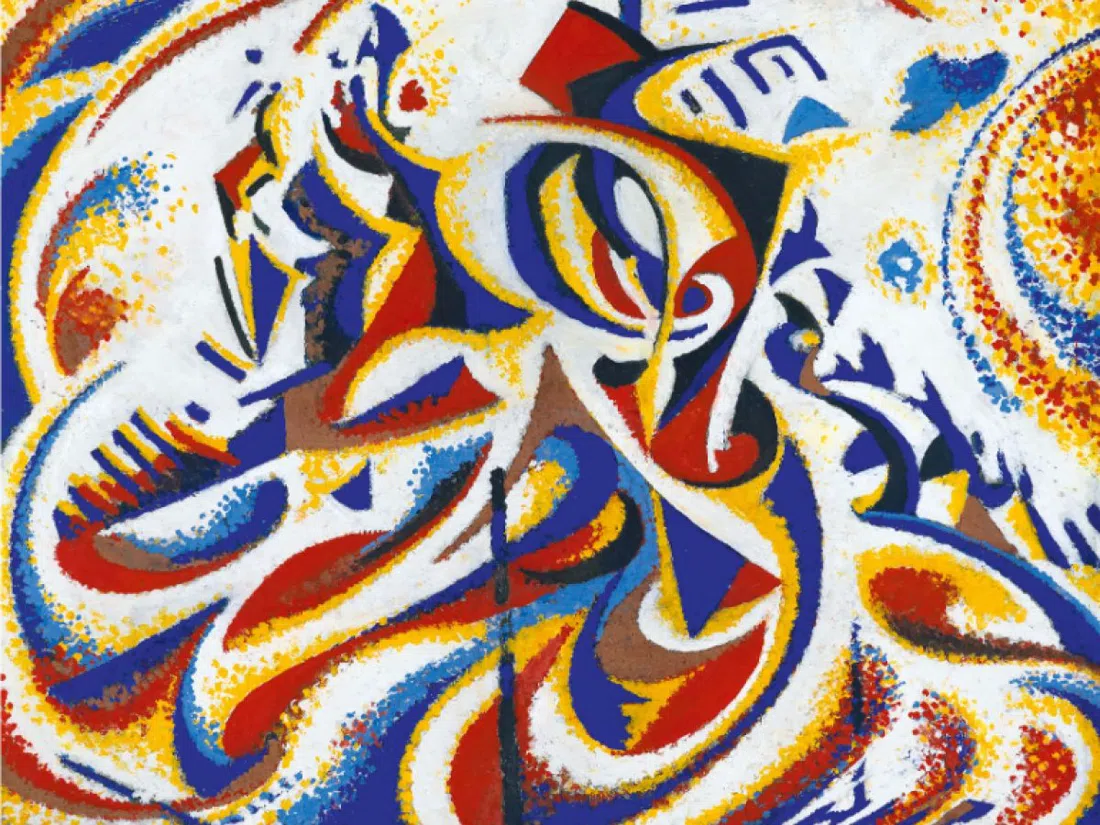
KMSKA runs a dedicated group-tour booking system, including a guided "Finest Tour" of roughly 120 minutes, arranged specifically for groups at a group-tour rate of roughly €105 on top of individual entry tickets. That makes it a genuinely good option for tour operators or larger private groups planning a proper Rubens-focused afternoon rather than a quick add-on stop. Go with time, not a checklist — this is the museum where the argument for Rubens as one of the defining painters of the century gets made in full, gallery after gallery, without the interpretive scaffolding the house currently leans on.
A Proper Guided Walk
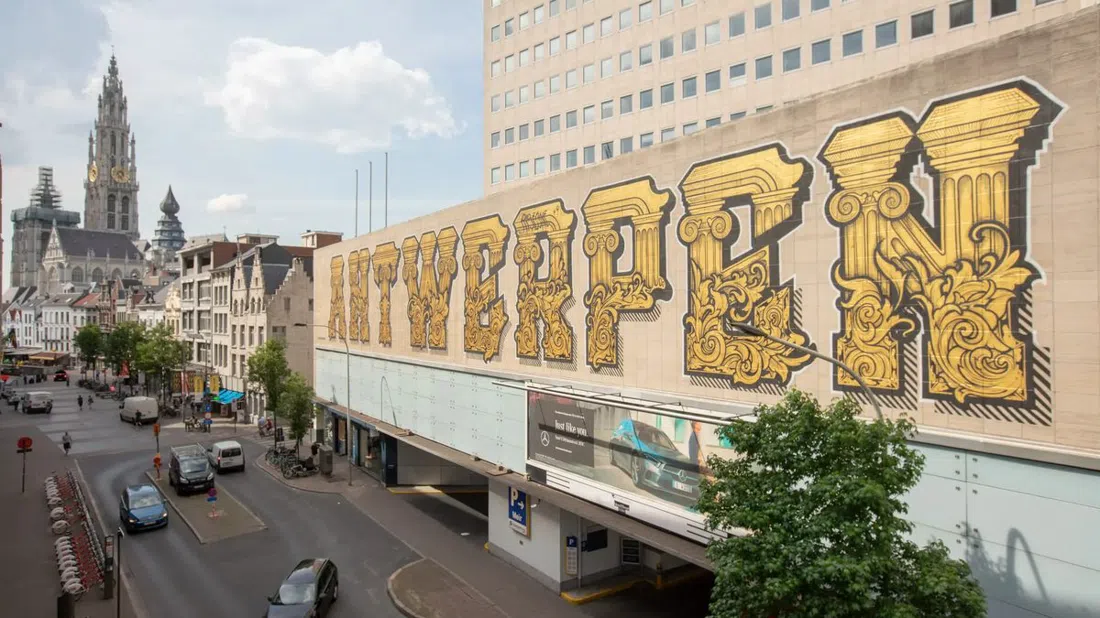
For readers who want all of this stitched together by someone who actually knows the material, Antwerp City Guides (Koninklijke Gilde van Antwerpse Gidsen) [citywide] is the credible option — the city's official guiding association, nearly a century old, running certified art-historian-led walks built specifically around Rubens and the Baroque. A themed tour runs roughly €50–80 depending on length and group size, built for group bookings from the outset, which makes it a far more reliable choice for a tour operator than stitching together individual museum guides. For an independent walker, it's the difference between seeing the sites and understanding why they're arranged the way they are.
Eating and Drinking Around the House
Two stops close out the day within a few minutes of where it started.
Grand Café Horta & Art Nouveau Hall [Hopland] occupies a striking piece of ironwork salvaged from Victor Horta's demolished Volkshuis, a 700-square-metre Belle Époque hall a short walk from the Rubens House. It's an odd, effective pairing for a Rubens-themed day — baroque master against Art Nouveau ironwork, a full architectural century apart — and it handles large groups and private events comfortably, with a terrace for anyone who'd rather sit outside. Mains run roughly €18–28, solidly mid-range brasserie territory, good for a group dinner after a day of museums.
Rubens Inn [Wapper], meanwhile, is the literal next-door option — a Belgian gastropub steps from the house itself, taking group reservations, with both terrace and indoor seating. Mains run €15–30 for straightforward Belgian classics. It's not essential in the way the cathedral or KMSKA are, but for anyone who's just come out of the Rubens House garden and wants lunch without walking anywhere, it's the practical answer.
Planning the Route: Transport, Cash, and Timing
Antwerp's historic centre is compact enough that everything from Wapper to Vrijdagmarkt is walkable in a single day, with KMSKA as the one stop worth a tram (regular services run from the centre into Zuid, tickets via the De Lijn app or at stops) or a twenty-minute walk on its own. Belgium runs on the euro, cards are accepted almost everywhere including at church donation boxes via contactless terminals, though carrying a little cash is still sensible for smaller sites and donation-based churches that haven't modernised.
Budget roughly €50–70 per person for a full day covering the Rubens House, the cathedral, and one further museum — Rockoxhuis or Plantin-Moretus — before food; closer to €150 if KMSKA's guided Finest Tour and a sit-down group dinner are both on the itinerary. Book the Rubens House and KMSKA group slots in advance regardless of season; both run structured group systems that fill up, and turning up without a slot at the Rubens House risks a wasted stop given how much of the site is currently closed. St James' Church is the one genuine wildcard — verify its hours the same week you travel, and treat any grave-viewing access as a bonus rather than a guarantee until the restriction lifts in 2028.
For broader logistics beyond this walk — where to base yourself, how the rest of the city's museums and neighbourhoods fit together — see the full Antwerp guide, and for accommodation near the historic centre, start with Antwerp hotel search.