Especial Antwerp
Inside MoMu, Antwerp's fashion museum on Nationalestraat
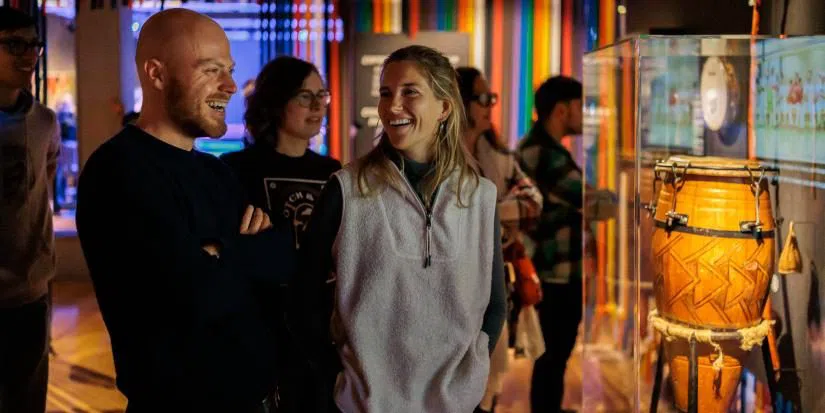
Inside Antwerp's fashion museum the galleries are dim and the vitrines lit; outside its door the walk carries on past shops, a church and the streets down to the river.
Por Tomás AlmeidaA city read one street at a time
MoMu holds the rounded corner of the ModeNatie building on Nationalestraat, behind tall arched windows set in pale stone and brick. A ticket is €13 at the door, €9 if you are 18 to 25, and free under 18. The museum closes on Mondays.
What you see inside MoMu
MoMu — Fashion Museum Antwerp (Nationalestraat) keeps its galleries dim and its floors bare and pale. Clothes stand on spotlit mannequins in long glass vitrines, lit from above, and the rest of each room is left dark. The route runs as a single line past the cases.
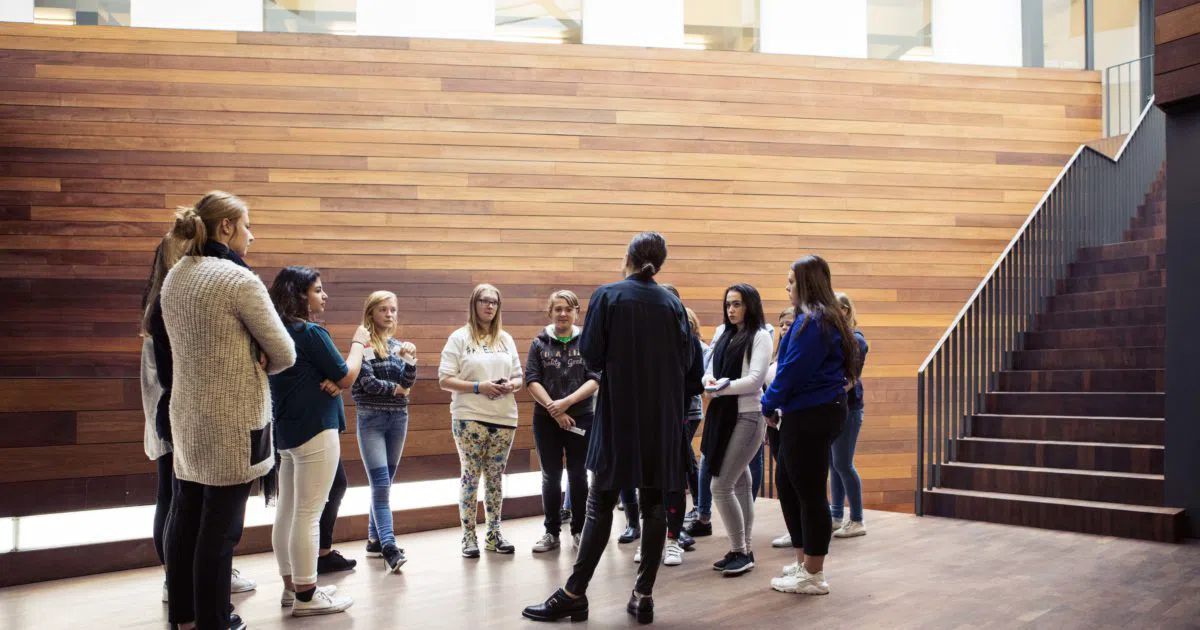
The rooms are narrow, and that sets the pace. You read the vitrines in the order they are hung, and a booked group ahead of you will slow that line. Last tickets go at 17:00 and the doors close at 18:00.
The building does some of the work. From the pavement the pale stone-and-brick facade reads as one more corner block on a shopping street, and most people walk the turret end of Nationalestraat without registering that the fashion museum is behind it.
Planeje sua viagem para Antwerp
Preços em tempo real dos nossos parceiros de reserva.
Cancelamento grátis em muitos quartos. Podemos receber uma comissão quando você reserva.
Tickets, hours and group bookings
Entry is sold at the door. The museum opens at 10:00, runs to 18:00, and keeps one late slot on Thursday evening. The first Tuesday of the month is free.
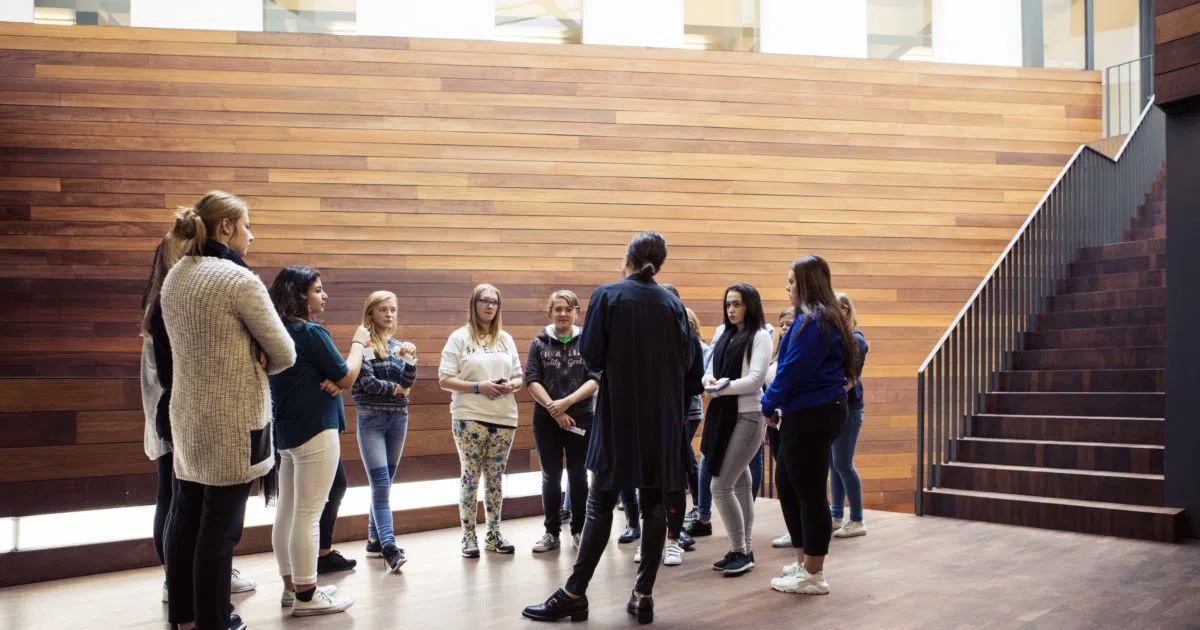
Groups book through the museum itself. More than 12 paying visitors gets a discounted rate, school groups come in free, and the booking carries a slot time because the galleries will not absorb an unbooked crowd. Guided walking tours of the quarter run seven days a week.
Nationalestraat at the museum door
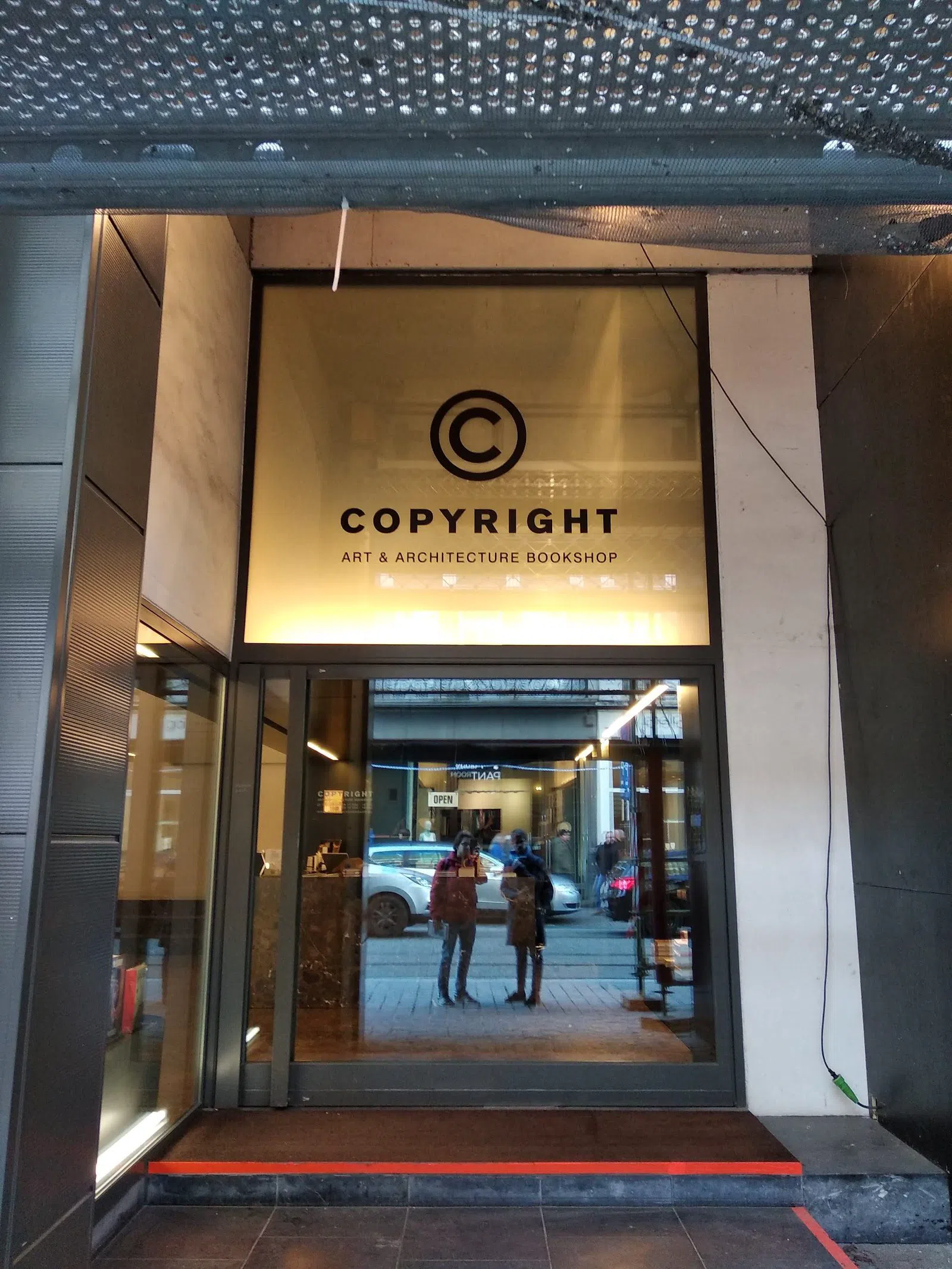
Copyright Bookshop (Nationalestraat 28a) is built into the museum block, next door to the entrance. The floor is concrete, the shelves run floor to ceiling with fashion and architecture monographs, and the flat tables in the middle carry oversized art books. This is the best place in the city to buy the exhibition catalogue. It opens 11:00 to 18:30 Tuesday to Saturday and 14:00 to 18:00 on Sunday, closed Mondays.
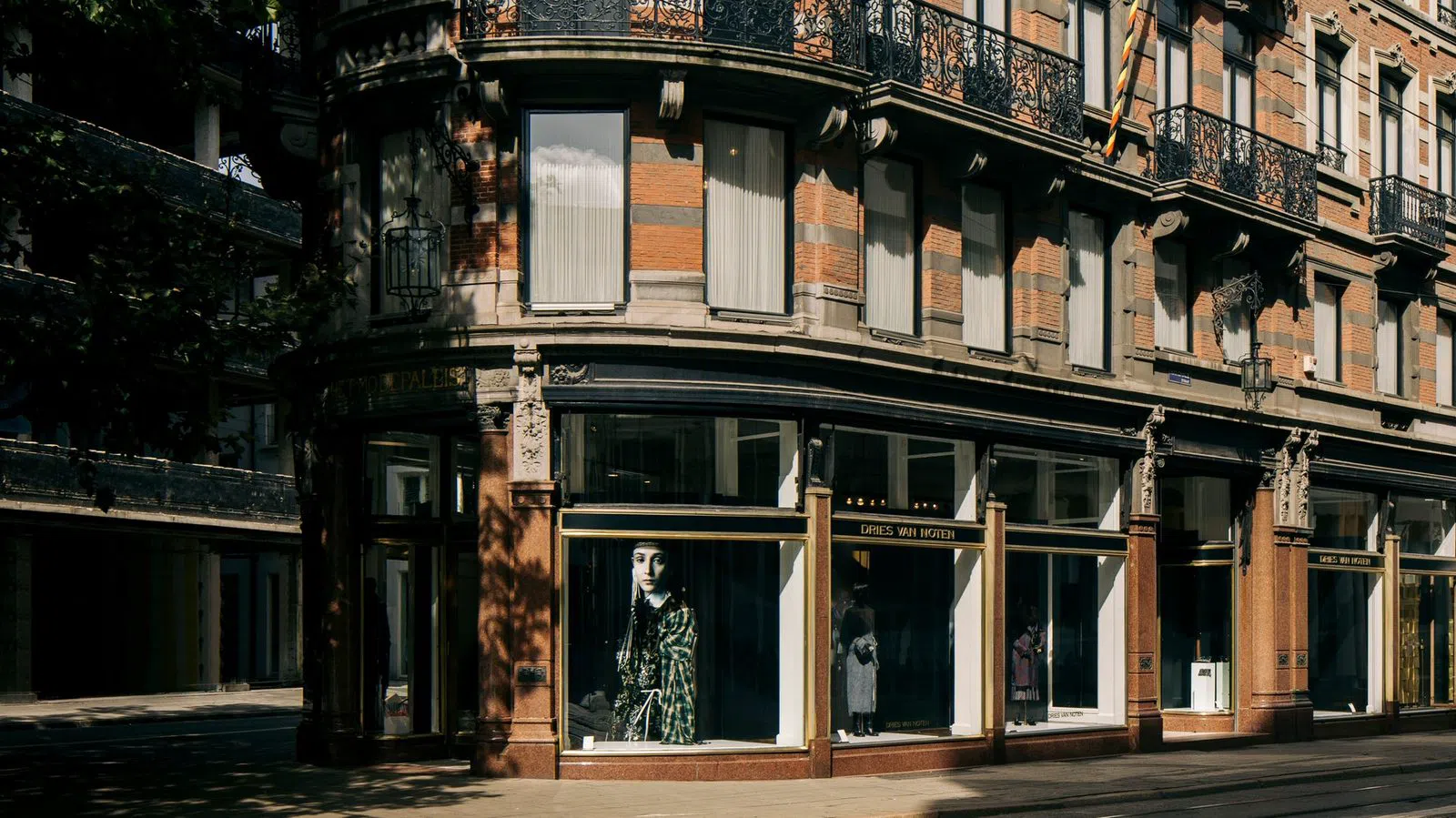
Het Modepaleis (Nationalestraat 16) is 2 minutes away and costs nothing to walk into. The 1881 listed building climbs five storeys to a rounded corner turret in creamy stone, and curved plate-glass windows wrap the ground floor. Dries Van Noten retired in 2024 and the shop still trades, Monday to Saturday, 10:00 to 18:30. Dark wooden cabinets and vintage leather chairs fill the rooms. It is the most photographed building of the fashion district, and a working shop while you photograph it.
Sint-Andrieskerk and Kloosterstraat
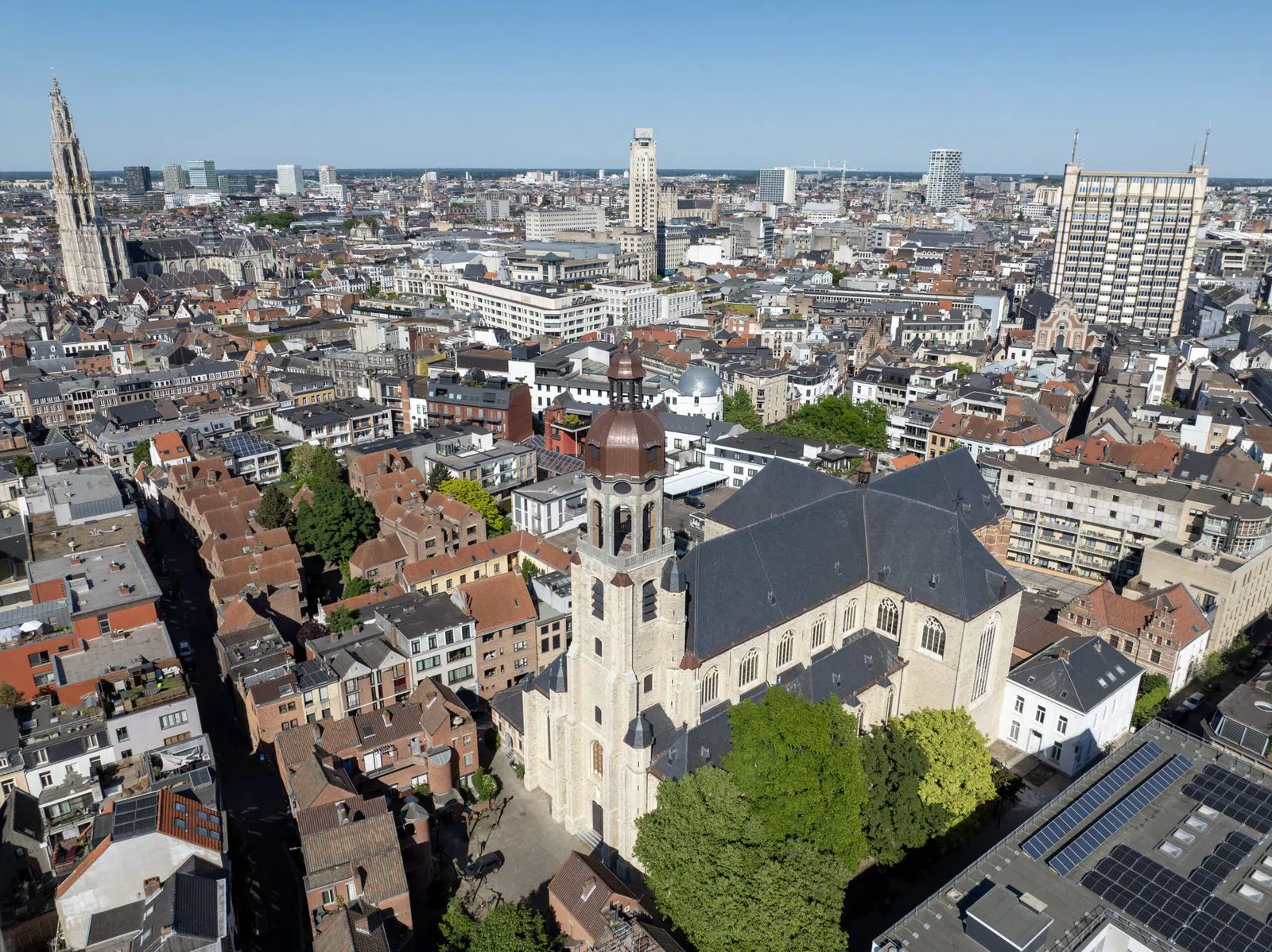
Sint-Andrieskerk (Pastoor Visschersplein) is the parish church of the old Parish of Misery quarter around the museum, hemmed in so tightly by houses that the late-Gothic bulk only shows itself from the square. Entry is free. The interior is whitewashed and vaulted, the baroque pulpit is carved as a rock with life-size fishermen apostles climbing it, and a memorial to Mary Queen of Scots hangs on the wall. From November to March the afternoons are shut, so a winter visit happens in the morning. Services continue; keep out of them and keep your voice down.
From the church it is 5 minutes downhill to Kloosterstraat, a long run of tall brick townhouses with brocante shopfronts spilling onto the pavement. Mid-century chairs, chandeliers, gilt mirrors, stacked crates and painted signs sit out on the stone. The shops are small inside. Sunday is the street's busiest day, when the Sint-Jansvliet flea market runs at the far end.
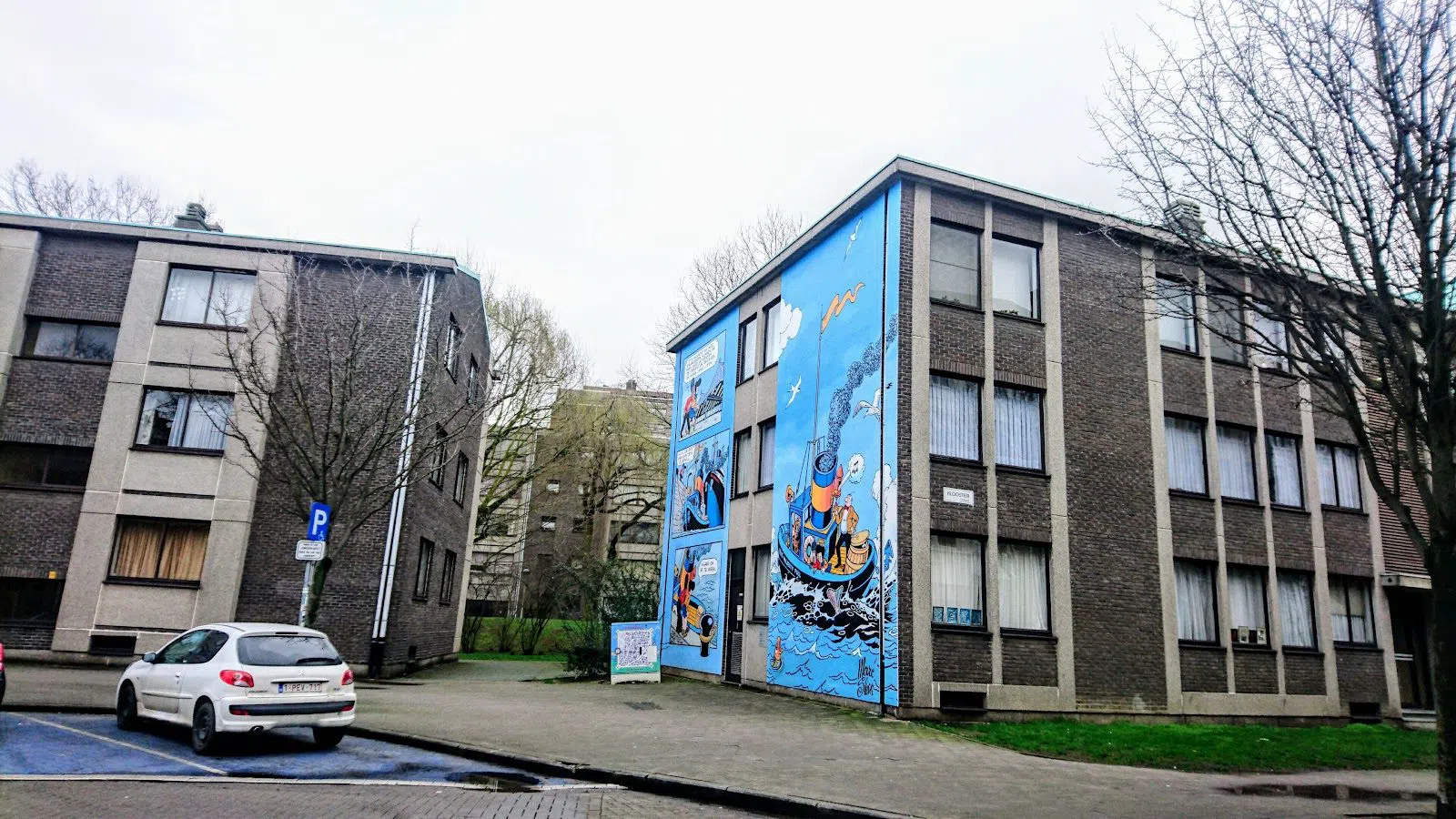
South through the Zuid
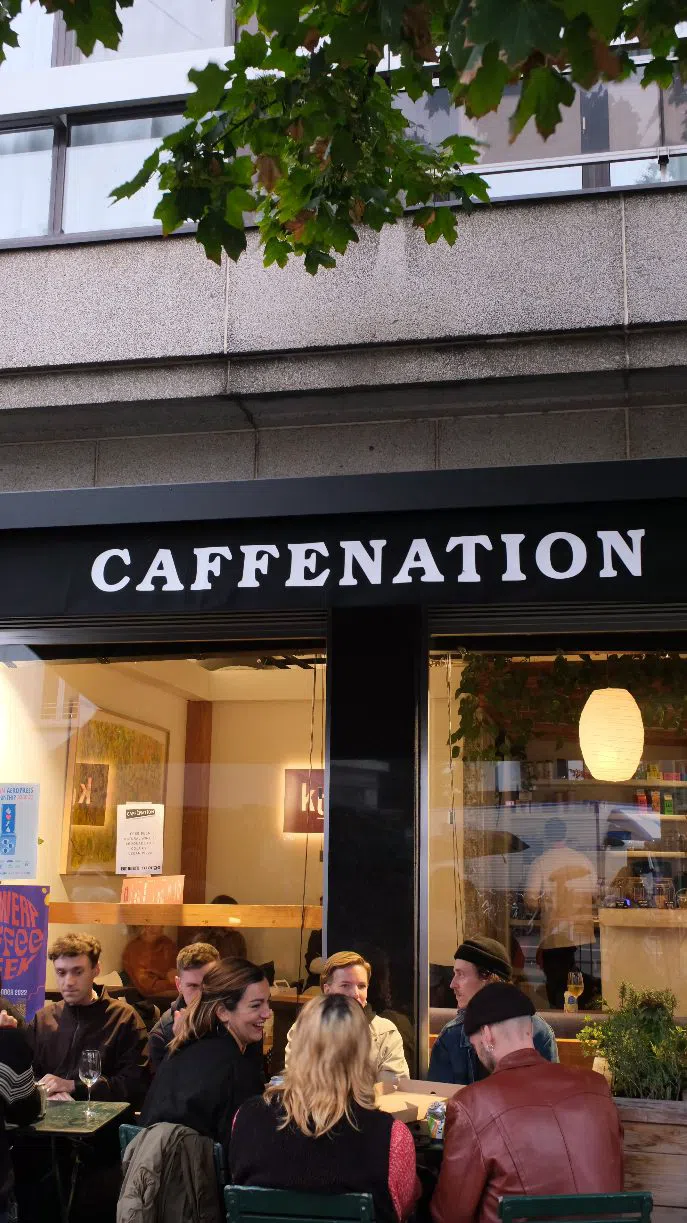
Caffènation KOCO (Volkstraat 2) is the nearest branch of Antwerp's main specialty roaster to the museum, and it falls on the walk toward the Zuid. They brew light-roast filter in glass on a pale wood counter, under white tiles and hanging greenery; the bar is plant-based and you order at the counter. It opens at 08:00 on weekdays, 10:00 at weekends, and closes at 17:00, so it fits at the start of the walk or partway through.
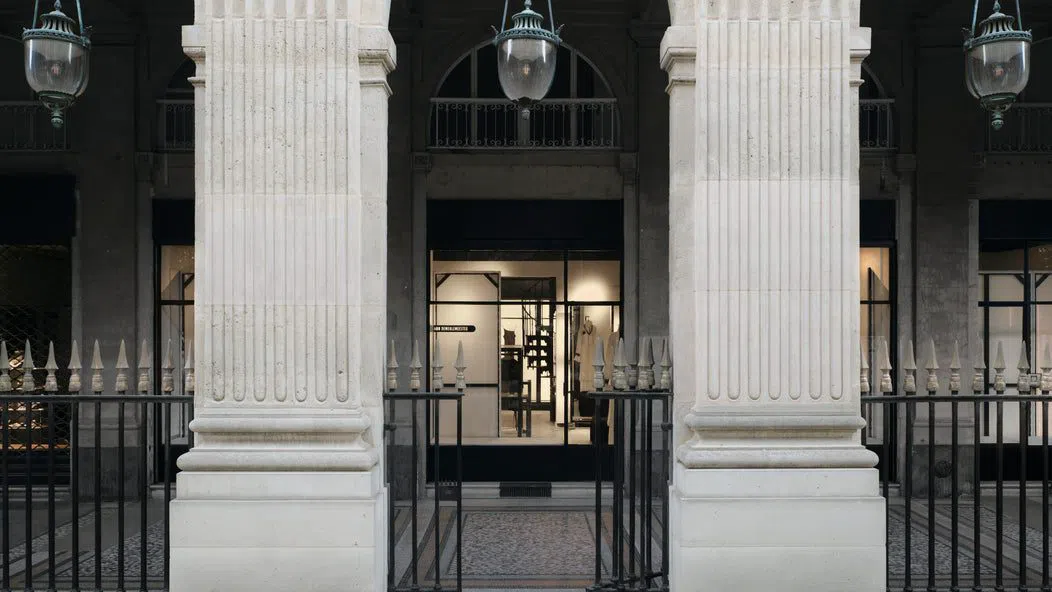
Ann Demeulemeester Antwerp (Leopold de Waelplaats) is 12 minutes south of MoMu, in an 1880s Beaux-Arts former seamen's school of white stone facing the fine-arts museum. The interior is stark black and white, with sparse rails over pale parquet and tall windows doing the lighting. It reopened in 2021 under Claudio Antonioli and now sells homeware alongside the clothes, Monday to Saturday, 10:00 to 18:30. This is the second Antwerp Six address worth the walk.
Across the square, KMSKA — Royal Museum of Fine Arts Antwerp (Zuid) occupies an 1890 neoclassical palace with bronze chariots on the roofline, grafted onto a new all-white interior of folded walls and skylit stairs. Entry is €20 for adults and Thursday runs late, to 22:00. It is a long visit. Do not stack it with MoMu inside the same two hours.
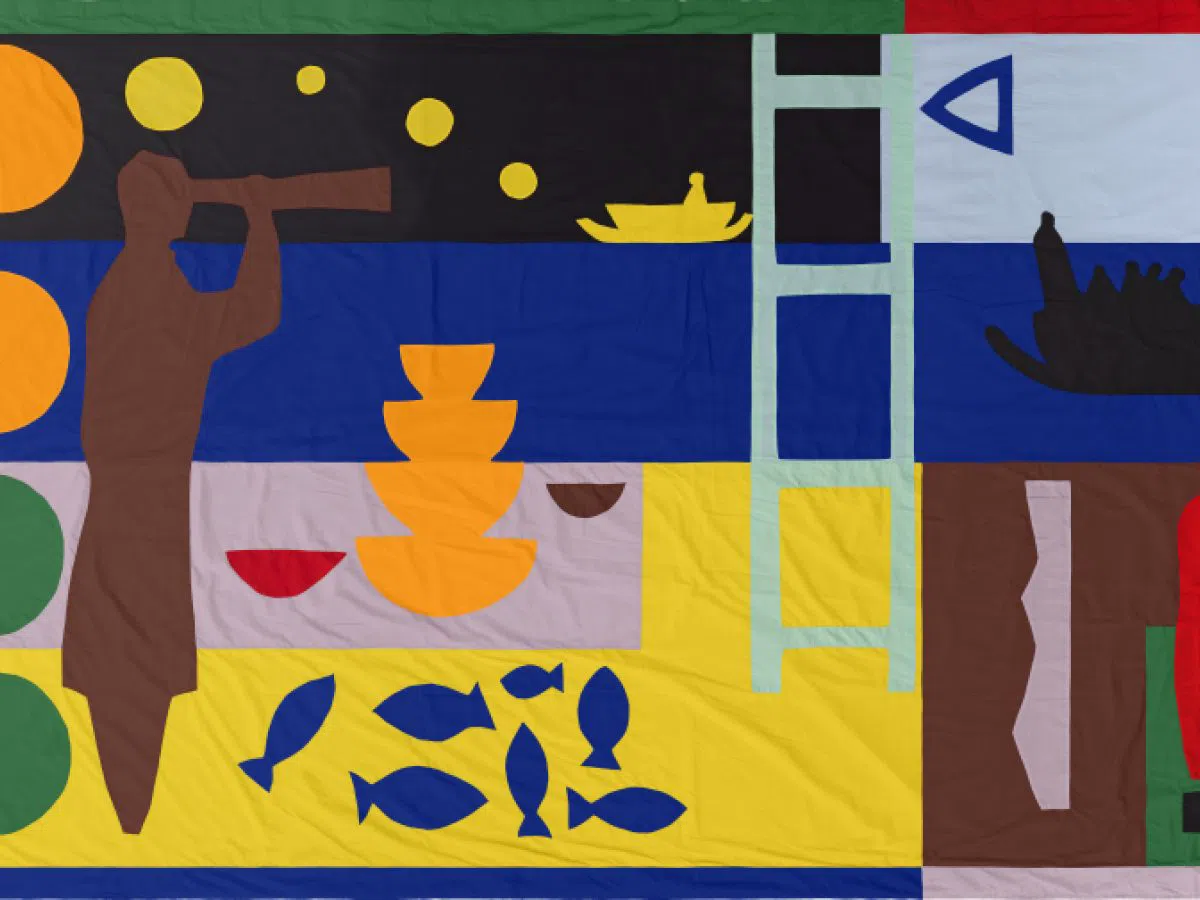
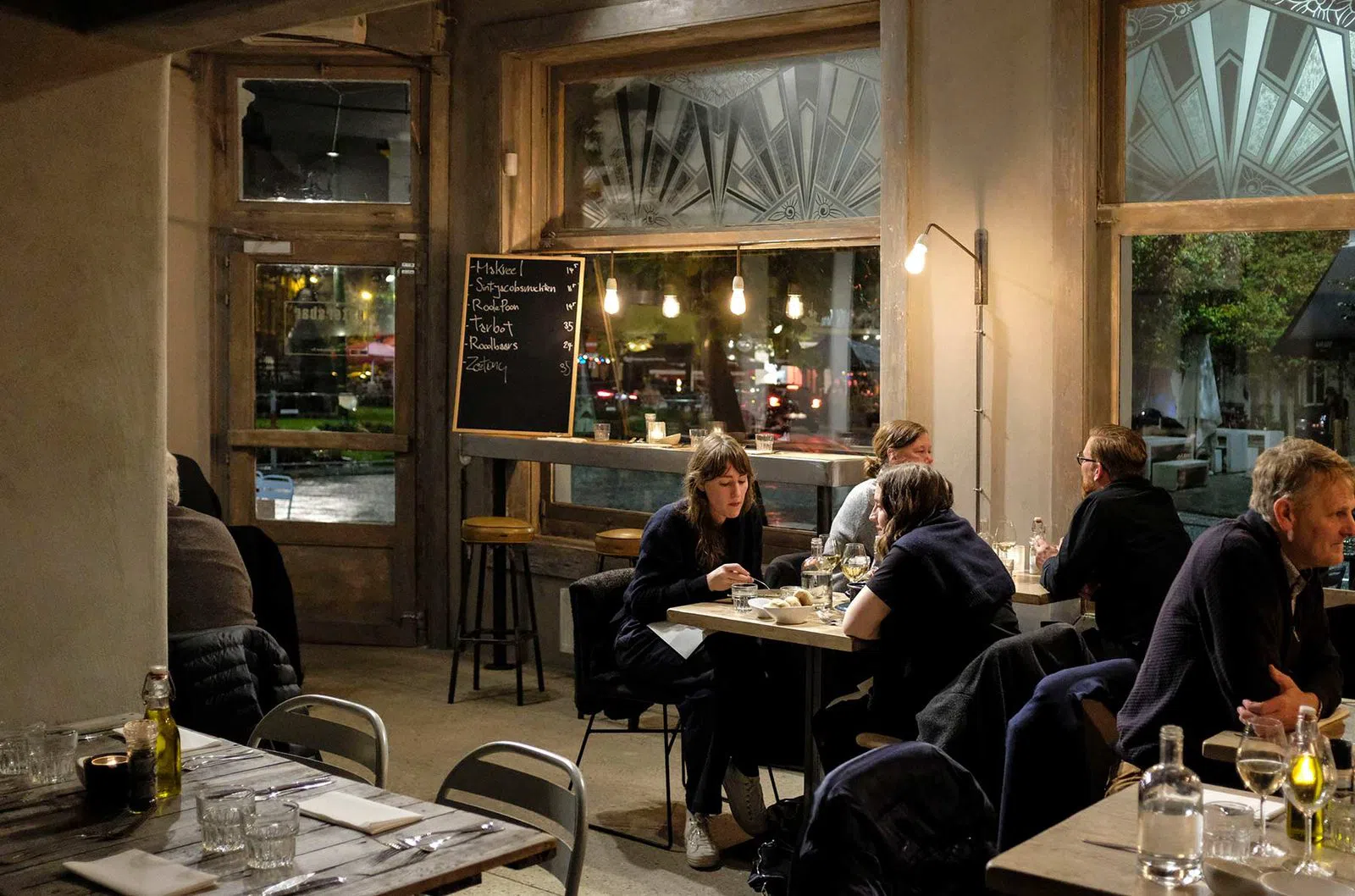
Fiskebar (Marnixplaats) is 10 minutes from the museum and takes the evening. Oysters sit on crushed ice at a marble counter and whole fish go on the grill in an open kitchen tiled in blue, on a round square. Service is mostly evenings, with lunch added on Saturday and Sunday. Reserve for a weekend.
East to the cathedral

Bakkerij Goossens (Korte Gasthuisstraat) has traded since 1884 and is still run by the fourth generation of the family. The doorway is tiny, cut into a 16th-century stepped facade, and dark raisin-studded loaves sit on wooden shelves behind a cramped counter. What people queue on the pavement for is the roggeverdommeke, the raisin rye. Open 07:00 to 19:00 Tuesday to Saturday, shut Sunday and Monday.
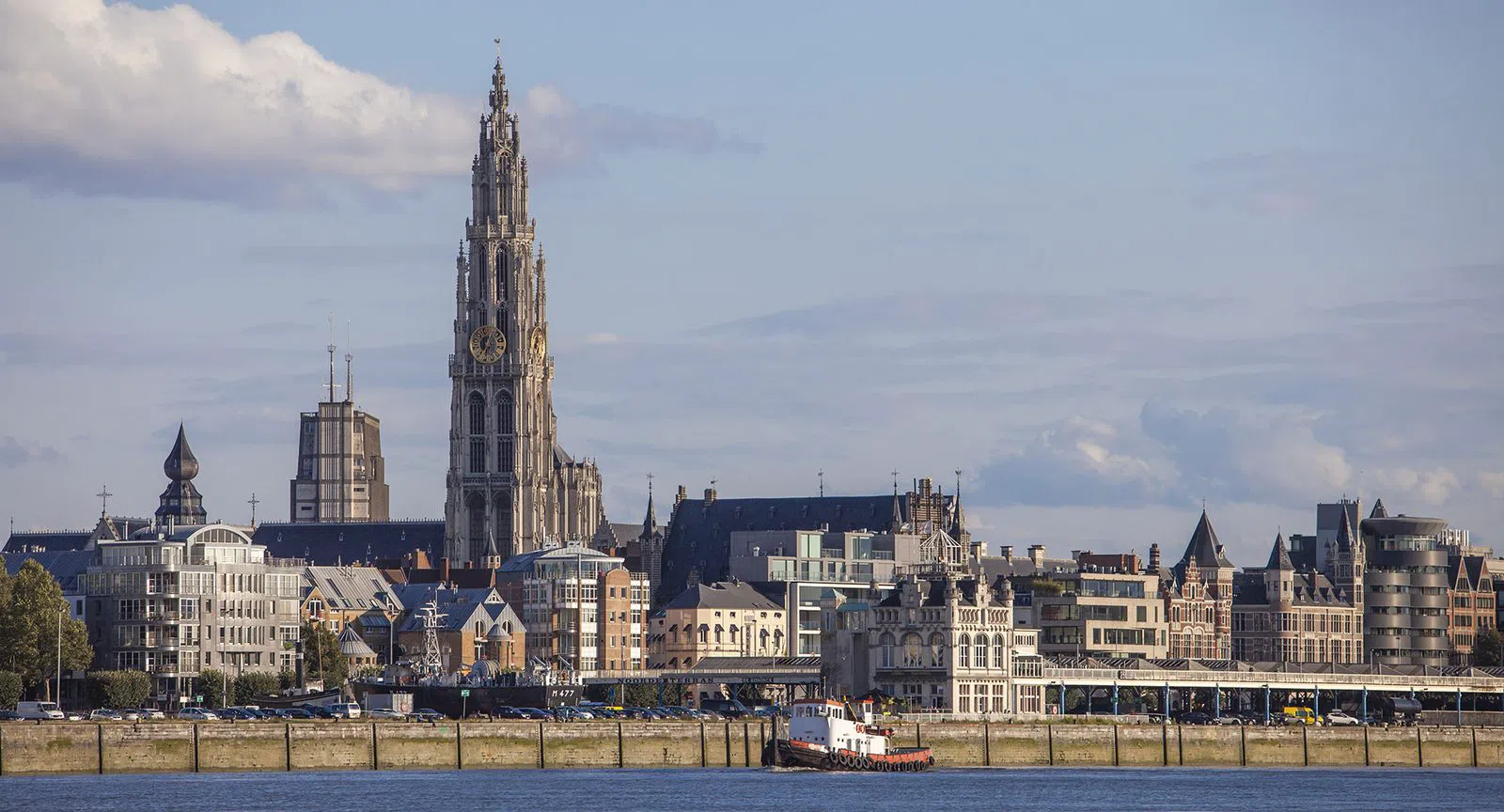
The Cathedral of Our Lady (Onze-Lieve-Vrouwekathedraal) is 8 minutes from MoMu through tight medieval lanes, which do nothing to prepare you for a single 123-metre tower of lace-cut Gothic sandstone. Inside, white columns carry the nave and four giant Rubens altarpieces hang in it, the Descent from the Cross among them. Entry is €12 for adults and free under 18. The tower climb is paid separately and runs on an irregular schedule, mostly April to October.
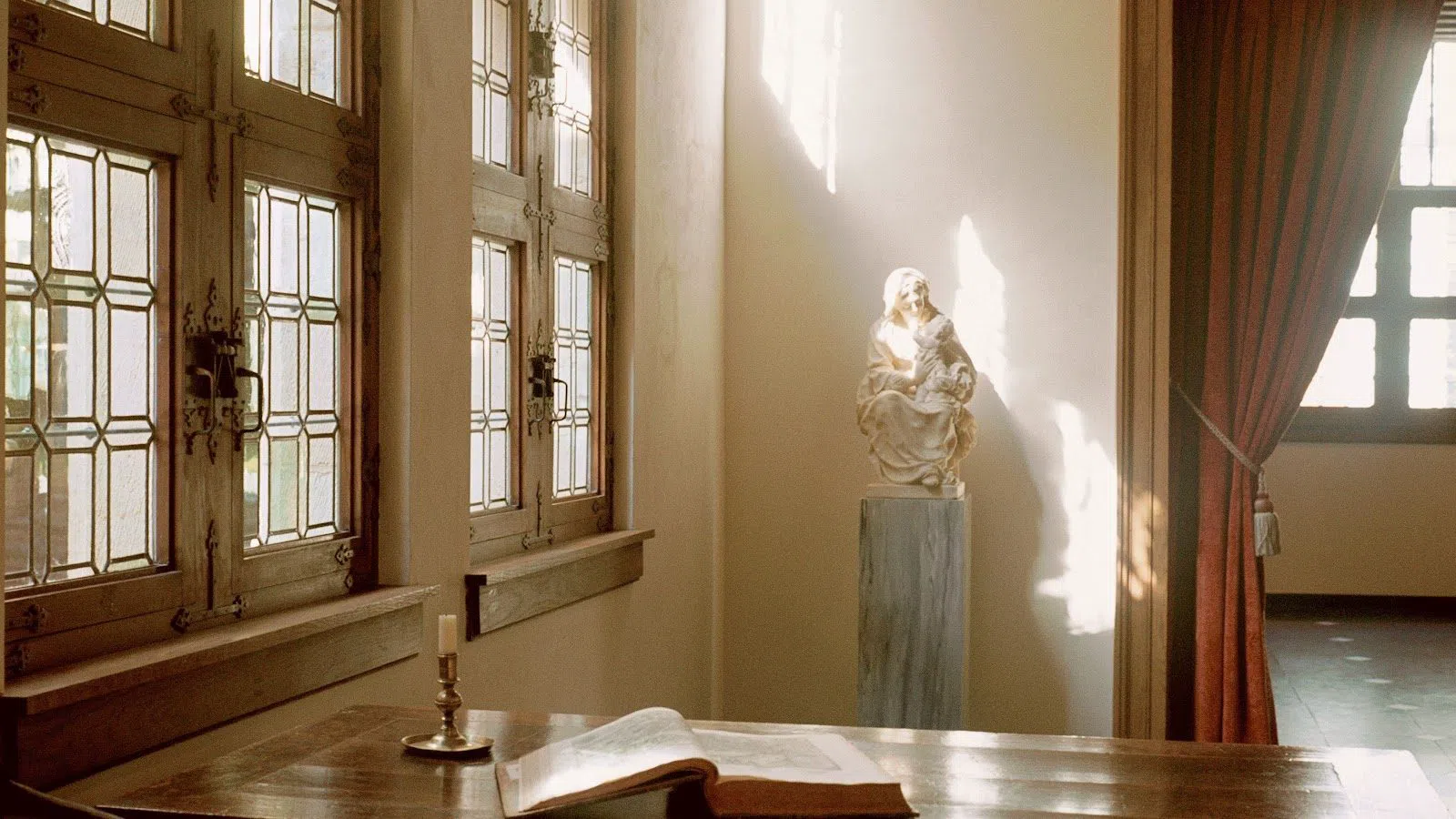
Snijders&Rockoxhuis (Keizerstraat) costs €10 and is rarely crowded. Two linked 17th-century patrician houses wrap a walled courtyard garden, and the period rooms behind them have gilt-leather walls, dark beamed ceilings and Flemish paintings hung close together. Walk here when the cathedral is full. It closes Mondays and is free on the first Tuesday of the month.
A beer on Kammenstraat
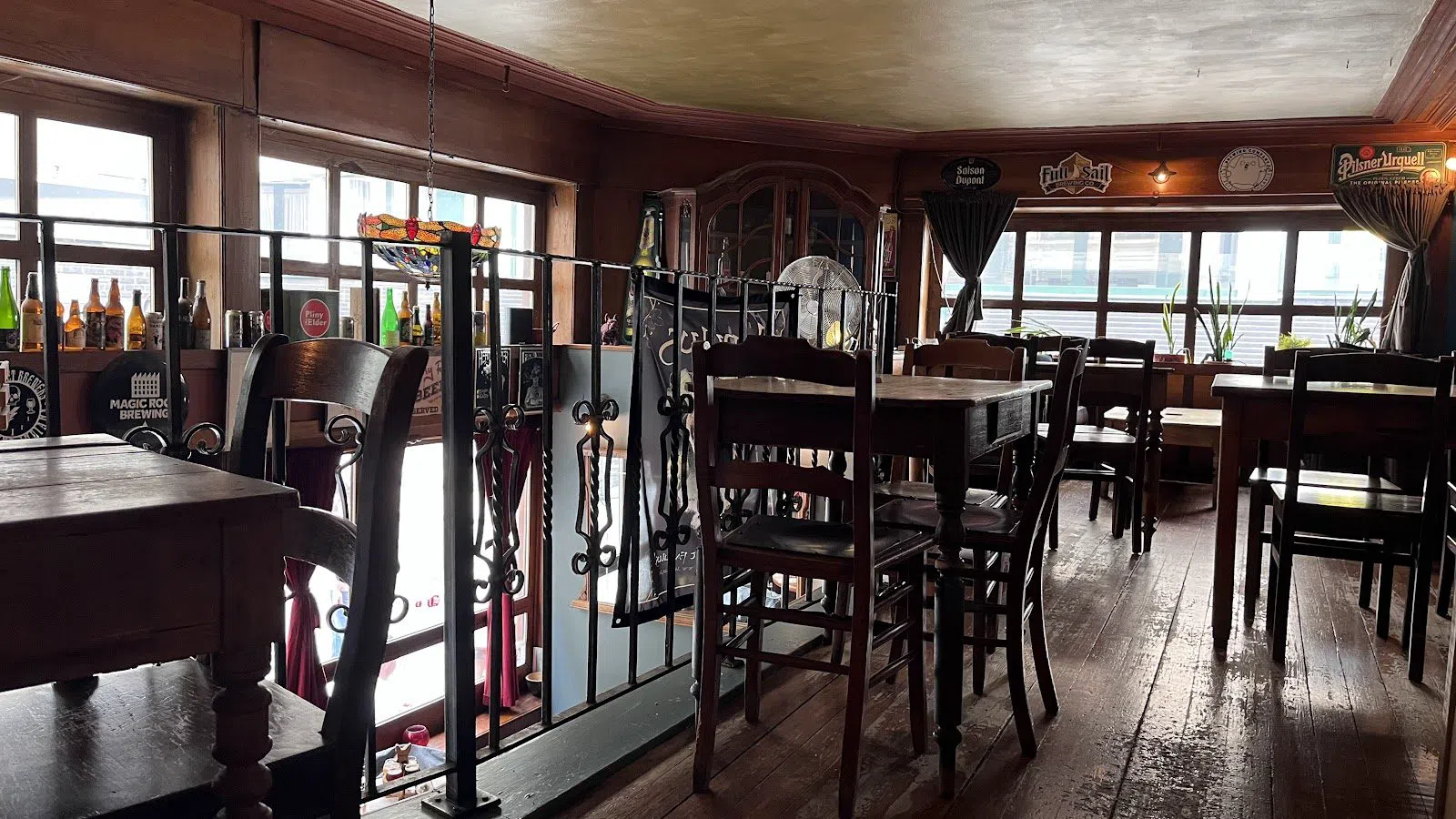
Billie's Bier Kafétaria (Kammenstraat 12) is 3 minutes from the museum door and has the best beer list in the quarter: 180 Belgian and foreign bottles, 11 rotating taps behind a short counter, a chalkboard and shelves of mismatched glassware over bare brick and stacked crates. It is walk-in only and small. Four or five people fit, a tour group does not. It opens mid-afternoon and shuts on Tuesdays.
The tunnel and the rooftop
The Sint-Annatunnel costs nothing, never closes, and still runs its 1933 wooden-stepped escalators, the oldest working escalators in Europe, down a tiled Art Deco shaft into a 572-metre white-tiled tube curving under the Scheldt. Take the escalators single file. At the Linkeroever end you come up to the full skyline view back at the cathedral. Maintenance work on the surface nearby does not shut the tunnel.

MAS — Museum aan de Stroom stacks red Indian-sandstone boxes 60 metres up in staggered layers, with wavy floor-to-ceiling glass between them and a spiralling escalator route climbing through it. The roof terrace is free, unticketed and open 360 degrees over the docks and the old town, and it stays open later than the galleries. Use it to read the shape of the walk before you make it. The museum floors close on Mondays, so check mas.be if you want them.

Best time to go
Morning is the safe half of the day in this quarter. The church shuts its afternoons from November to March, the bakery and the coffee bar are both morning trades, and MoMu's galleries are at their emptiest at opening.
Thursday is the exception worth building a day around, because both MoMu and KMSKA hold late openings that evening. Sunday suits a slower version: the flea market end of Kloosterstraat is at its fullest, and Fiskebar adds a lunch service. Pick a weekday if you want to walk into the two designer shops, which keep Monday to Saturday hours.
Is MoMu worth it
It suits a visitor who wants close, slow looking at clothes and then the streets that produced them, all inside a few hundred metres. The ticket is the cheapest part of the afternoon, and the museum asks for attention rather than time.
Planning notes
Mondays shut MoMu, Copyright Bookshop, the Rockox house and the MAS galleries; Billie's shuts Tuesdays, and Goossens shuts Sunday and Monday. Book the museum slot ahead for a group, reserve Fiskebar for a weekend, and check mas.be before counting on the galleries there.
See the Antwerp guide and the Antwerp hotel search.
Antes de ir
How much is a ticket to MoMu, and is there a free day?
Entry is €13 at the door, €9 for visitors aged 18 to 25, and free for under 18s. The first Tuesday of every month is free for everyone.
What are MoMu's opening hours and closed days?
The museum opens 10:00 to 18:00 and closes on Mondays. The desk stops selling tickets at 17:00, and it stays open late on Thursday evening.
Do I need to book MoMu in advance?
You buy individual tickets at the door. Groups book a slot time with the museum because the galleries are narrow; more than 12 paying visitors pay a lower rate, and school groups are free. Guided walking tours of the quarter run seven days a week.
What else is within a few minutes of the museum?
Copyright Bookshop sits next to the entrance. Het Modepaleis is 2 minutes along Nationalestraat, Billie's Bier Kafétaria 3, and the Cathedral of Our Lady 8 minutes on foot.
Can I do MoMu and KMSKA on the same day?
Yes, but not back to back. KMSKA costs €20 and is a long visit, so keep it to its own block; it stays open until 22:00 on Thursdays, the evening MoMu also opens late.