 In this area
The Antwerp issue
Borgerhout, Antwerp: the neighbourhood that built itself
A warm, street-level guide to Antwerp’s most quietly radical district, where Moroccan grocers, natural-wine bars, galleries and gig rooms share the same few square kilometres.

By Marieke De ClercqHow Antwerp really dresses
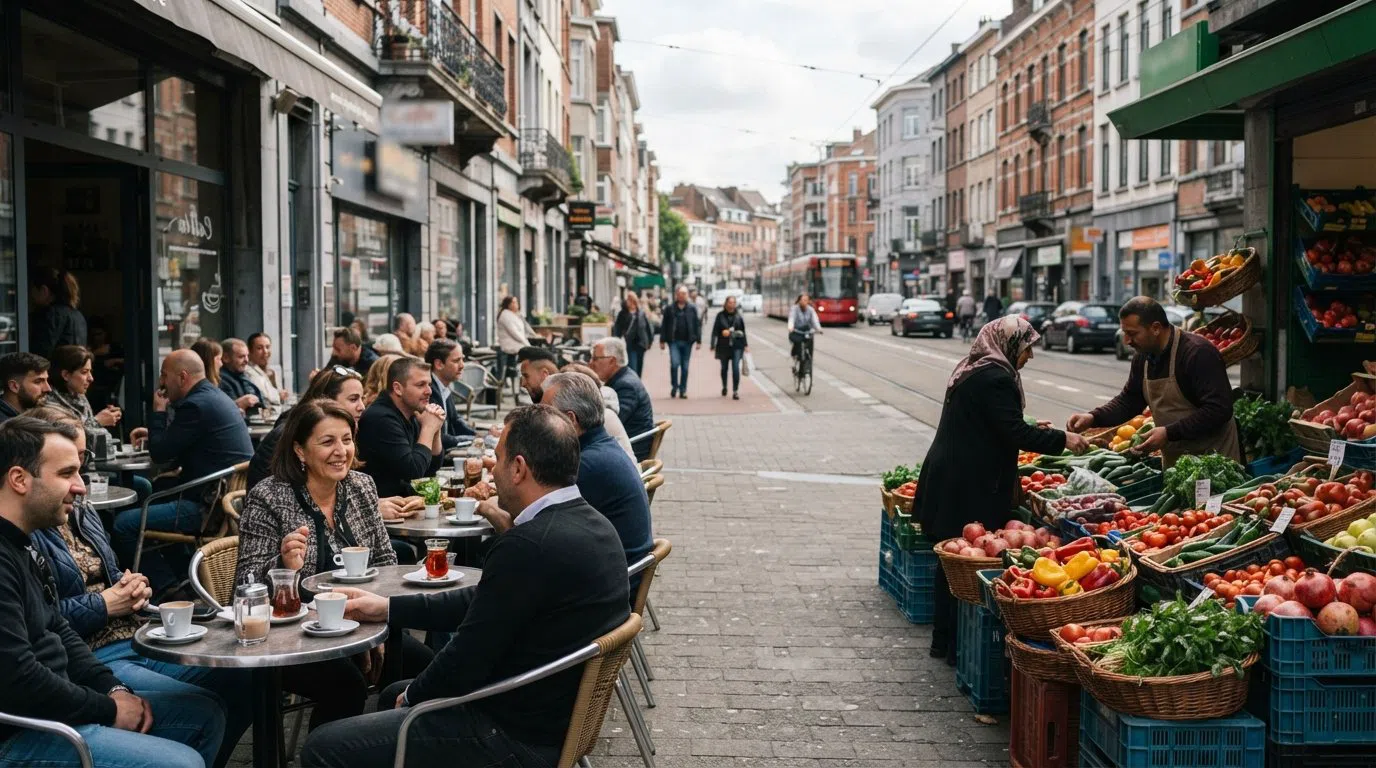
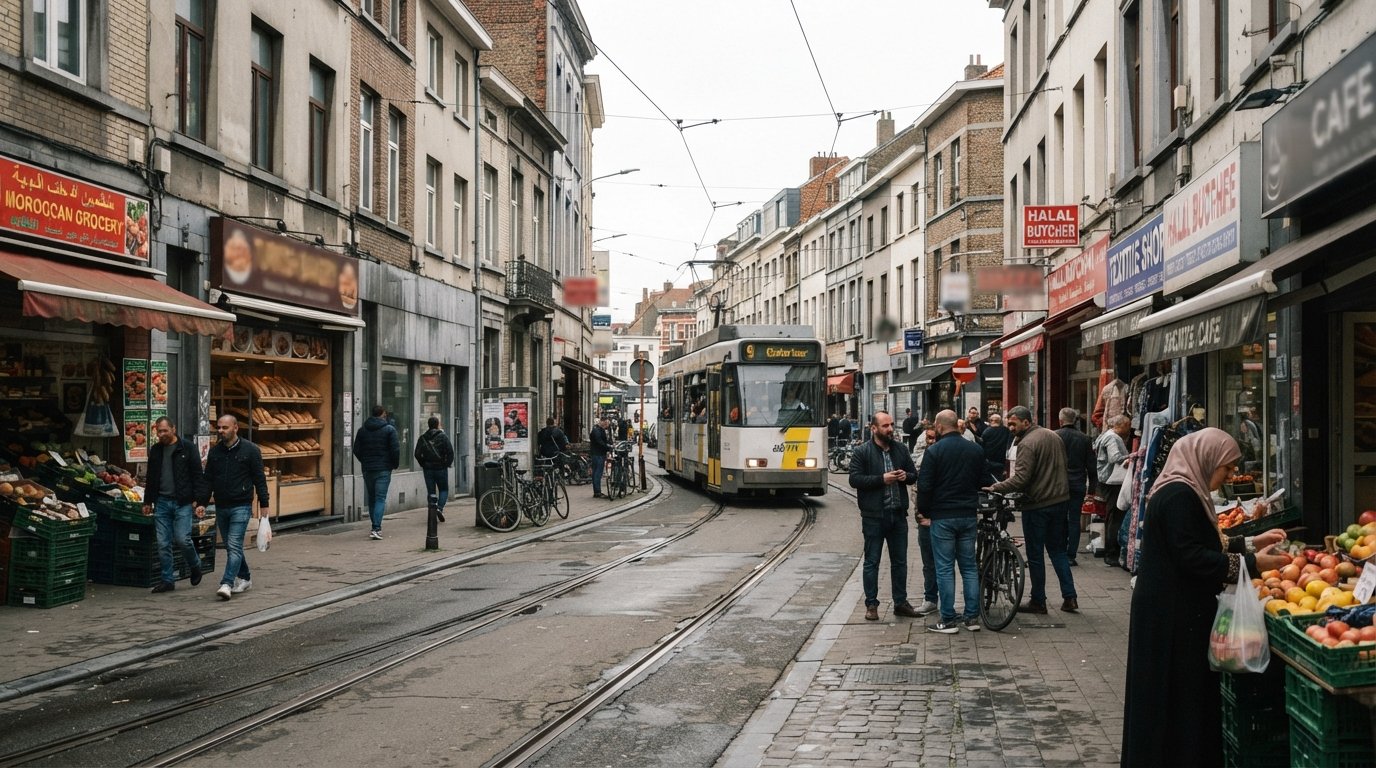
Borgerhout announces itself with the Turnhoutsebaan: a long, workaday strip of Moroccan grocers, Turkish bakeries, phone-repair shops and €5 barbers that has never bothered to be pretty, only useful. Then, one block off it, the mood changes. Moorkensplein and Krugerplein open out like a deep breath — terraces, playgrounds, coffee bars, wine bistros, the odd gallery, and the sense that this district has been assembled by its residents with a screwdriver and a stubborn streak. In September 2025, Time Out crowned Borgerhout the second-coolest neighbourhood on earth. Locals, who have been calling it BoHo for years, mostly took that in the same spirit in which they do most things here: with a grin, a shrug, and another chair pulled up to the table.
What Borgerhout is known for
Borgerhout’s story is not the usual Antwerp story of polished façades and inherited elegance. It is denser, louder, more mixed, and more honest about how cities actually work. For decades the district was shorthand for immigrant Antwerp, sometimes used fondly, sometimes not, and the old nickname “Borgerokko” carried the weight of that history. Then the centre got expensive, the young creatives drifted east, and the neighbourhood began to reframe itself from the inside out. Not by erasing what was already here, but by adding to it: a community lab turning parking spaces into parklets, residents laying a record-breaking two-kilometre communal table down the Turnhoutsebaan, artist-run galleries opening beside halal butchers, natural-wine bars moving into the same grid as the fruit stalls. That is Borgerhout’s trick. It is not a makeover. It is a negotiation.
The numbers tell part of the story: roughly 47,000 people, more than 140 nationalities, less than four square kilometres. But the real fact is the atmosphere. Arabic, Dutch and French overlap at the fruit stalls. Trams grind by. Kids take over the Krugerplein playground. A live band starts up in a bike café and nobody acts surprised. The neighbourhood feels less like a scene than a village that happens to sit inside a port city — unpretentious, a little rough around the edges, and genuinely warm to anyone who turns up hungry and curious.
Plan your Antwerp trip
Live prices from our booking partners.
Guests & rooms
Free cancellation on many rooms. We may earn a commission when you book.
Where to eat & drink
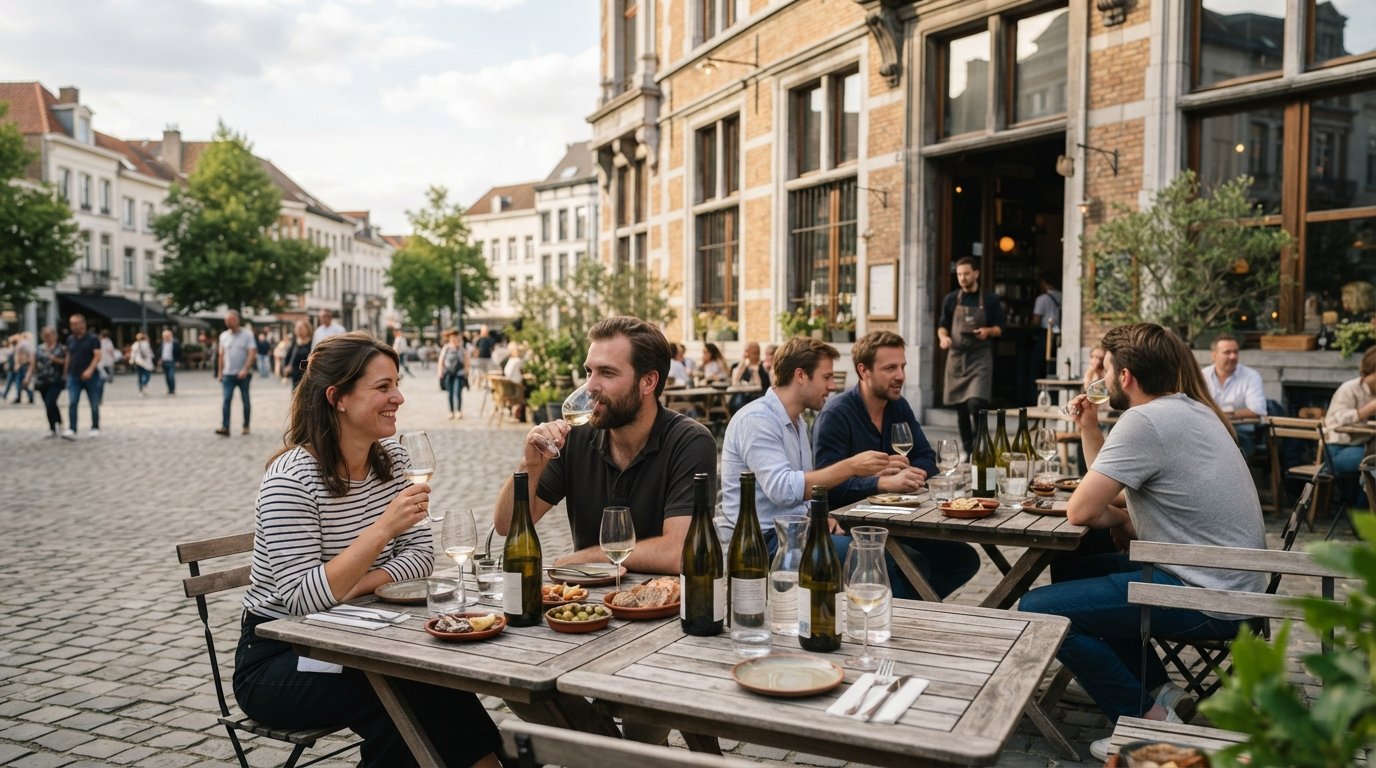
If Borgerhout has a dining room, it is Moorkensplein. That is where the neighbourhood’s food-and-drink confidence really gathers itself, and where the best tables feel less like imported concepts than local answers to local appetites. Glou Glou at Moorkensplein 27 is the flag-bearer, a bar à faim in the proper sense: chef Christophe Van Remoortere sends out French-rooted small plates with Asian and Italian accents, all designed to share, all matched to a cellar of biodynamic and low-sulphite natural wine. It is closed Sunday to Tuesday, so plan ahead and book. Across the square, Bar Caju at Moorkensplein 28 is the daytime counterpart, the kind of breakfast-and-lunch bar that makes you wonder why more neighbourhoods don’t understand the value of a good croissant and a decent lunch burger. Camille Grillet keeps it seasonal, with house-made jam and granola, and the room runs Wednesday to Saturday from 9 to 4.
For dinner with a little more fire in it, Briquet on Vinçotteplein does creative vegetable-forward sharing plates, with prices roughly €14–€24 and a natural-wine list poured from tanks at about €6.50 a glass. The terrace matters here; in Borgerhout, a good terrace is not decoration, it is a civic service. Bistro Rocco on De Leescorfstraat 72 is the intimate counterpoint: friends Maud and Marie-Charlot run an open kitchen turning out fresh pasta and seasonal small plates with organic Italian and French wines. No reservations, first come first served, Wednesday to Saturday. That is very Borgerhout — a place that trusts the room to sort itself out.
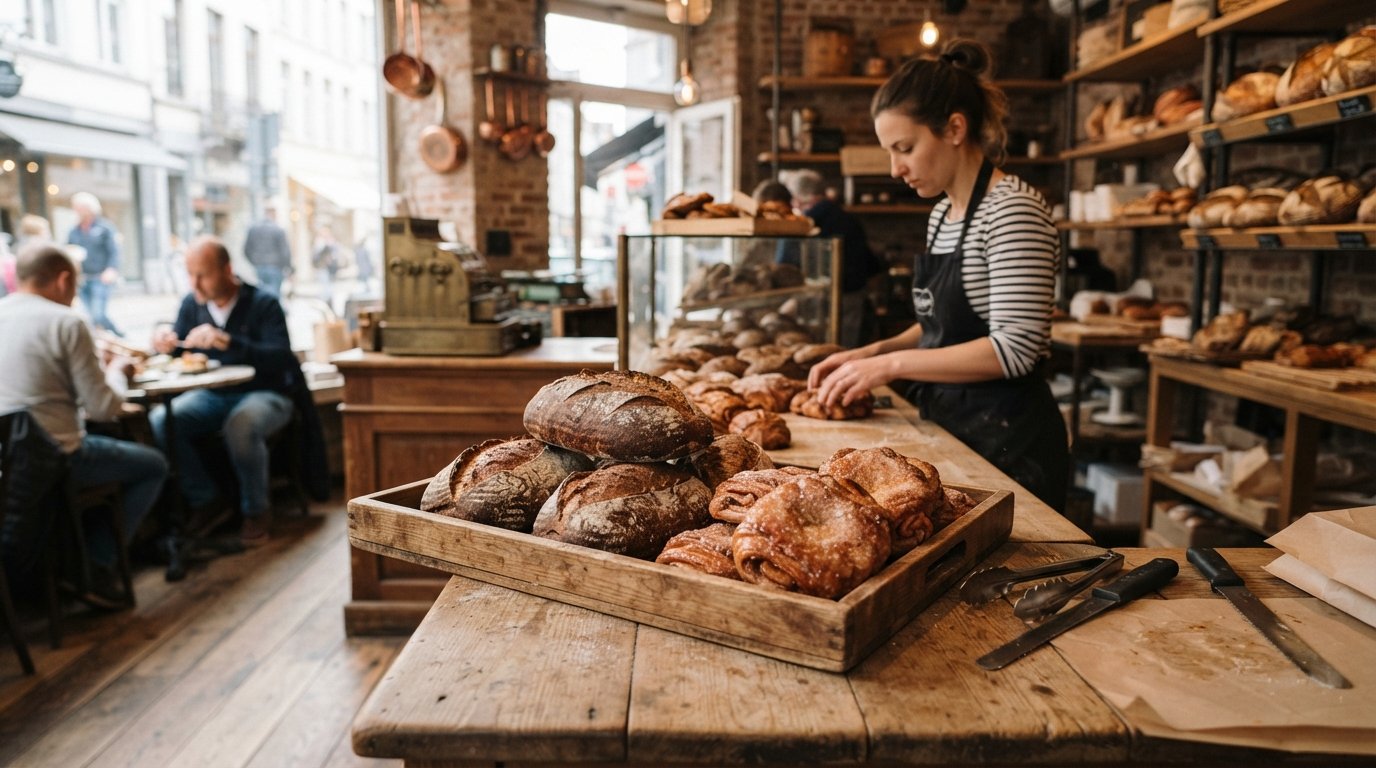
Between meals, the neighbourhood keeps you fed in smaller, more everyday ways. Butchers Coffee on Generaal Eisenhowerlei 19 pulls the best espresso in the area and bakes its own sourdough, which is the sort of detail that sounds modest until you realise how often a city’s best mornings depend on it. Bakkerij Boulot on Sint-Marcusstraat is the sourdough atelier locals queue for, with rye-and-wheat “boulot” loaves and cinnamon couques straight from the oven. And you haven’t really eaten Borgerhout until you’ve worked your way down the Turnhoutsebaan itself: Moroccan sweets at Bakkerij Roma, falafel at Falafel King, Belgian fries at Frituur Tina. That sequence alone tells you more about the district than a brochure ever could.
Going out
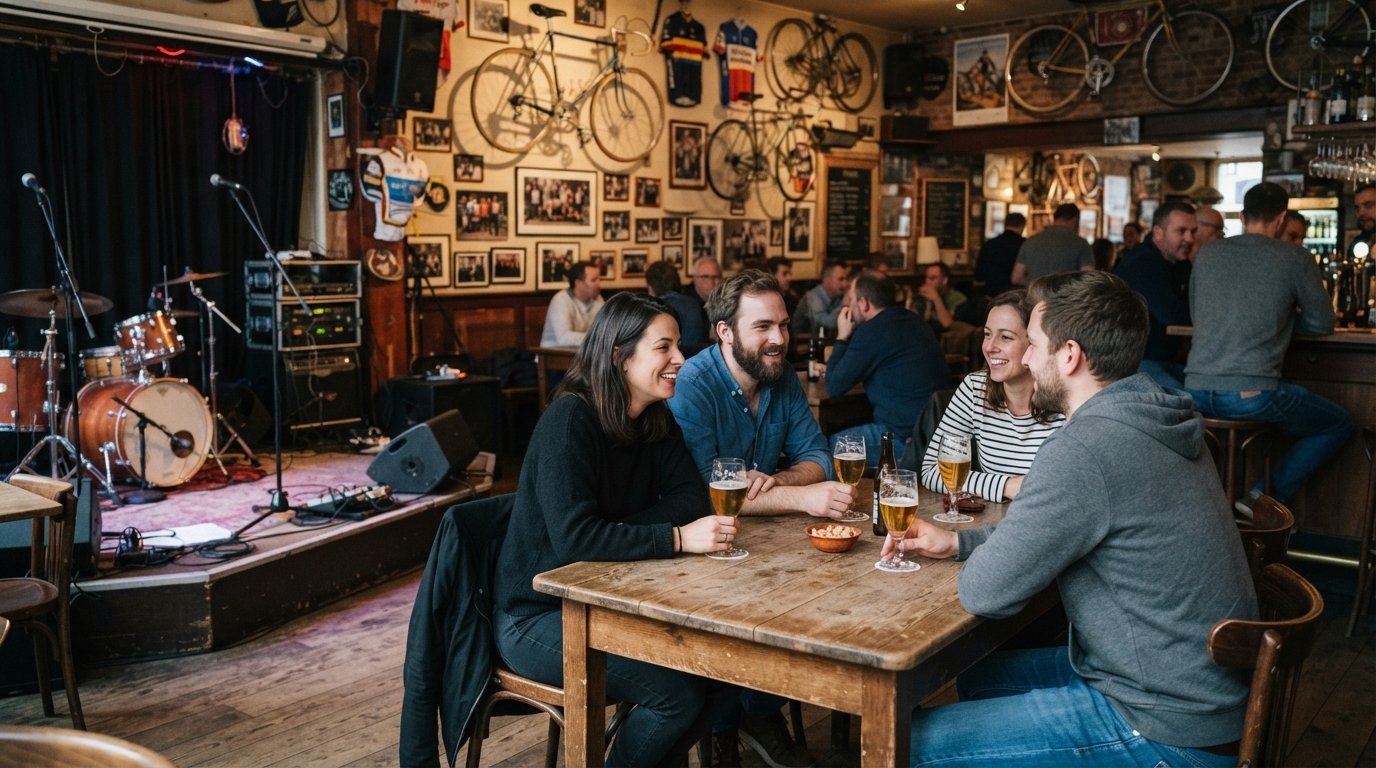
Nightlife in Borgerhout is not about velvet ropes or superclubs; if you want that, the rest of Antwerp will happily send you elsewhere. Here, the evening is built around cafés, gig rooms and the pleasure of staying put. The anchor is Café Mombasa on Moorkensplein, Rein Adons’s beer-and-bicycle café with well over 100 beers, cycling races on the big screen, cycling photos papering the walls and live bands on a tiny stage. It has the cheerful clutter of a place that knows exactly what it is. You go for a beer and end up staying for a song, or a second beer, or both.
A short walk away, Bar Leon near Krugerplein has one of the city’s sunniest, biggest terraces beside a playground. Since 2010 it has been the classic buurtcafé: laid-back beer and wine, open late on weekends, and exactly the kind of place where the neighbourhood’s social life spills out into the evening without needing a special occasion. If Borgerhout has a living room, Bar Leon is one of the sofas.
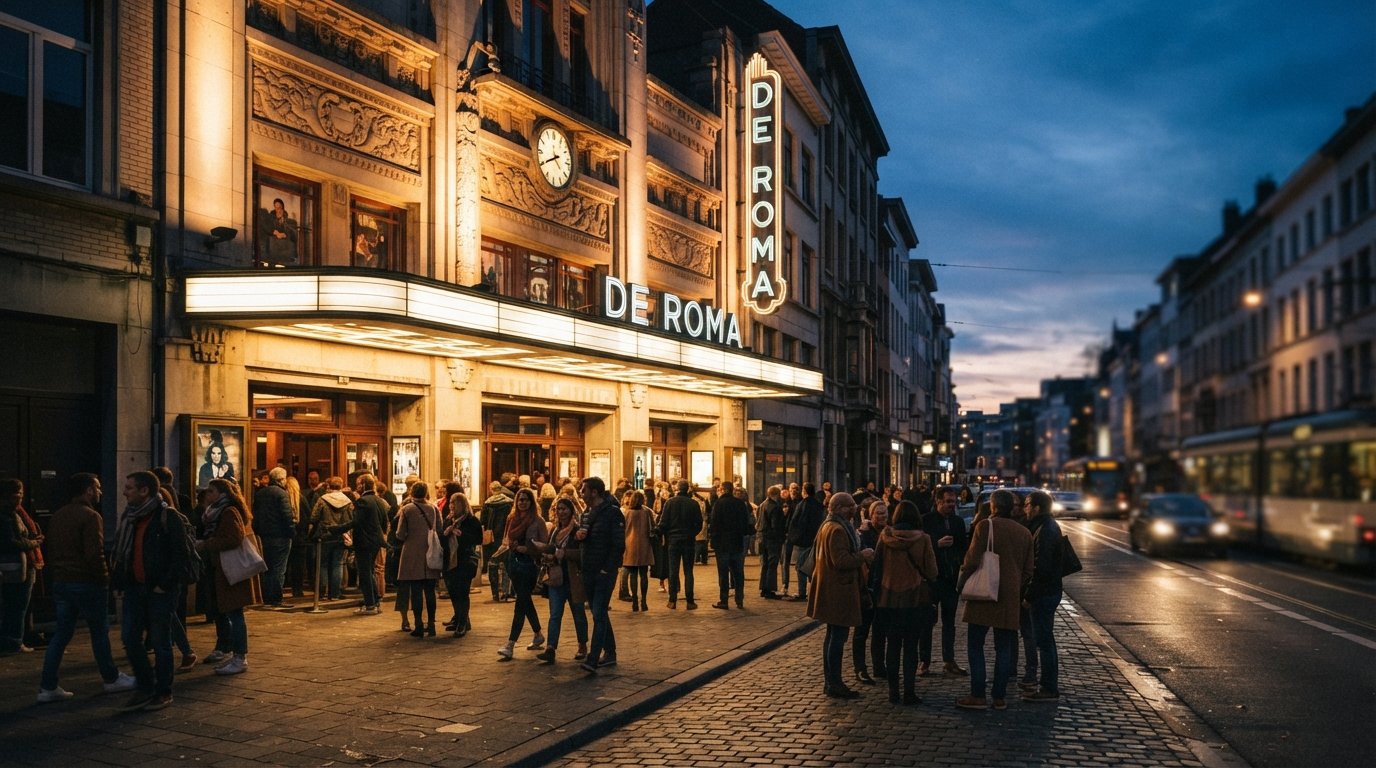
For a proper night out, the big rooms do the heavy lifting. De Roma on the Turnhoutsebaan is the neighbourhood’s crown jewel: a restored 1928 Art Deco cinema, once Antwerp’s largest at 2,000 seats, saved by volunteers and reopened in 2003. Today it hosts concerts, world music, film and theatre, and still carries the grandeur of a building that knows how to hold a crowd. A little further out, Trix on Noordersingel 28–30 is the former factory turned roughly 1,100-capacity venue for alternative, indie and heavier touring acts. Together they give Borgerhout an evening range that is better than it has any right to be. You can start with a natural wine, move to a beer, and end in a packed hall with your coat over the chair and your ears ringing. That, in this neighbourhood, counts as a very good night.
Things to do / what to see
Borgerhout rewards wandering more than ticking off sights. The squares are the place to begin. Moorkensplein is the food-and-drink hub, all terraces and movement, while Krugerplein is the leafy family square with the playground and Bar Leon’s big, sun-catching terrace. Between them lies the real city: side streets where studios, cafés and galleries have landed without asking permission from the main road. That is where Borgerhout feels most itself — not in a monument, but in the everyday choreography of people moving between work, school, coffee and a late drink.
The neighbourhood’s DIY art scene is a genuine draw, not a decorative afterthought. Base-Alpha Gallery is artist-run and focused on emerging Belgian and international artists; DMW Gallery shows contemporary work with rotating exhibitions. And then there is BorGerHub, a creative laboratory and event space in a former Justice of the Peace court, which feels exactly like the sort of adaptive reuse Antwerp does best when it stops trying to be precious about it. These places matter because they are not trying to stand apart from the neighbourhood. They are part of its operating system.
For something sweet and serious, Coup de Chocolat deserves a detour. Caroline Huyghe runs this bean-to-bar chocolate maker, and the detail that sticks is as good as the chocolate: her Colombian cocoa is shipped in by sailing cargo ship. That kind of stubbornness feels very Borgerhout — a little idealistic, a little practical, and completely unwilling to do things the easy way if the better way is available.
Time your visit with live culture if you can. A concert at De Roma or Trix turns a good day into a proper Borgerhout day, and even if you only have an hour or two, the district rewards the simple act of staying outside. Order a natural wine or a Belgian beer, sit on a terrace, and watch the neighbourhood do what it does best: keep itself in motion without making a song and dance about it.
Don’t miss in Borgerhout
Turnhoutsebaan, a bustling multicultural commercial street
Krugerplein, a popular local square with neighborhood bars
De Roma, a beautifully restored historic cinema and concert hall
Shopping & markets
Shopping in Borgerhout is browsing, not grand consumption. The Turnhoutsebaan is the district’s long, unglamorous ribbon of Turkish greengrocers, Moroccan grocers, spice shops, textiles and everyday retail — cheap, colourful and genuinely useful. It is not polished, and that is precisely why it works. You come here for bread, fruit, sweets, fish, a new cable, a quick trim, and maybe a bag of something fragrant you did not know you needed until you smelled it.
Among the traditional shopfronts are the specialist newcomers that tell you how the neighbourhood is changing without losing its base layer. Royale Fish on Handelstraat is the stop for Moroccan fish. Coup de Chocolat doubles as an edible souvenir stop. Bakkerij Boulot and Bakkerij Roma cover the baked goods spectrum from sourdough to Moroccan sweets. The whole strip is a lesson in coexistence, but also in practicality: these are shops people use, not places designed to be photographed and forgotten.
The set-piece is the weekly Sunday market on the Sint-Bernardsesteenweg, the best moment to feel Borgerhout in full flow. Produce, cheap clothes, household bits, food stalls, a properly diverse crowd — it is all there, and all moving at once. Locals will tell you that a Sunday market wander, followed by a detour through the side-street galleries and a terrace afterwards, is the ideal Borgerhout half-day. They are not wrong. One tip, though: many independent shops keep short hours and some close early or on Mondays, so weekends and midday are your safest bet.
Where to stay in Borgerhout
Borgerhout is more a live-like-a-local base than a hotel district, so the stock leans toward B&Bs and apartments rather than big hotels. Several sit right on Moorkensplein and the nearby streets, which is exactly where you want to be if your idea of a good stay involves stepping out for Glou Glou, Bar Caju or Café Mombasa without needing a taxi. That pocket gives you the food scene, the terraces and the tram on your doorstep while staying quieter than the Turnhoutsebaan itself.
Prices are noticeably gentler than in the old town, which is part of the appeal. If you are a light sleeper, pick a place a street back from the main road. If you prefer the calmest, greenest feel, aim toward Krugerplein or the Zurenborg edge. Borgerhout suits adventurous eaters and repeat visitors who want a real neighbourhood rather than sightseeing convenience. If this is your first time in Antwerp and your priority is the cathedral and Grote Markt, stay centrally and come here for the evening instead. Borgerhout is the sort of place that rewards being nearby, not necessarily being in the middle of everything.
Hotels in Borgerhout
Our best-rated stays in this neighbourhood. Prices are approximate “from” rates — confirmed at the provider when you continue. We may earn a commission if you book through our partners — at no extra cost to you.
In this area In this area
Getting around
Borgerhout sits just east of Antwerp’s centre and is easy to reach. It is about a 20-minute walk from Antwerpen-Centraal, and tram 24 runs from Astridplein beside Central Station straight down the Turnhoutsebaan, stopping at De Roma in the middle of the neighbourhood. Trams 4 and 10 also serve the district. Once you are here, the place is flat and very walkable. The squares, bars, bakeries and galleries are all within a few minutes of each other, which means the neighbourhood works best at street level, on foot, with enough time to drift.
For the wider city, the centre, Meir shopping street and the Zuid museum quarter are a short tram ride or brisk walk away, and Zurenborg’s Art Nouveau streets sit on Borgerhout’s southern edge. Antwerp International Airport in Deurne is only a few kilometres east, while Brussels Airport is about 45 minutes by train via Antwerpen-Centraal. Street parking is limited and tricky, so if you are driving, use a car park and get around on foot and tram. In a district like this, that is not a compromise. It is the point.
Gallery
Borgerhout in pictures
Borgerhout — your questions
Is Borgerhout a good area to stay in Antwerp?
Yes, if you want a real, lived-in neighbourhood with a standout food-and-drink scene rather than doorstep sightseeing. Time Out named it the world's second-coolest neighbourhood in 2025, and it is cheaper than the old town, with the centre a 20-minute walk or short tram away. Stay around Moorkensplein for the bars and cafés. If your priority is the cathedral and Grote Markt, base yourself centrally instead and visit Borgerhout for the evening.
Is Borgerhout safe?
Broadly yes. Borgerhout is a busy, multicultural neighbourhood that feels alive from morning to late night, and visitors generally find it welcoming and safe. Like any dense urban district, it pays to keep normal city awareness — watch your belongings and stick to lively streets on the main Turnhoutsebaan late at night — but the squares and side streets where you will spend most of your time feel friendly and residential.
What is Borgerhout known for?
Its superdiversity and its DIY food-and-culture scene. Locally nicknamed BoHo, it is home to 140-plus nationalities and a wave of natural-wine bars, sourdough bakeries, coffee spots and artist-run galleries that grew up alongside its Turkish and Moroccan shops. Highlights include Glou Glou and Briquet for natural wine, Café Mombasa's beer-and-bike café, live music at Trix and De Roma, and the Sunday market on the Sint-Bernardsesteenweg.
How do I get to Borgerhout from Antwerp Central?
It is about a 20-minute walk from Antwerpen-Centraal, or you can take tram 24 from Astridplein to the De Roma stop. Trams 4 and 10 also serve the district.