 In this area
The Antwerp issue
Diamond Quarter, Antwerp: where the stones move and the station gleams
A working district behind Antwerp-Centraal where the diamond trade, kosher counters and a railway cathedral share the same few streets.

By Marieke De ClercqHow Antwerp really dresses
Roughly 84% of the world’s rough diamonds still pass through a square kilometre behind Antwerp-Centraal, and on a weekday morning you can hear the place before you properly see it: telephones, wheeled cases, a door buzzer, a half-remembered greeting in Yiddish, Gujarati or Hebrew. Then the bollards rise, the shutters stay down, and the quarter does what it has always done — work.
What the Diamond Quarter is known for
Diamond Quarter, or Diamant, is not a neighbourhood that flatters the camera. It doesn’t need to. Its theatre is economic, not decorative: four short streets — Hoveniersstraat, Rijfstraat, Schupstraat and Pelikaanstraat — hemmed by plain office fronts, CCTV, private security and the kind of retractable steel bollards that tell you immediately this is a district where tens of billions of euros in stones move through every year. The trade is concentrated in a few blocks, but the reach is global. Around 84% of the world’s rough diamonds and roughly half of all cut stones pass through here, handled by well over a thousand registered companies and thousands of brokers, cutters and dealers.

The first thing to understand is that this is a workplace before it is a sight. Antwerp’s diamond economy runs through four bourses — the Diamantkring (Diamond Club of Antwerp), the Beurs voor Diamanthandel, the Antwerpsche Diamantkring and the Vrije Diamanthandel — most of them clustered on and around Hoveniersstraat. The Antwerp World Diamond Centre, or AWDC, coordinates the industry, while grading labs including GIA, HRD and IGI keep offices within a few doors of each other. That concentration gives the quarter a kind of compressed intensity you feel on the pavement. Everyone seems to be going somewhere with purpose. Nobody is strolling for the sake of it.
It is worth arriving with clear eyes about the present. Since the G7/EU ban on Russian diamonds took effect on 1 January 2024, Antwerp lost close to a third of its rough imports, and some quarter windows now carry the melancholy little sign of the age: te huur. The city closed 2025 at about USD 19.1 billion in trade — a decline, yes, but with signs of stabilising in the second half and with Antwerp reinforced as the G7’s diamond-verification hub. The quarter is quieter than in its heyday, but “quieter” is not the same as “dead”. On the right weekday, it still feels like the centre of gravity.
What gives Diamant its odd, stubborn beauty is that it does not try to be pretty in the Zurenborg sense. There are no Art Nouveau balconies, no canal-side terraces, no postcard corners designed to make visitors linger. The beauty here is concentrated in two things: the stones themselves, glimpsed in tight window displays on Vestingstraat, and the astonishing railway cathedral that anchors the whole district. One is all sparkle and compression; the other is all stone, iron and arrival.
Plan your Antwerp trip
Live prices from our booking partners.
Guests & rooms
Free cancellation on many rooms. We may earn a commission when you book.
Where to eat & drink
The quarter eats the way it works: quickly, practically, with a strong kosher lean and very little interest in performance. That is not a criticism. In Antwerp, a district that knows exactly what it is can be more satisfying than one trying to be all things to all people.
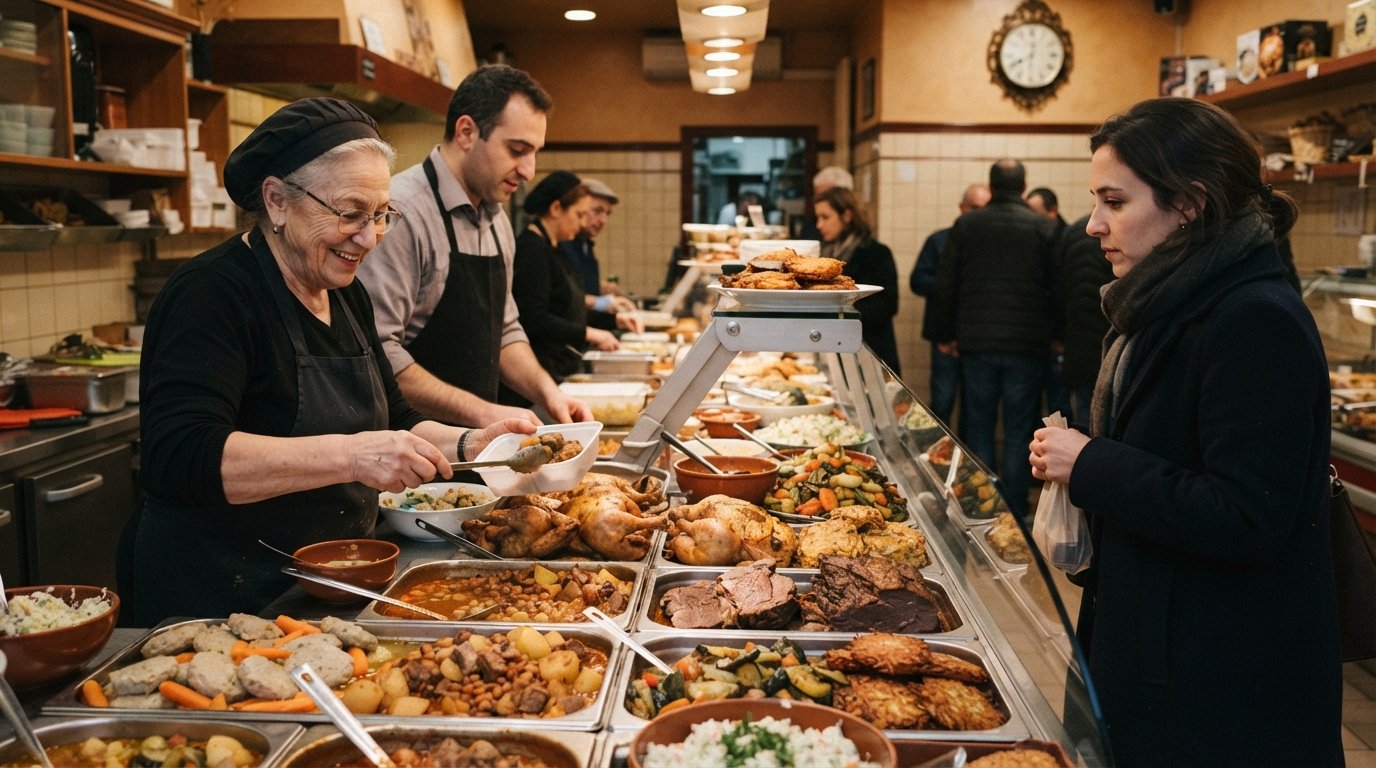
The most characterful sit-down stop is Hoffy’s on Lange Kievitstraat, run since 1985 by the Hoffman brothers. You choose from cooked dishes laid out at the counter — gefilte fish, cholent, roast meats and a serious spread of vegetable preparations — and the owners circulate between tables in several languages. It is one of those places where the room tells you, without fuss, who it serves and why it has lasted. There is no concept-shop gloss here, no borrowed nostalgia. Just a canteen with memory.
If you want a more polished dinner, Eighteen on Appelmansstraat is the surprise. The name nods to the 2018 postcode, which is exactly the sort of dry Antwerp joke I can respect. It does kosher fine dining under Shomre Hadas supervision, crossing French technique with Middle Eastern and Asian flavours, sushi included. Book ahead. This is not the place to wander in on a whim after a station coffee and expect a table because you are charming. It is a proper reservation restaurant, and it knows it.
For a stand-up bite between the bourses and the station, the streets around Appelmansstraat, Simonsstraat and Van Leriusstraat carry a rotating cast of kosher delis, dumpling and Chinese counters, and grab-and-go traders’ cafés. That patch of pavement is the quarter in miniature: businesslike, multilingual, efficient, with the food serving the rhythm of the day rather than the other way around.
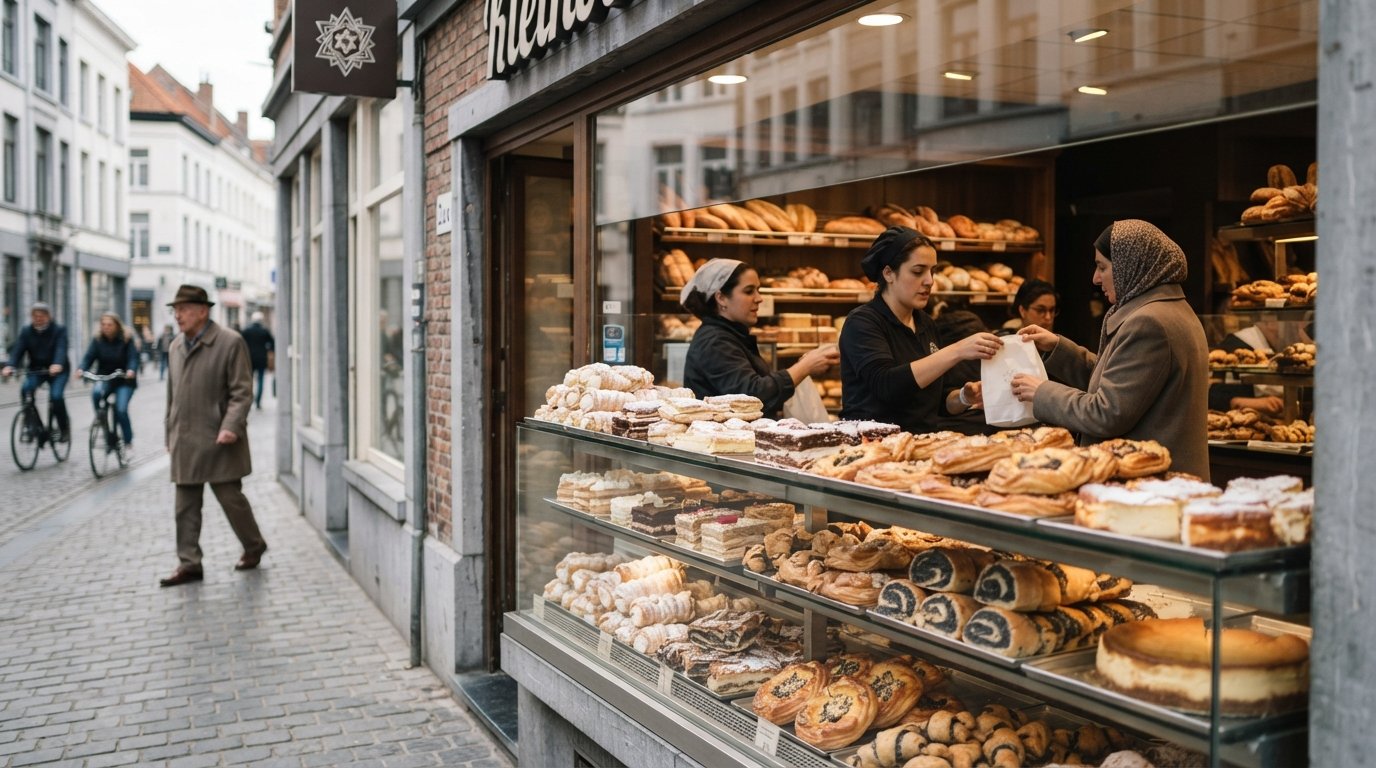
A short walk east into the wider Jewish quarter brings you to Kleinblatt on Provinciestraat, a kosher bakery that has held the same address since 1931. It is a genuine institution, and the sort of place that makes a city feel lived in rather than merely marketed. The cheesecake, cheese danishes and Eastern European pastries are the draw, and regulars swear they are the best in the city. Kleinblatt is more takeaway than sit-down café, which feels exactly right for a bakery that has survived by becoming part of the routine.
Things to do / what to see
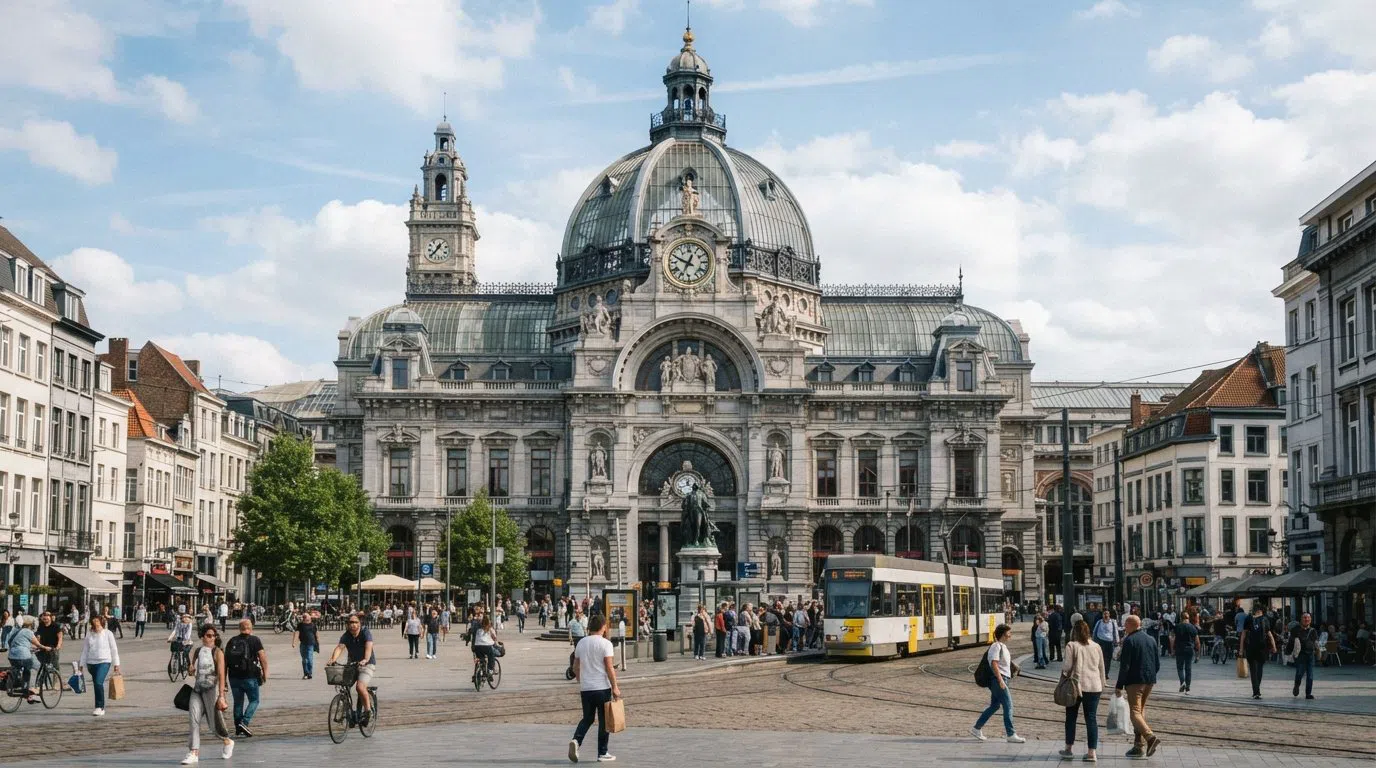
The single reason to make a trip here even if you never buy a stone is Antwerp-Centraal. Opened in 1905 and designed by Louis Delacenserie, the terminus is nicknamed the spoorwegkathedraal — the railway cathedral — and the nickname is not cute exaggeration. It is a building that behaves like a civic monument and a machine at once. Stand in the stone ticket hall under the great dome, then walk out onto the platforms sheltered by Clément Van Bogaert’s 185-metre iron-and-glass train shed. Come early morning, when the light is near-empty and the station feels almost devotional in its scale.
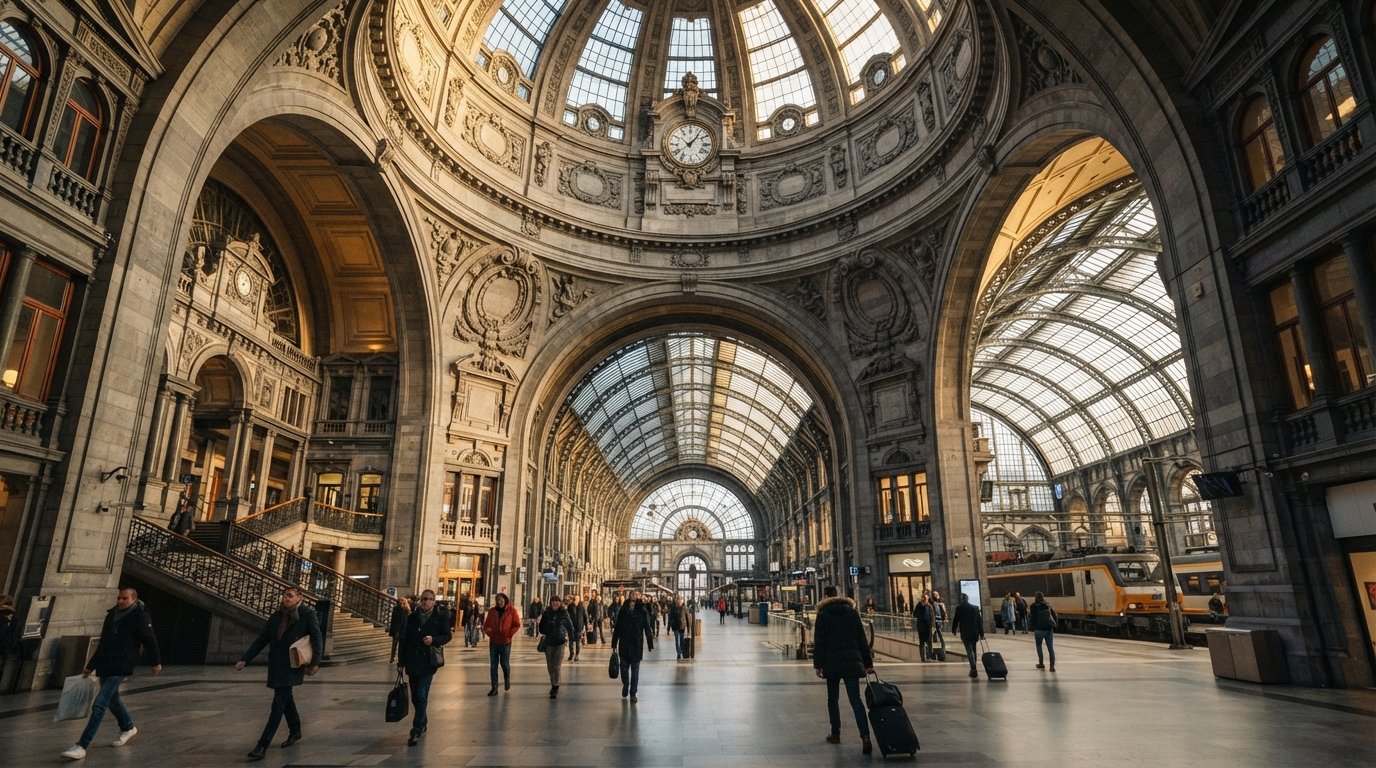
If you want a guided architecture walk, the Visit Antwerp desk sits in the arrival hall on level 0, and the walk usually starts out on Koningin Astridplein so you get the full facade before moving inward. Do that. It gives the station the proper cinematic entrance it deserves. Across Astridplein you’ll find Antwerp Zoo, founded in 1843 and one of the oldest in the world, with grand 19th-century animal houses and more than 5,000 animals. It is an unexpectedly elegant neighbour to the station, as if the city decided one monumental arrival hall deserved another kind of civic fantasy right opposite.
For the diamonds themselves, DIVA tells the story from mine to finished jewel across some 650 objects in its A Brilliant Story galleries, with grading games and design labs for kids and adults alike. It sits a short 10–15 minute walk away in the historic centre at Suikerrui 17-19, not in Diamant proper, which is worth remembering if you are planning your day around it. Standard adult entry runs around €12, and it closes on Wednesdays.
Don’t miss in Diamond Quarter (Diamant)
Antwerpen-Centraal railway station
The diamond trading streets of Hoveniersstraat and Schupstraat
The diverse culinary offerings, including traditional kosher restaurants
The best thing to do in the quarter, though, is less a formal attraction than a way of looking. Walk Vestingstraat and study the tight window displays. This is where the stones reveal themselves, not as fantasy, but as objects in circulation — certified, handled, insured, discussed, moved. The street is not long on spectacle, but it is rich in implication. You are looking at the visible edge of an industry that prefers to keep most of itself behind reinforced glass.
Shopping & buying a diamond
There are two ways to shop the quarter, and the difference matters for your wallet. Vestingstraat and Lange Herentalsestraat are the retail-facing streets, lined with window displays aimed at visitors — fine for browsing and for pieces that are ready to wear. But the received local wisdom is that the real value sits with the wholesale dealers on Hoveniersstraat and Pelikaanstraat, where there is no high-street middleman and comparable certified loose stones can run well below retail. Buyers here typically pay a fraction of high-street prices for equivalent GIA-graded diamonds.
That is the practical pitch, but the practical rules matter more than the pitch. Always insist on a grading report from a reputable lab; GIA is the widely trusted benchmark, with HRD and IGI also present locally. Look for jewellers carrying the city’s Antwerp’s Most Brilliant quality label, which is the nearest thing this district has to a public promise. Established names such as Diamond Blue and Juwelier Rudiam carry it and have been fixtures in the district for decades.
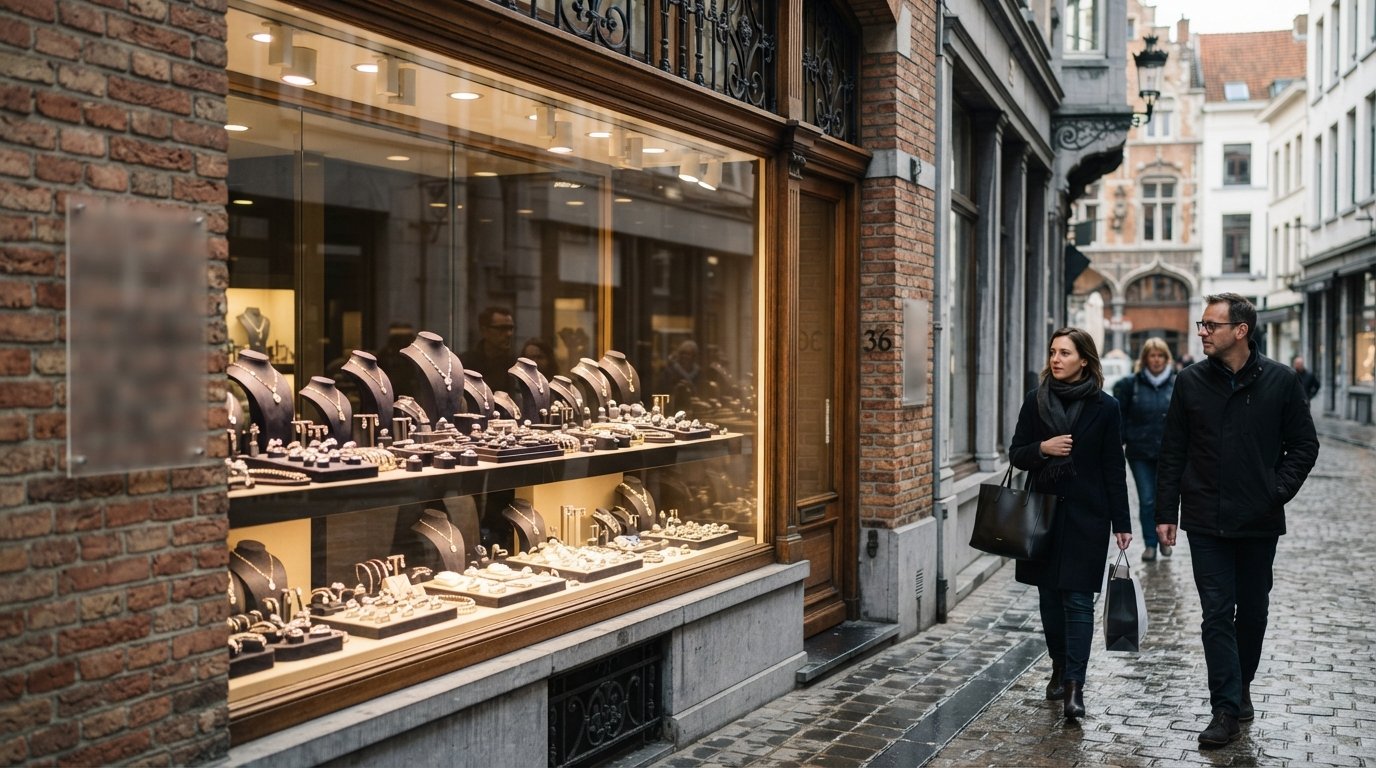
Diamond Blue is a long-running family jeweller with 18-carat gold and gemstone pieces, and Juwelier Rudiam has been in the Diamond District since 1978, making handmade, made-to-order jewellery. These are not shops to admire for their fit-out and then quietly forget. They earn their place by being real businesses in a district where too much retail elsewhere is all surface and no stock.
Trade hours are roughly 10:00–18:00 on weekdays, with many shops closed at weekends and some closing early on Fridays. That Friday-afternoon exhale is part of the quarter’s rhythm: by Sabbath, the district folds in on itself, and on Saturday almost nothing trades at all. If you are a non-EU resident spending over €125.01, ask about a VAT-refund form before you pay. It is the kind of detail that separates a good purchase from a mildly embarrassing one.
Where to stay in the Diamond Quarter
The honest pitch for staying here is convenience, not charm. Beds around Pelikaanstraat, Koningin Astridplein and the streets immediately behind the station put you a two-minute walk from the platform — ideal if you are arriving by train, doing a whistle-stop night, or heading on to Brussels, Amsterdam or Paris the next morning. The trade-off is atmosphere. The quarter goes quiet and shuttered in the evenings, so for dinner, drinks and a stroll you will want to walk, or take one premetro stop, toward the old centre, the Meir, or south to Het Zuid. Light sleepers should ask for a room away from the busy Astridplein and Pelikaanstraat frontage.
The area’s live hotel options render directly below.
Hotels in Diamond Quarter (Diamant)
Our best-rated stays in this neighbourhood. Prices are approximate “from” rates — confirmed at the provider when you continue. We may earn a commission if you book through our partners — at no extra cost to you.
In this area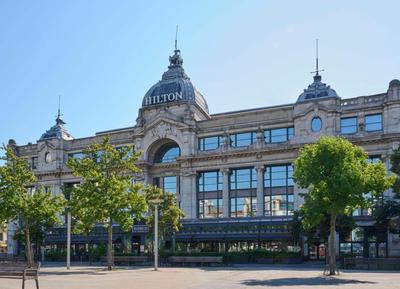 In this area
Diamond Quarter (Diamant)
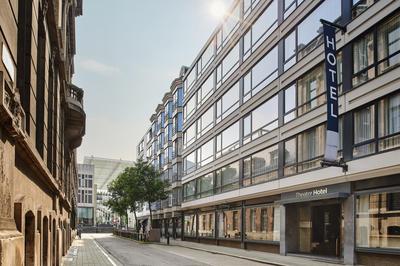
Hilton Antwerp Old Town
8.2· 5,514 reviews
approx. from£231 / nightSee prices
 In this area
 In this area
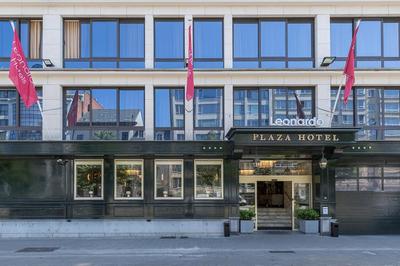
Diamond Quarter (Diamant)
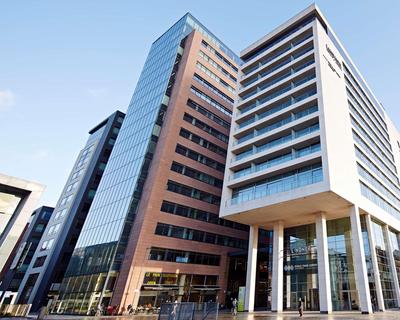
Leonardo Hotel Antwerp The Plaza
8.2· 4,775 reviews
approx. from£169 / nightSee prices
 In this area
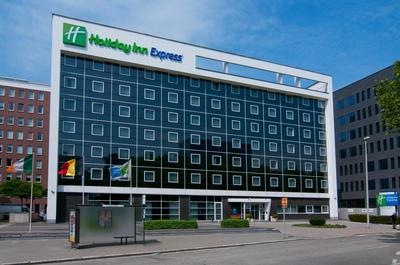
Diamond Quarter (Diamant)
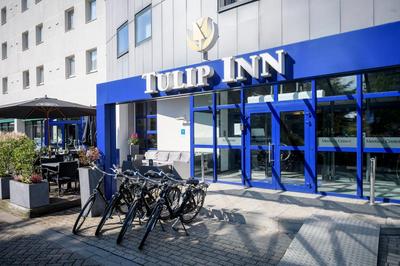
Holiday Inn Express Antwerpen City North by IHG
8.2· 5,512 reviews
approx. from£135 / nightSee prices
 In this area
 In this area
Diamond Quarter (Diamant)
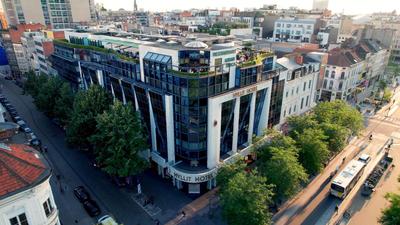
Lindner Hotel Antwerp, part of JdV by Hyatt
8.6· 3,768 reviews
approx. from£236 / nightSee prices
 In this area
Diamond Quarter (Diamant)
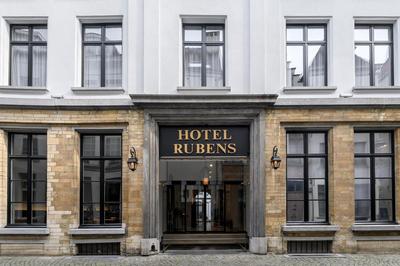
Hotel Rubens-Grote Markt
9.2· 4,355 reviews
approx. from£265 / nightSee prices
 In this area
 In this area
Diamond Quarter (Diamant)
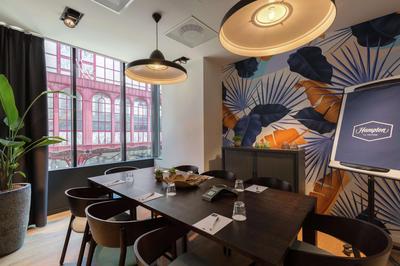
Hampton By Hilton Antwerp Central Station
8.8· 10,878 reviews
approx. from£177 / nightSee prices
 In this area
Diamond Quarter (Diamant)
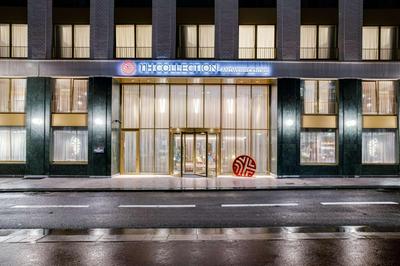
NH Collection Antwerp Centre
9.2· 7,365 reviews
approx. from£164 / nightSee prices
 In this area
Diamond Quarter (Diamant)
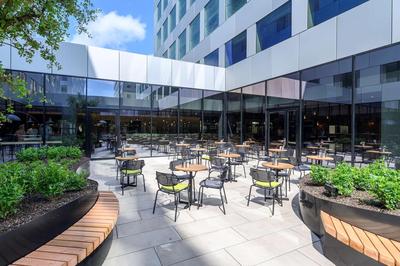
Radisson Hotel Antwerp Berchem
9.2· 4,668 reviews
approx. from£156 / nightSee prices
Getting around
This is the best-connected corner of Antwerp, and one of the reasons it works so well as a base for a short stay. Antwerpen-Centraal puts you on direct trains to Brussels in about 45 minutes, and onward to Amsterdam and, via the network, Paris and beyond. For Brussels Airport, the direct train from Centraal takes roughly 35–45 minutes, which is about as painless as airport access gets.
Underneath and beside the station, two premetro stops serve the quarter: Diamant, directly under Pelikaanstraat, is the deepest station in the city and sits on tram lines 2, 6, 9 and 15. Astrid is linked to the station and Diamant by an underground walkway, so you can move between them without surfacing. A single ticket is €3 for 60 minutes with unlimited transfers, and the premetro runs roughly 04:30–01:00 daily. A major tunnel renovation is under way from May 2026 into early 2027, with some lines diverted to surface routes, so check De Lijn before relying on a specific line.
On foot, the historic centre and the Meir shopping street are about 10 minutes away, Het Zuid around 20. That is the useful truth of Diamant: it is not a destination that keeps you captive; it is a district that places you precisely where the city’s systems meet. Trains, trams, stones, kosher counters, office doors, a railway cathedral — all of Antwerp’s practical intelligence, compressed into a few streets behind the station.
And perhaps that is why the quarter lingers in the memory. Not because it is pretty. Not because it tries to be. But because it is so unapologetically itself: a working district with reinforced glass and retractable bollards, where business is still done face to face, and where the most beautiful thing on the block may be the station dome catching morning light.
Gallery
Diamond Quarter (Diamant) in pictures
Diamond Quarter (Diamant) — your questions
Is the Diamond Quarter a good area to stay in Antwerp?
It’s a good base if you value convenience over character — you’re steps from the main station and premetro, which is perfect for train arrivals or a short stay. But it empties out and shutters after business hours, so if you want evening buzz, terraces or a scenic old-town feel, base yourself in the historic centre or Het Zuid and visit Diamant by day.
Can tourists actually buy diamonds in the Diamond Quarter, and is it cheaper?
Yes. Retail shops on Vestingstraat welcome visitors, while the wholesale dealers on Hoveniersstraat and Pelikaanstraat generally offer better value on certified loose stones because there’s no high-street markup. Always insist on a GIA (or HRD/IGI) grading report, look for jewellers with the city’s ‘Antwerp’s Most Brilliant’ label, and if you’re a non-EU resident spending over €125.01, ask for a VAT-refund form.
When is the Diamond Quarter open, and is it safe?
The trade runs roughly 10:00–18:00 on weekdays; much of it closes at weekends, and — because of the Orthodox Jewish community — many shops shut from Friday afternoon through Saturday, when almost no business is done. The area is heavily secured with cameras, bollards and private security and feels safe during the day; after hours it’s quiet, so keep normal city awareness and watch for pickpockets in the station crowds.
What’s the best reason to visit if I’m not buying jewellery?
Antwerp-Centraal. The station alone is worth the trip: a 1905 railway cathedral with a stone dome hall and a vast iron-and-glass train shed, right on the edge of the district.