The Antwerp issue
Walking Antwerp After You Leave Central Station
A walk that begins in the four-level station hall and takes in a 1531 trading floor, a free dock-top panorama and the Art Nouveau streets past the ring, with the 2026 closures that will shape your day.

By Tomás AlmeidaA city read one street at a time
Most visitors meet Antwerp from the top of an escalator, photograph the dome at Central Station, and set off in search of chocolate. The building deserves more attention than that, and so does the half hour after it. On foot from that hall you can reach the world's first purpose-built exchange, the most intact square in the city, and a river you cross underneath rather than over. What follows is the route in the order I walk it, with the door rules and 2026 closures that will decide your day.
Walk down through the station, not out of it
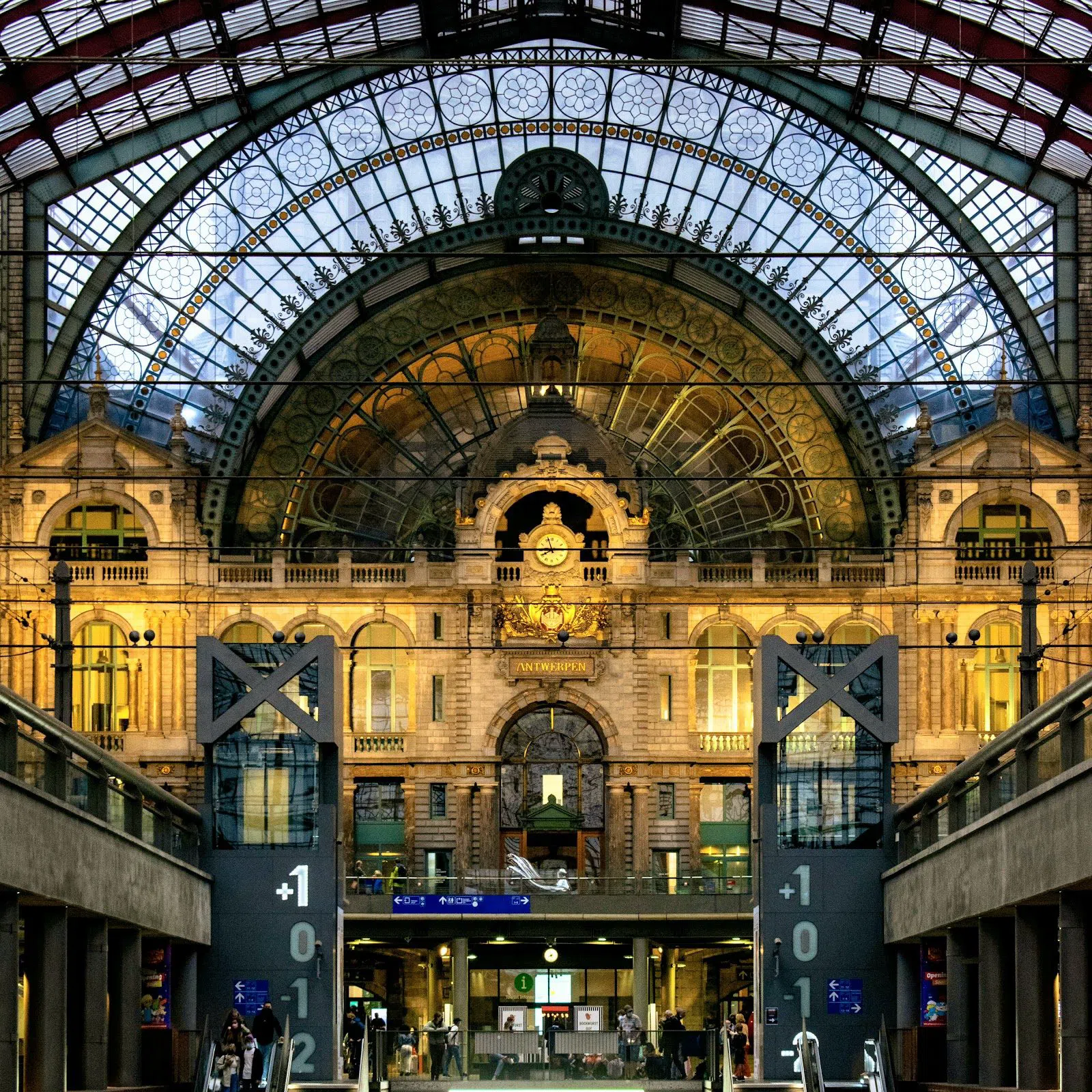
Antwerp Central Station (Antwerpen-Centraal, on Koningin Astridplein at the head of the Keyserlei) is free, public and has no door policy whatsoever. Groups walk in unchallenged; guided architecture tours meet in the main hall. The 1905 stonework and the glazed shed are what everyone climbs the escalator for, but the reason the building still works is underneath it. The 2007 conversion turned a dead-end terminus into a through-station by stacking tracks on four levels beneath the original hall, and the descent is what makes this architecture rather than ornament. You cut down through the strata, trains running below trains, the old fabric held above the new. Twenty minutes, and spend most of them going down. Outside, Koningin Astridplein is slated for redevelopment, so expect hoardings and a less flattering exterior than the postcards promise. Take your photograph from the platform end instead.
Plan your Antwerp trip
Live prices from our booking partners.
Free cancellation on many rooms. We may earn a commission when you book.
Down the Meir to a trading floor from 1531
The Meir runs southwest from the station and does most of the work of getting you into the old town in about ten minutes. Turn off it and you find the Handelsbeurs Antwerpen (the Bourse, just off the Meir in the centre), the world's first purpose-built commodity exchange, opened in 1531, left to decay for decades and now restored. Stand on the floor under that glass roof and you are looking at the shape every trading hall built since has borrowed: the covered courtyard, the arcades, the merchants circling.
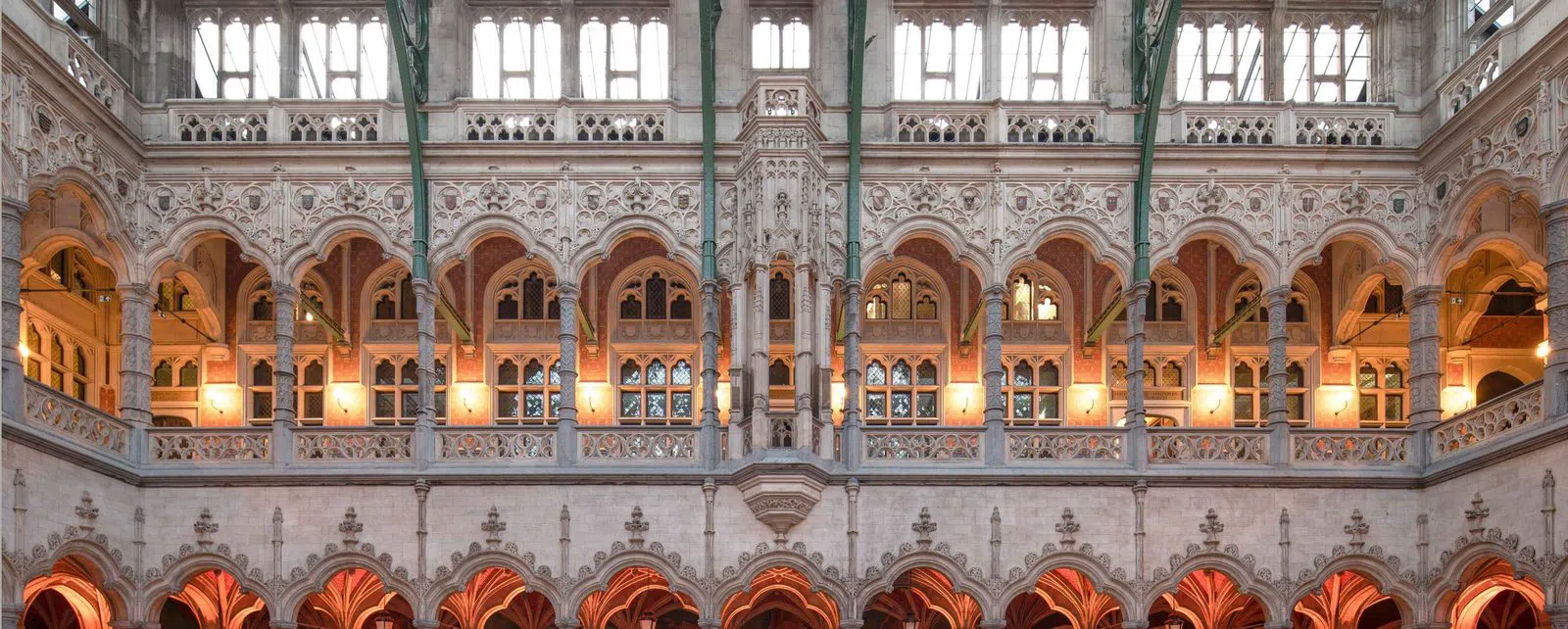
The catch is access, and it is a real one. The floor is open to the public only at weekends and during school holidays, 10:00–18:00, and it closes entirely when the building is hired for a private event. Check the calendar on the morning you plan to go, not the night before, because the schedule changes late. When it is open it is free and free-flow, so a group can simply wander in and out.
The Jesuit square most people walk past
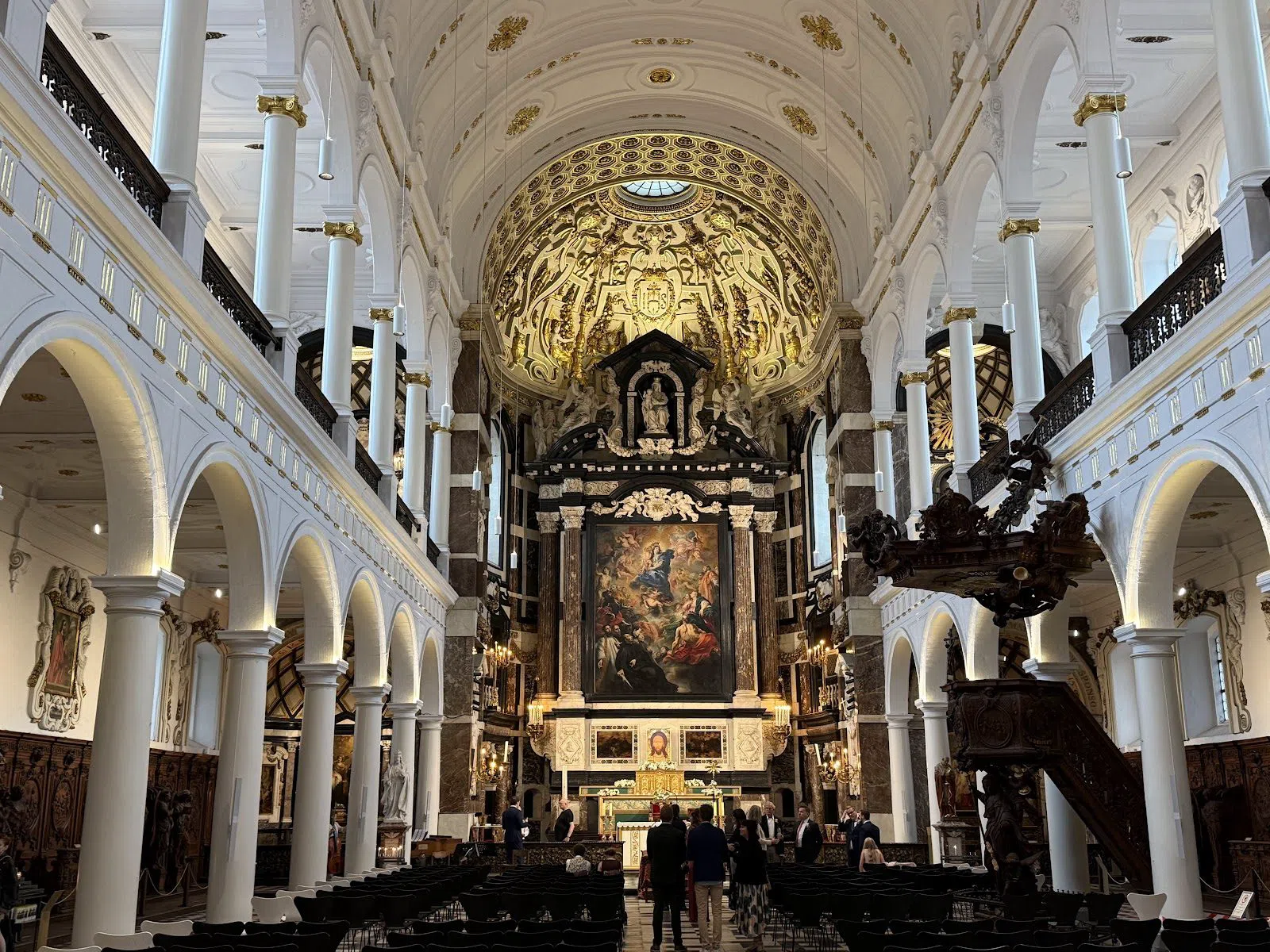
A few minutes north sits Hendrik Conscienceplein, and on it Sint-Carolus Borromeuskerk (Hendrik Conscienceplein, city centre), built by the Jesuits between 1615 and 1621. If you want the walkable-historic-streets version of Antwerp in a single stop, this is it. The square is the most intact in the city and closed to traffic, and the church front is theatre in stone rather than piety.
Entry is free outside services. Guided tours are arranged by prior email, for a small fee, and small groups are fine; large parties are not what this building is for. Hours vary a great deal and it shuts for celebrations, so treat an open door as a bonus rather than a plan.
The cathedral, on its own terms
Cathedral of Our Lady (Onze-Lieve-Vrouwekathedraal, between Groenplaats and Handschoenmarkt) is the counterweight to the station, the other building this city measures itself against and the older claim. Entry runs roughly €10–15 for an adult. Group visits are bookable through the cathedral's group page, and there is a café, De Plek, inside the complex, which makes a rare thing in a cathedral: a sane meeting point for people arriving at different times.
One caveat before you promise anyone the full Rubens experience. As of early 2026 his epitaph triptych was off display for restoration. The other Rubens works remain hung and the visit is still worth the ticket, but confirm what is on the walls before you build a morning around one painting.
A merchant's rooms while the Rubens House is shut
The Rubens House being closed is the practical problem of an Antwerp art trip, and the answer is ten minutes' walk northeast. Snijders&Rockoxhuis (Keizerstraat, centre) is €10 for an adult and free on the first Tuesday of the month, closed Mondays. It is a merchant's interior of the same period rather than a reconstruction of one: smaller rooms, a real domestic scale, paintings hung as possessions instead of exhibits.
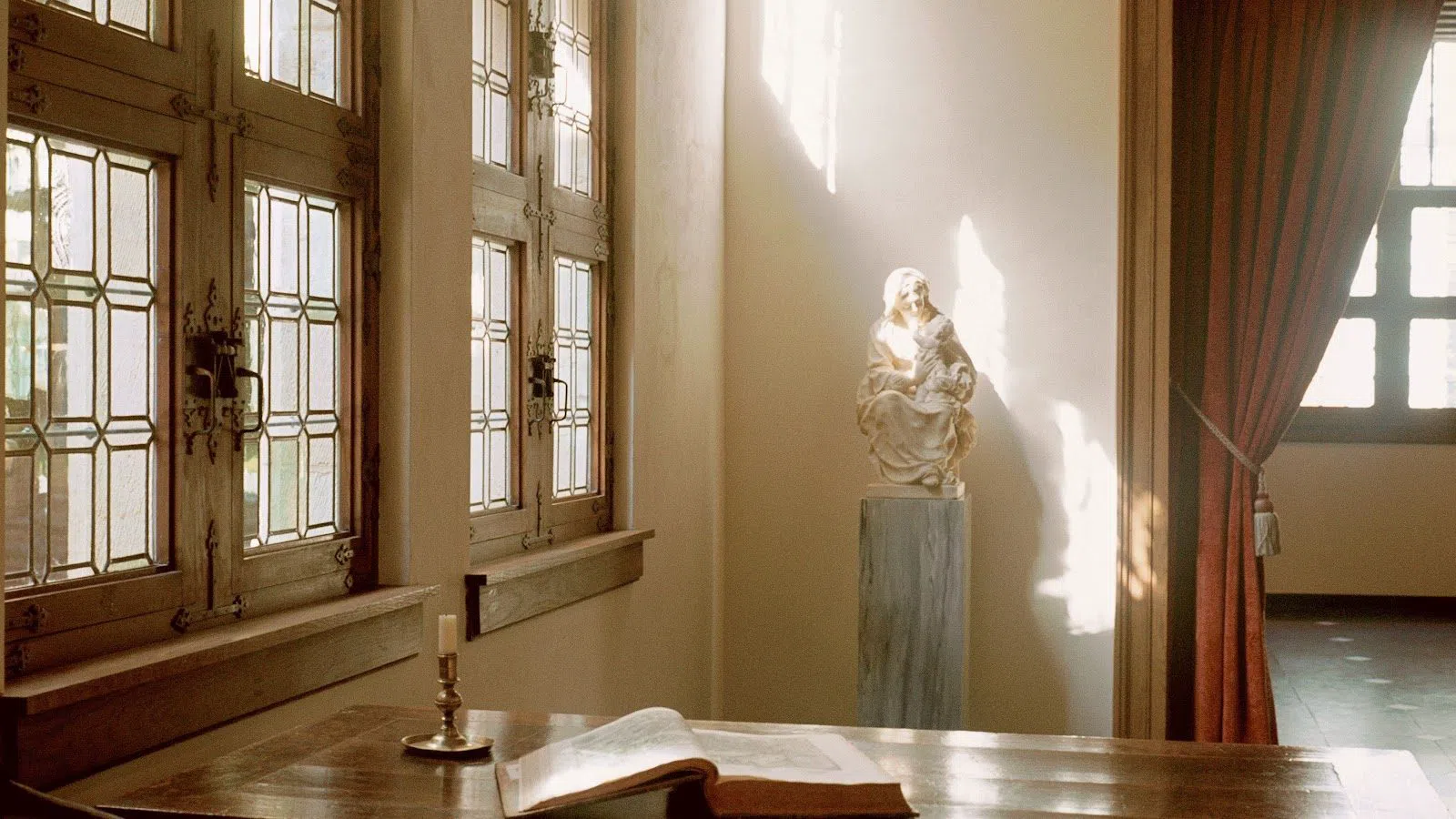
Guided visits are bookable and small groups are welcome, but the rooms are intimate and a large party will be split at the door. From October 2026 to January 2027 it hosts the first retrospective ever devoted to Catharina van Hemessen, which for a house museum of this size is an unusually serious piece of programming.
Forty years of the Antwerp Six
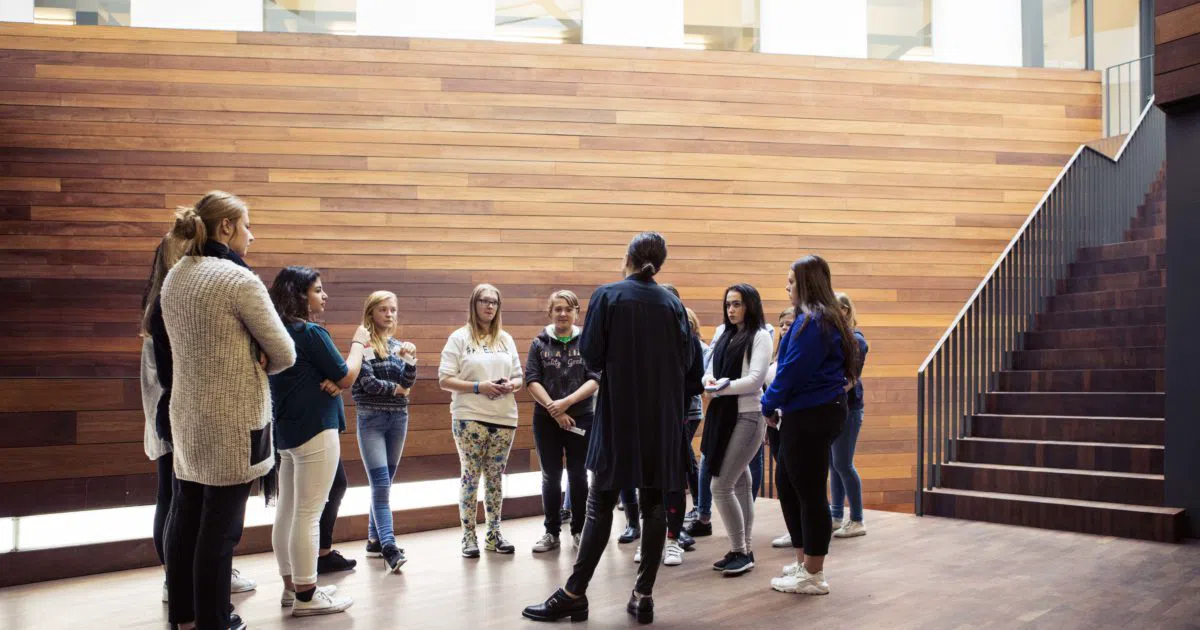
South of the cathedral, in the fashion quarter, MoMu – Fashion Museum Antwerp (Nationalestraat) is running the exhibition that gives the city its clearest claim on the late twentieth century: the first major show ever devoted to the Antwerp Six, marking forty years, from 28 March 2026 to 17 January 2027. You do not need to care about clothes to find it interesting; it is a story about six graduates who exported a city's name, told in the city that produced them.
Tickets are in the mid-teens in euros and it closes Mondays. Entry is by timed slot, so book online. Groups must pre-book, though the museum runs formal expo-visit packages and school programmes and handles them well.
The river, and the tunnel underneath it
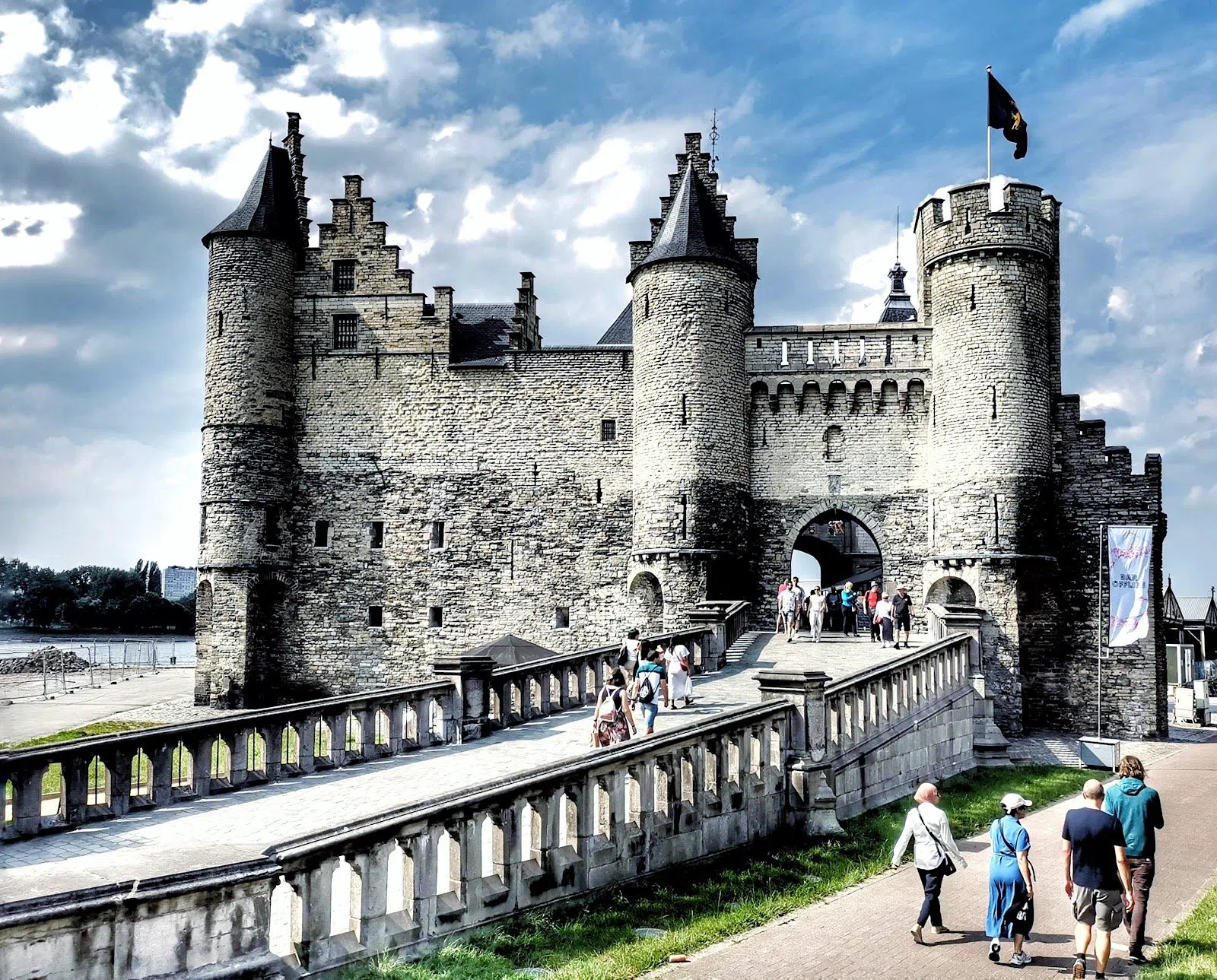
Follow any of the short streets west from Grote Markt and you hit the Scheldt at Het Steen (Steenplein, on the river), the medieval keep with a contemporary addition landed on top of it. The addition is a real piece of architecture and not a gift-shop bolt-on, and the rooftop over the river is free, as is the visitor centre inside. The paid eleven-room interactive trail, The Antwerp Story, is €7 for adults, €5 for ages 6–18 and free under 5. Skip it without guilt if you are short on time; take the roof regardless. Because the building doubles as the city visitor centre and the cruise terminal, it is built for volume and walk-in groups are no problem at all.
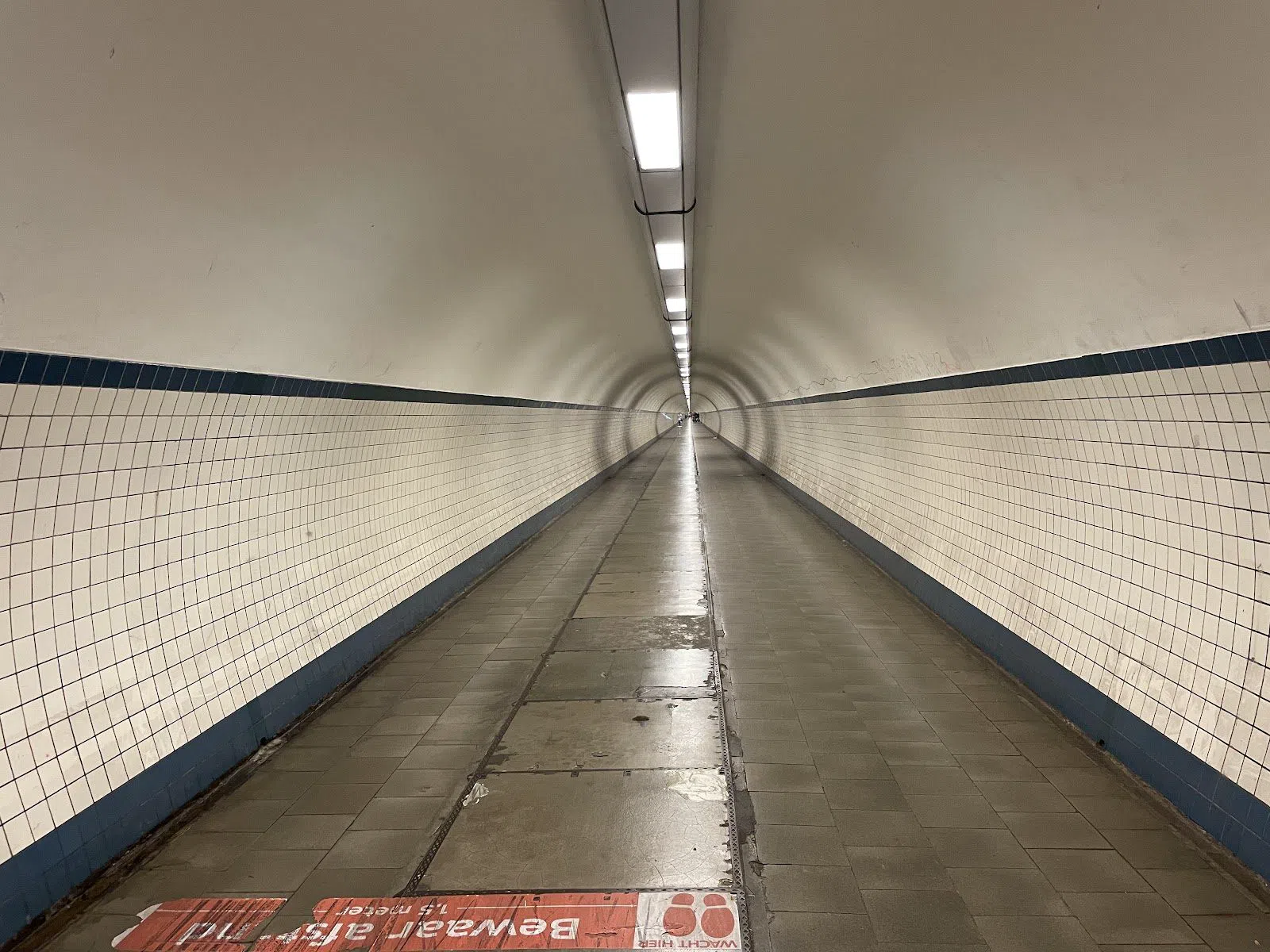
Five minutes south along the quay, at Sint-Jansvliet, is the entrance to the Sint-Annatunnel (Sint-Jansvliet, on the old-town side). It is 572 metres under the Scheldt, free, always open, and the original wooden escalators, steep and clattering, are the reason to go. Ride down, walk across, come up on Linkeroever and turn round for the classic skyline view back at the old town, which is the one view of Antwerp you cannot get from inside Antwerp. It is narrow, so a group walks single file when cyclists come past. Escalator maintenance runs weekly on Thursdays and the lifts can queue badly then; the tunnel itself stays open, so it costs you time rather than the trip.
North into the docks
Het Eilandje, twenty minutes' walk north of Het Steen, is where the city stops being medieval. MAS | Museum aan de Stroom (Het Eilandje) is the red tower you have already seen from the river, and the single best free thing in Antwerp is inside it: a spiral of escalators that climbs the outside of the building floor by floor, each turn giving a wider slice of the docks, ending in a 360° rooftop boulevard. No ticket for the climb or the roof. The museum floors are ticketed and currently show 'Martial Arts' until late November 2026, and there is a rooftop restaurant and café, which along with the open-plan floors makes it one of the few places in the city that absorbs a large party.
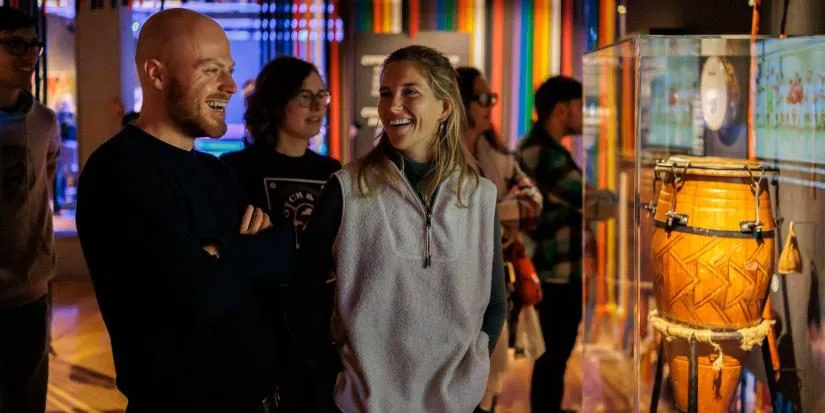
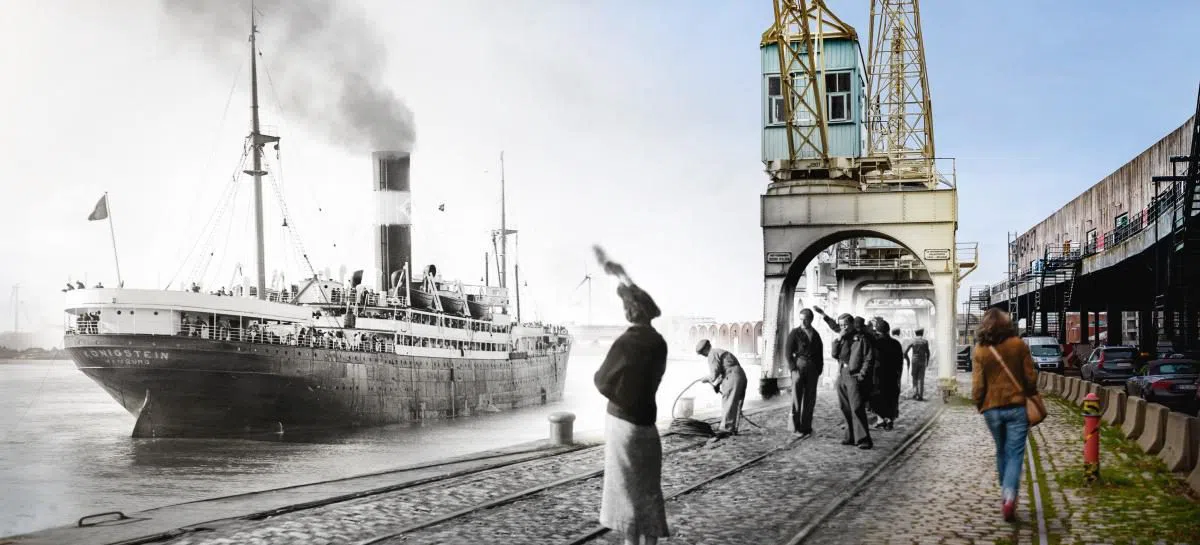
A short walk away, in the old shipping sheds on the quay, the Red Star Line Museum (Het Eilandje) tells the emigration story in the actual buildings where millions were processed and disinfected before sailing for America. That is why it lands harder than a general history museum: you are standing in the room instead of reading about it. Tickets are around €12, it opens Tuesday to Sunday 10:00–17:00, and a temporary show, 'Between Languages', opens on 19 November. The converted sheds take sizeable groups.
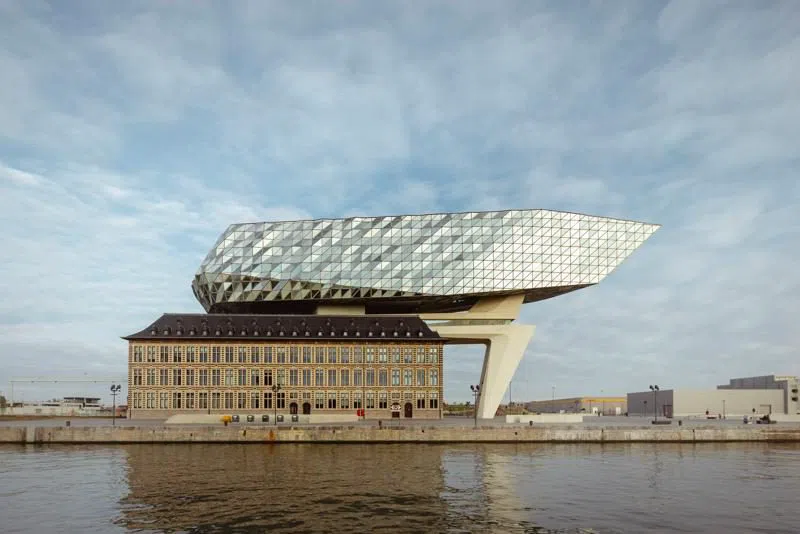
Further north, in the working port, the Port House (Havenhuis) (port area, beyond the Eilandje) is Zaha Hadid's last major completed building, a faceted glass hull set above a converted fire station and the best modern answer to the station's 1905 excess. It is a functioning headquarters rather than an attraction. The exterior is public and unrestricted, the interior is by scheduled guided tour only in small fixed-size slots that need booking well ahead, and the tours are given in Dutch. Most people come for the outside, and the outside is the point.
The one museum worth a whole morning
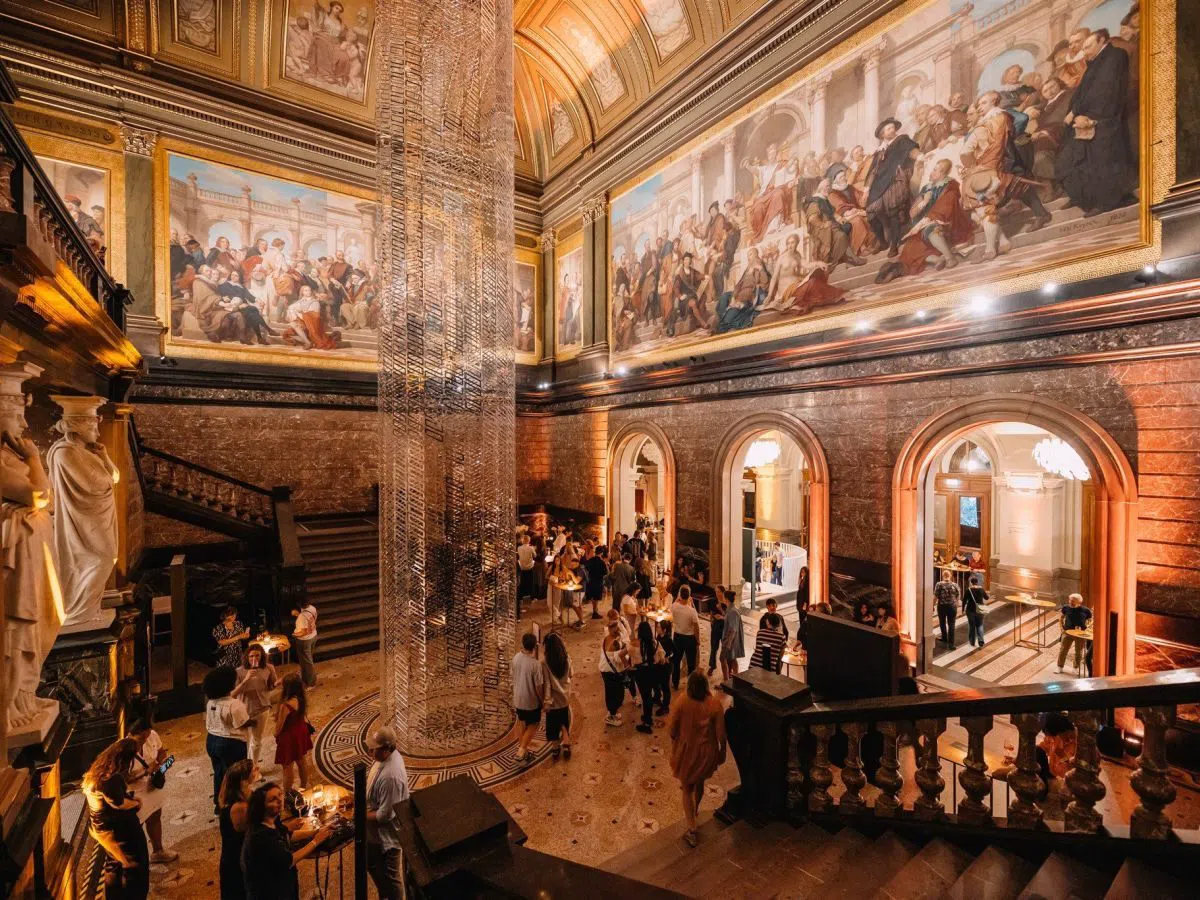
Back south, in Het Zuid, KMSKA (Royal Museum of Fine Arts Antwerp, Leopold De Waelplaats) costs €20 and is the strongest architectural experience in the city after the station. The collision of the nineteenth-century shell with the white contemporary volumes cut into its courtyards is worth the ticket on its own, and it currently holds Rubens works displaced from the closed Rubens House, which makes it the single best answer to the Rubens problem. Thursday late opening runs to 22:00, the quietest and best-lit way to see it. There is a dedicated groups programme and the building swallows coach parties without feeling crowded.
Out past the ring for the payoff
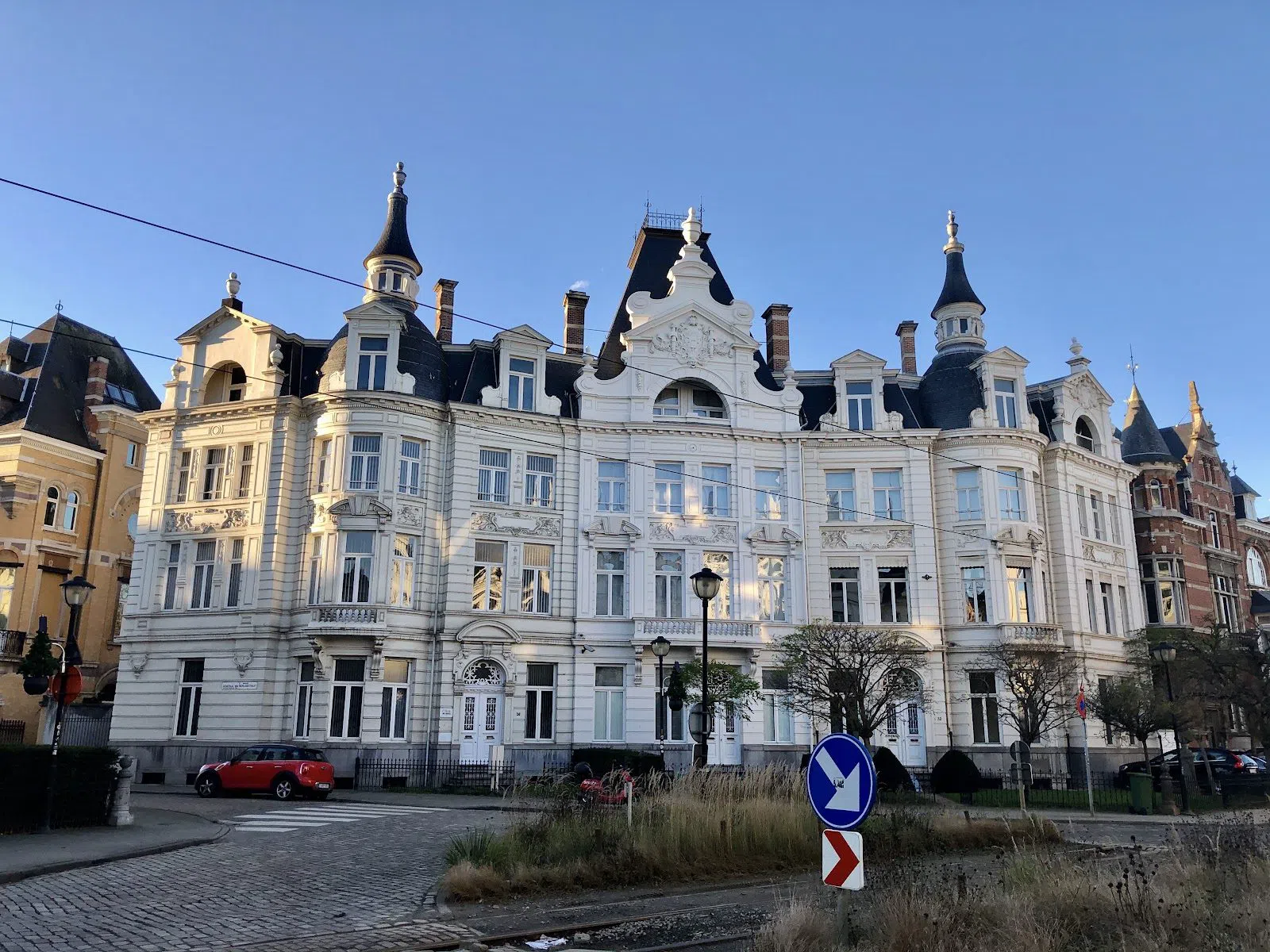
Fifteen minutes by tram gets you to Zurenborg / Cogels-Osylei (Zurenborg, east of the centre), arguably the densest Art Nouveau quarter in Europe and the real reward for leaving the tourist rectangle. It is an open street, free, walkable at any hour, and two-hour guided group tours run from the station hall at Antwerpen-Berchem. Street works have been reported along Cogels-Osylei; the houses are untouched but expect fencing in your photographs.
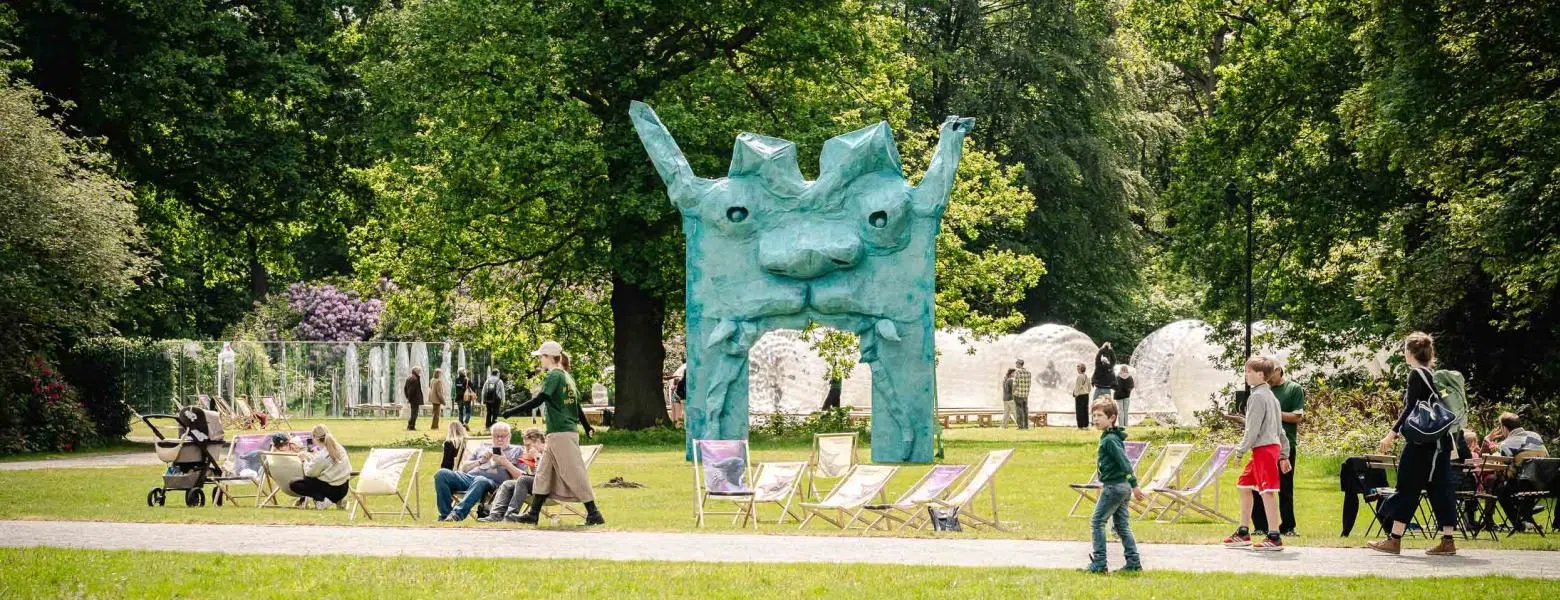
South of the ring, Middelheim Museum (Middelheim, southern edge) is an open-air sculpture park that is free, needs no booking and takes groups of any size, with a collection serious enough that the price makes no sense. Hours shift by season, 10:00–19:00 in September and 10:00–17:00 from October to March, and it closes Mondays.
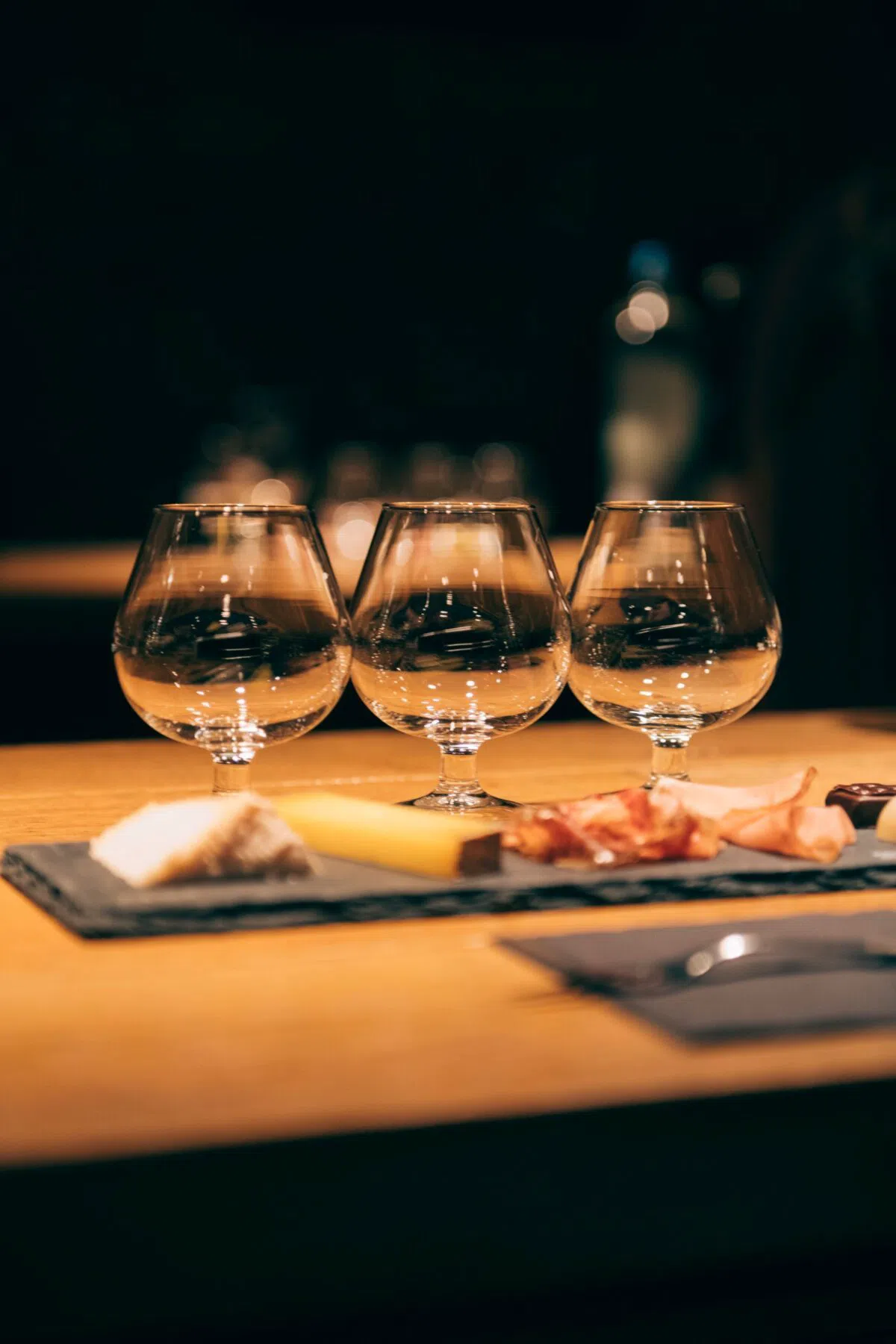
Fifteen to twenty minutes by tram from Central Station, De Koninck – Antwerp City Brewery (Zuid, on the southern approach) has been brewing since 1833 and is the one brewery in Antwerp you can tour on the spot. The tour is self-guided and interactive, so it scales to any group size, tickets run mid-teens in euros including tastings, and it ends with a bolleke in the bar. On site you also get Van Tricht the cheese affineur, a butcher, a bakery and the chocolatier Jitsk, which makes it a lunch stop as much as a brewery. Closed Mondays.
A bolleke, and where to drink the rest
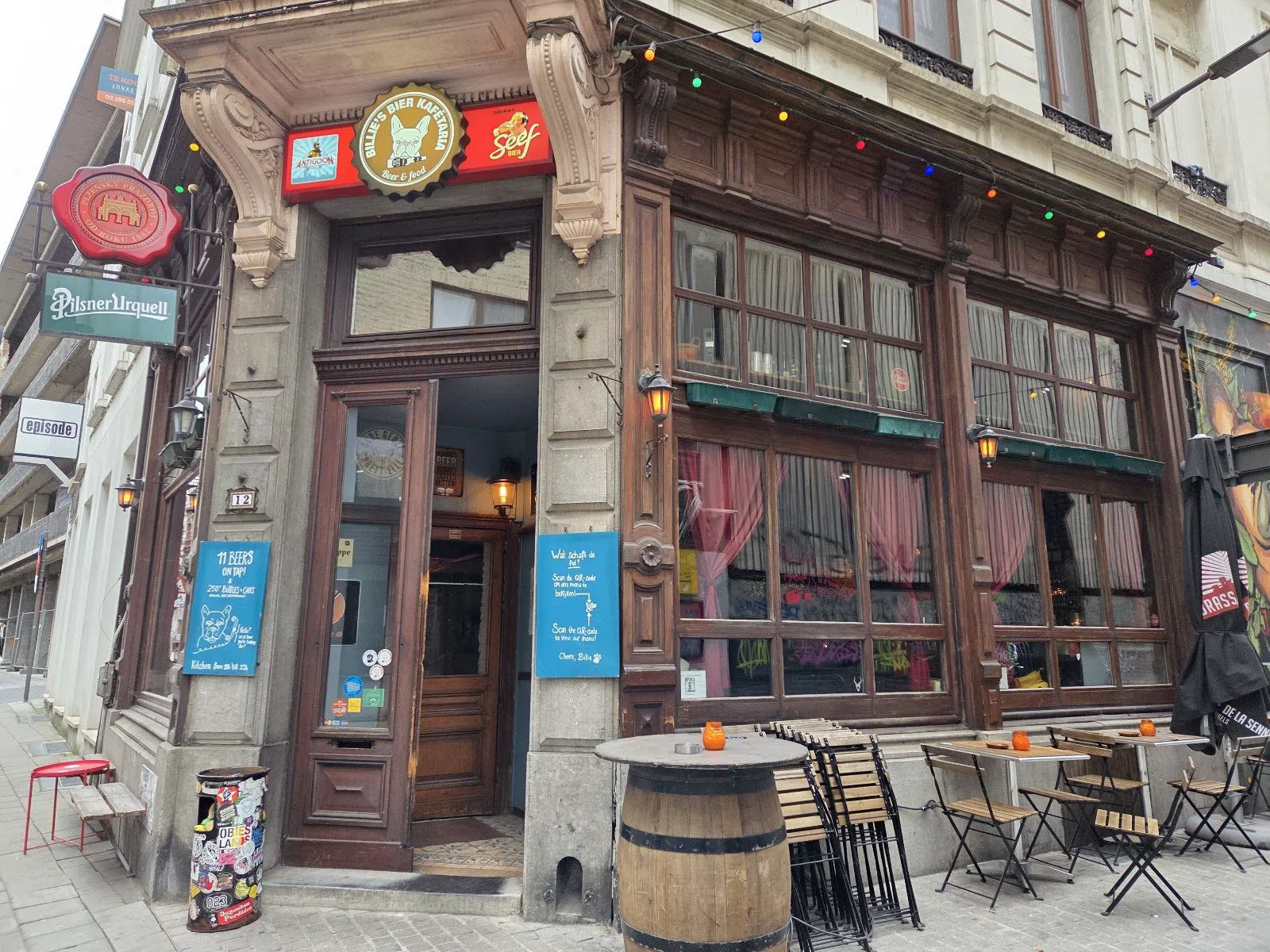
For beer that is not a brewery's own, Billie's Bier Kafétaria (Kammenstraat, centre) keeps around 180 Belgian and foreign beers and, more usefully, staff who will steer you through them, which matters now that the city's old encyclopaedic beer institution on Vleminckveld has closed. Beers run roughly €4–8. Be realistic about the room: it is small and packed, there are no bookings, and it is first come first served. Four to six people is right. A stag-sized party will not get in and should not try.
Getting around, paying and timing
Trams and the premetro cover everything above; the only stops that need one are Zurenborg, Middelheim and De Koninck, and none is more than twenty minutes out. Everything from the station to the Eilandje is walkable, and the whole central sequence (station, Bourse, Conscienceplein, cathedral, river, tunnel) is comfortably a single day on foot.
Cards work almost everywhere, but carry €20–30 in cash for small bars and the odd church donation box. Watch Mondays: MoMu, Snijders&Rockoxhuis, Middelheim and De Koninck all close, which guts a Monday itinerary. Billie's closes Tuesdays and does not open until 16:00 on weekdays, 14:00 at weekends. The Handelsbeurs is weekends and school holidays only. Thursday is the strongest single day here, with KMSKA running to 22:00, though the tunnel escalators are maintained that day.
On budget, a full day of the best of this costs nothing: the station, the Bourse when open, Sint-Carolus Borromeuskerk, Het Steen's roof, the tunnel, the MAS rooftop, Middelheim, Zurenborg and the Port House exterior are all free. Add one paid anchor, KMSKA at €20 or the cathedral at €10–15, and you have a serious day for the price of lunch. Two nights is the honest recommendation for the route above; one night covers the centre and the river but not the tram rides. Stay in the centre or Het Zuid for walking distance, and compare rates through this Antwerp hotel search. For neighbourhood-by-neighbourhood detail and where to eat between these stops, see the wider Antwerp guide.
Before you go
Is Antwerp worth more than a stopover between trains?
For one night, yes, comfortably. The central sequence (Central Station's lower levels, the Handelsbeurs, Hendrik Conscienceplein, the cathedral, Het Steen's free roof and the Sint-Annatunnel) is a full day on foot and needs no transport. Two nights is what you want if you also intend to reach Zurenborg, Middelheim, De Koninck or KMSKA, since each of those is a tram ride out of the centre.
Can I see Rubens in Antwerp while the Rubens House is closed?
Yes. KMSKA (€20, Zuid) is the main destination: it currently holds Rubens works displaced from the closed Rubens House. The Cathedral of Our Lady still has Rubens hung, though in early 2026 his epitaph triptych was off display for restoration, so check before you go. For the period interior itself, Snijders&Rockoxhuis on Keizerstraat is a real merchant's house rather than a reconstruction.
Is the MAS rooftop really free?
Yes. The escalator spiral up the outside of the building and the 360° rooftop boulevard are free and need no ticket; only the museum floors inside are ticketed. It gives you the best free view over the city, and the ride up is worth as much as the top. The 'Martial Arts' exhibition runs on the paid floors until late November 2026.
Which places do I need to book ahead?
MoMu sells timed slots, so book online, and groups must pre-book. Port House interiors are by scheduled guided tour only, in small fixed-size slots that fill well ahead, and the tours are in Dutch. Guided tours at Sint-Carolus Borromeuskerk are arranged by prior email. The Handelsbeurs cannot be booked at all: it opens weekends and school holidays, 10:00 to 18:00, and closes for private hires, so check its calendar the morning you plan to visit.
How do I reach Zurenborg and Middelheim from the centre?
Both are short tram rides. Zurenborg is about fifteen minutes east and can also be done as a two-hour guided walk that starts from the station hall at Antwerpen-Berchem; the streets are free and open at any hour, though street works mean fencing in photos along Cogels-Osylei. Middelheim is on the southern edge, free and with no booking, and closes Mondays: 10:00 to 19:00 in September, 10:00 to 17:00 October to March.